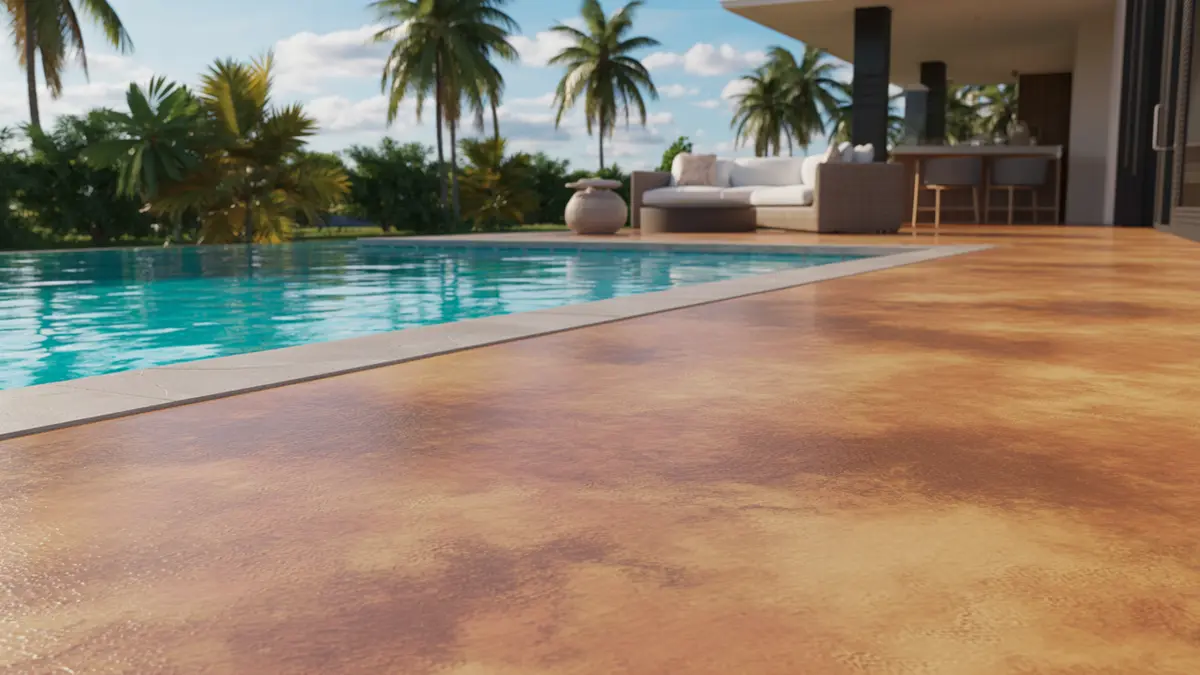
A pool deck in South Florida endures conditions that would destroy most flooring materials: relentless UV radiation, salt air, chlorinated water, tropical downpours, and bare foot traffic in extreme heat. An uncoated or poorly coated concrete pool deck becomes dangerously slippery when wet, painfully hot in direct sun, and aesthetically degraded within a few years. The right coating system solves all of these problems while dramatically improving the look and value of your outdoor living space.
Pool Deck Coating Options
Acrylic Deck Coatings (Cool Deck)
Acrylic-based cool deck coatings are the most popular choice for South Florida pool decks. These coatings contain heat-reflective pigments that reduce surface temperature by 15–30°F compared to uncoated concrete. They are available in a wide range of colors and textures and provide good slip resistance when wet. Acrylic coatings are cost-effective but require recoating every 3–5 years in South Florida's intense UV environment.
Polyaspartic / Polyurea Deck Coatings
Polyaspartic deck coatings offer superior UV resistance, chemical resistance, and longevity compared to acrylic systems. They maintain their color and performance for 8–12 years without recoating. The coating can be textured with broadcast media to provide excellent slip resistance. While more expensive upfront, the reduced maintenance cycle makes polyaspartic coatings a better long-term value for premium properties.
Decorative Overlay Systems
For pool decks that need significant cosmetic improvement, decorative overlay systems apply a thin cementitious or polymer overlay over existing concrete, then stamp or texture it to resemble natural stone, pavers, or tile. These systems can transform a plain concrete pool deck into a resort-style feature at a fraction of the cost of replacing the concrete.
Key Considerations for South Florida Pool Decks
- Slip resistance is non-negotiable — any pool deck coating must provide a coefficient of friction (COF) of 0.60 or higher when wet.
- Heat reflectivity matters — dark colors absorb solar energy and become dangerously hot. Choose light colors and heat-reflective formulations.
- UV stability is critical — coatings that yellow or chalk in UV exposure will look terrible within a year in South Florida.
- Drainage must be maintained — the coating should not alter the deck's drainage pattern, which can cause standing water near the pool.
- Chlorine resistance — the coating must withstand regular exposure to chlorinated splash water without degrading.
Pool Deck Coating Costs in South Florida
Pool deck coating in the Miami-Dade, Broward, and Palm Beach area typically ranges from $4 to $15 per square foot, depending on the system type and current deck condition. A standard 800 sq ft pool deck averages $3,200–$8,000 for a professional coating installation. Decorative overlay systems are at the higher end.
Maintenance for Coated Pool Decks
Coated pool decks require minimal maintenance: regular sweeping to remove debris, periodic pressure washing at low pressure (under 2,000 PSI), and prompt cleanup of any chemical spills. Avoid using harsh pool chemicals directly on the deck surface, and consider a maintenance recoat every 5–8 years for acrylic systems or 10–12 years for polyaspartic systems.
Art of Coating Miami specializes in pool deck coatings that withstand South Florida's toughest conditions. We serve residential and commercial properties throughout the tri-county area. Call (786) 618-4877 for a free on-site estimate.
Request a Free QuoteSigns Your Pool Deck Needs Resurfacing
Most pool decks give clear warnings before they fail. Hairline cracks that widen, flaking or chalky patches, faded color, and surfaces that turn slick when wet all point to a coating at the end of its life. Hollow-sounding spots when you tap the surface signal that an old coating is delaminating from the slab below. Catching these early usually means a straightforward resurface rather than a costly tear-out and re-pour. If you are seeing any of these symptoms, our pool deck flooring page explains the systems we use to restore safety and looks, often in a single weekend.
- Cracks that trap dirt or catch bare feet
- Slippery texture that no longer grips when wet
- Faded, chalky, or peeling color from UV exposure
- Hot spots that are uncomfortable to stand on at midday
Choosing Color and Texture for the Heat
Color is a performance decision as much as an aesthetic one on a South Florida deck. Light, reflective tones such as sand, pale gray, and soft terracotta stay noticeably cooler underfoot than dark charcoals or deep blues that absorb solar heat all afternoon. Texture matters just as much: a fine broadcast aggregate gives reliable wet traction without being harsh on bare feet or swimsuits. We help you balance the resort look you want against barefoot comfort and slip safety, and we can sample finishes on-site so you see them in real sunlight before you commit to a color.
Permits, HOAs, and Timelines
Resurfacing an existing deck is typically a cosmetic improvement that avoids the permitting and demolition of a full replacement, which is a big part of why it costs so much less. That said, waterfront and HOA-governed communities sometimes have color or material guidelines, so it is worth checking before you choose a finish. A typical residential deck is cleaned, repaired, coated, and cured over two to three days, with careful attention to preserving the existing drainage slope so water keeps flowing away from the pool rather than pooling at the coping or against the house.
Resurfacing over a sound existing deck can cost a fraction of a full tear-out and re-pour, while delivering a cooler, safer, and more attractive surface in just a few days.
Request a Free QuoteWhy Professional Slip Safety Matters
Around a pool, traction is not a luxury. The National Floor Safety Institute attributes the majority of pool-area injuries to slick walking surfaces, which is why we engineer the aggregate and texture of every deck to deliver dependable wet grip rather than leaving it to chance. A professional installer also pressure-cleans, repairs spalling, and tests for moisture before coating, the steps that separate a deck that lasts years from one that fails in a season. Skipping prep to hit a lower price is the single most common reason bargain decks peel in the first summer.
Timing your project around the South Florida calendar helps too. Our rainy season brings daily afternoon storms and very high humidity, which can complicate the cure of some systems and push schedules. The drier, cooler months are often the easiest window for exterior deck work, giving coatings an uninterrupted stretch to cure and letting you enjoy the finished surface heading into peak pool season. If you are planning ahead for a spring or summer of entertaining, booking the resurface a little earlier in the year usually means more scheduling flexibility and a smoother installation. A good contractor will watch the forecast and stage the work so weather never gets trapped under your new finish.
Done right, a coated pool deck is cooler, safer, and more beautiful while adding real value to your outdoor living space. The difference always comes down to honest preparation and a system matched to sun and salt exposure. Ready to upgrade your pool area? Request a free on-site estimate through our contact page, or compare systems in our ranked guide to the best pool deck coatings for South Florida.
Last updated: October 2026