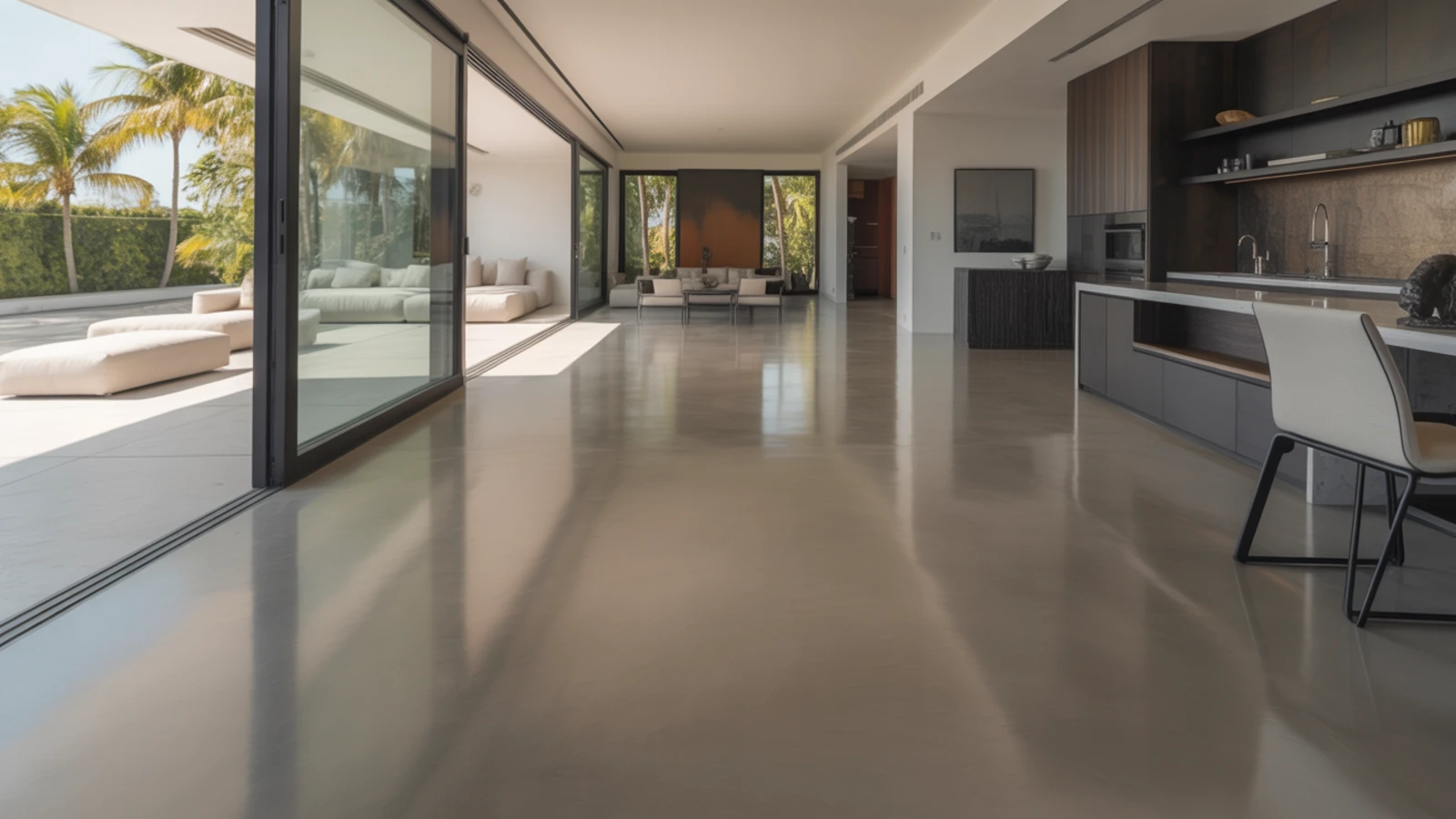
Microcement has become one of the most requested surfaces we quote across Miami-Dade, Broward and Palm Beach counties. Homeowners in Jupiter, Palm Beach and West Palm Beach want the seamless, hand-troweled look of plaster on floors, showers and stairs without tearing out tile. This guide covers what microcement actually is, what it costs installed in South Florida in 2026, where it performs, where it fails, and how to tell an experienced installer from a beginner.
What Microcement Actually Is
Microcement is a cement-based composite modified with polymers, usually acrylic or epoxy resins, plus fine aggregates and pigments. It is troweled on in several thin coats, typically building to about 2 to 3 mm in total, then sealed. Because it is so thin, it can go over existing tile, concrete and cement backer board once properly prepared. The polymers are what separate it from ordinary skim coat: they add flexibility and adhesion, so a well-built system bonds tightly and resists hairline cracking.
A standard system goes on in stages: a primer matched to the substrate, a base coat often reinforced with fiberglass mesh over grout lines or joints, one or two finer finish coats that create the texture, and two or more coats of sealer, usually water-based polyurethane or a two-component product. The finish coats are where craftsmanship shows. Trowel pressure, timing and sanding between coats decide whether you get soft cloudy movement, a tight smooth finish or a rustic stone look.
Where Microcement Works: Floors, Walls, Showers, Stairs and Countertops
Floors
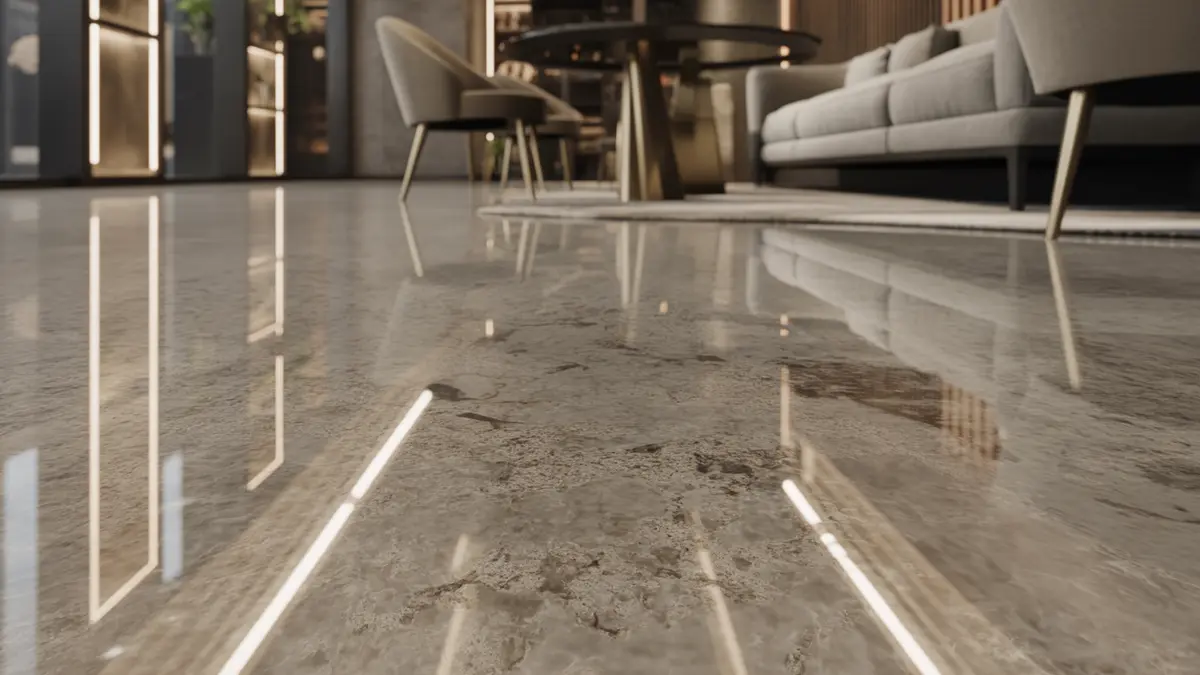
Interior floors are the most common application. A continuous surface with no grout lines suits open-plan condos and homes where the kitchen, living area and hallways should read as one plane. It handles normal residential traffic well when sealed correctly. It is less suited to garages with hot tire pickup or commercial kitchens with carts and chemicals, where epoxy or urethane cement is the better call. See our microcement flooring service for how we approach residential floors.
Walls and Decorative Plaster Finishes
On walls, microcement works as a decorative wall coating that resembles Venetian or lime plaster but is tougher and washable. Feature walls, fireplace surrounds, TV walls and entry halls are popular. It adds almost no depth, so trim and outlets rarely need adjustment, and a sealed wall can be wiped down and tolerates bathroom humidity without staining, which makes it a practical plaster finish for Florida homes.
Showers and Bathrooms
Showers are where microcement looks best and where installer skill matters most. A seamless, grout-free shower is easy to clean and striking, but it must sit over a proper waterproofing membrane rather than rely on the microcement or sealer to stop water. Correct slope to the drain, reinforced corners and a sealer rated for constant water exposure are non-negotiable. A shower built without a membrane can look fine for months, then show dark patches as water gets behind it.
Stairs and Countertops
Stairs suit microcement because it wraps treads, risers and nosings in one continuous surface. Nosings take the most wear, so they need extra base coat build, rounding and additional sealer, and stairs are usually priced per step. On vanities and low-use islands, microcement gives a monolithic concrete look without the weight. Busy kitchen counters are tougher: acids and hot pans can mark some sealers, so an epoxy countertop may suit better.
Overlaying Tile and Concrete: Renovating Without Demolition
The biggest reason people choose microcement here is that it can go directly over existing ceramic or porcelain tile. Tearing out tile in a condo means noise restrictions, dust, debris hauling and sometimes association approval for sound underlayment. With microcement, the tile becomes the substrate. We tap-test every tile, remove and fill any hollow ones, grind the glaze, clean, apply a bonding primer, then fill grout lines and embed mesh in the base coat so joints do not telegraph through. A typical room changes in days, not weeks.
Over bare concrete, prep means grinding to open the surface, repairing cracks and testing moisture before anything else. Active structural cracks will come back through any thin overlay, so they must be addressed or honored with a joint. Old adhesives, paint and sealers must come off completely. Skipped prep is the most common reason microcement peels, cracks or bubbles, and it is the step cheap quotes usually cut.
South Florida Conditions: Humidity, Slab Moisture, Salt Air and Sun
Moisture Vapor in Slabs
Many homes here sit on slab-on-grade foundations over a high water table, so moisture vapor can push up through the concrete constantly. Before microcement goes on a ground-floor slab, test it, commonly with calcium chloride tests or in-situ relative humidity probes. If readings are high, a moisture-mitigating epoxy primer goes on first. Without it, vapor can lift the coating or cause white blushing under the sealer. The EPA's guidance on moisture and mold explains why indoor moisture control matters beyond appearance.
Humidity During Installation
Microcement cures through evaporation and chemical reaction, and both slow down in high humidity. On a humid August day with doors open, coats stay soft longer and sealers can cloud. We run air conditioning and dehumidification, keep doors closed and adjust the time between coats rather than forcing a schedule. A crew that works to the same timeline in July as in January is cutting corners somewhere.
Salt Air and Coastal Homes
For oceanfront and Intracoastal homes in Palm Beach, Jupiter Island and Miami Beach, salt air does not attack the cement, but salt and sand tracked in from the beach are abrasive and dull the sealer faster. Plan on more frequent maintenance coats and use entry mats. When we install microcement flooring in Jupiter and other waterfront areas, we pay close attention to sealer choice near sliding doors where sand comes in.
Sun, UV and Outdoor Use
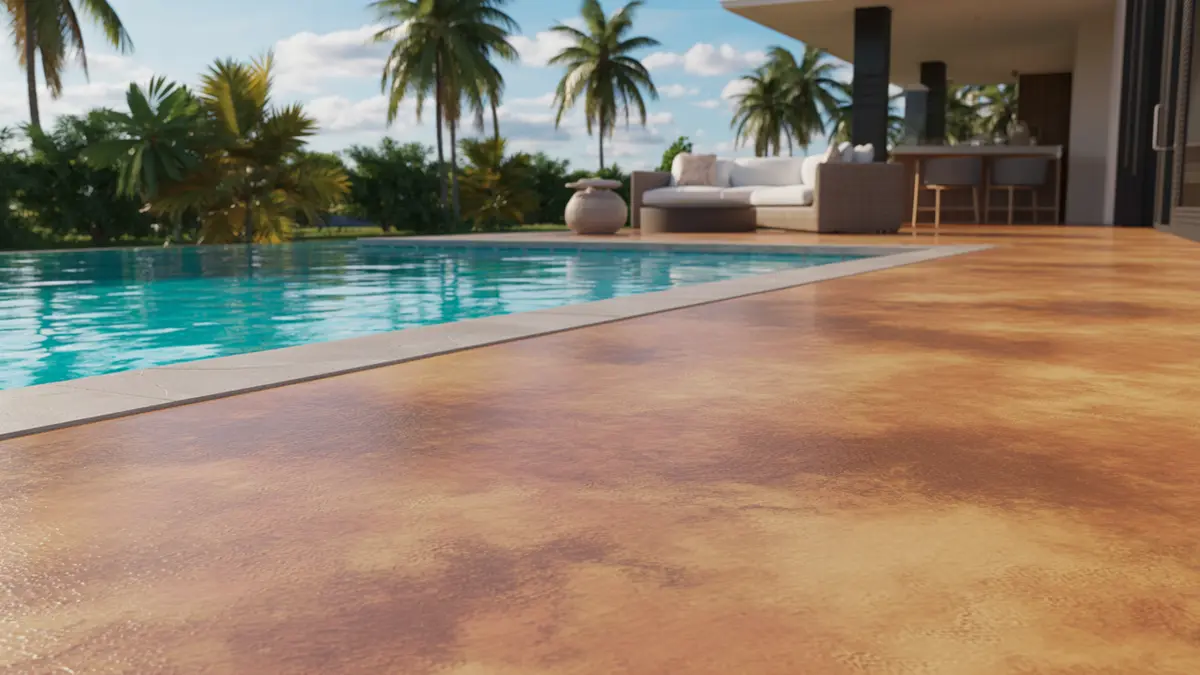
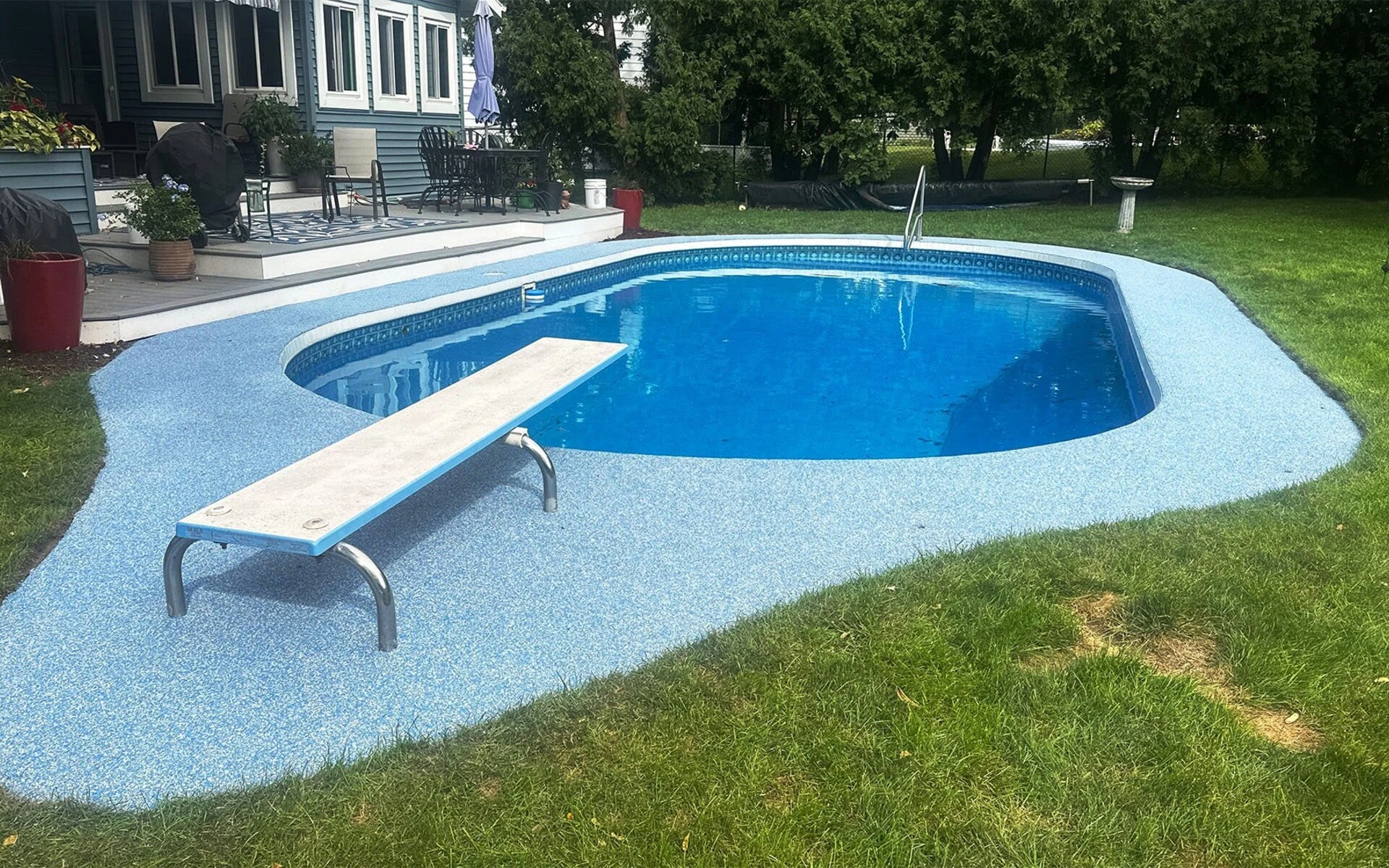
Microcement can work on covered patios, but full Florida sun is demanding. Some pigments fade, some sealers yellow or chalk under UV, and dark colors get hot underfoot. For pool decks and fully exposed areas we usually recommend a purpose-built pool deck coating instead. If you want microcement outdoors, use a UV-stable aliphatic sealer, choose lighter colors and keep it to covered or partly shaded areas.
How Much Does Microcement Cost in South Florida?
For professional installs in Miami-Dade, Broward and Palm Beach counties, microcement typically runs roughly $12 to $25 per square foot installed. That is a typical range, not a fixed price. Open floors over sound concrete sit toward the lower end. Showers, stairs, small bathrooms and tile overlays needing lots of repair push toward the upper end or beyond, because labor per square foot rises sharply on vertical and detailed work. The main cost drivers:
- Substrate prep: grinding, crack repair, loose tile removal and grout filling
- Moisture mitigation primer on ground-floor slabs
- Area type: showers, stairs and counters cost more than open floors and walls
- Shower waterproofing membrane, priced separately
- Finish complexity and number of coats
- Sealer system: two-component sealers cost more but generally last longer
Be cautious of quotes far below the typical range. They usually leave out prep, mesh, waterproofing or enough sealer coats, and those are exactly the components that decide whether the finish lasts. Ask every contractor to itemize prep, primer, number of coats and sealer type so you can compare quotes like for like, not just on the final bottom line.
Microcement Pros and Cons
Pros
- Seamless, grout-free surface that is easy to clean
- Thin enough to go over existing tile without demolition
- One matching finish across floors, walls, showers, stairs and vanities
- Less mess, noise and downtime than tile removal
- Can be repaired and resealed without full replacement
Cons
- Highly dependent on installer skill; poor work is obvious and hard to fix
- Softer than epoxy or polished concrete against impact and dragged furniture
- Sealer needs periodic maintenance, especially near the coast
- Not ideal for garages, sun-exposed pool decks or heavy commercial use
Microcement vs Polished Concrete vs Epoxy
Polished concrete is the slab itself, ground and densified to a sheen. It is extremely durable and low maintenance, but it needs an existing slab in decent condition and cannot go on walls or over tile. Our article on polished concrete floor benefits covers when that route makes sense. If you have a sound slab and heavy traffic, it is often the better value.
Epoxy is a resin coating, usually applied much thicker than microcement, with excellent chemical and abrasion resistance. It is the right choice for garages, workshops and commercial floors, with a more uniform, manufactured look. Microcement sits between the two: it has the warmth and texture of hand-applied plaster and works on almost any rigid surface, including walls and tile, but trades some hardness for that versatility.
How to Choose a Qualified Microcement Installer in Florida
Searching for microcement installers in Florida turns up painters, tile setters and handymen alongside true specialists. Microcement is easy to buy but hard to install well, so the questions you ask matter more than the brand on the bucket. A real microcement specialist in Florida will answer every point below in detail, and in writing, before giving you a final price.
- Licensed and insured in Florida, with proof on request
- A portfolio of completed microcement jobs, including showers and stairs
- A plan for moisture testing and vapor mitigation on ground-floor slabs
- Clear answers on tile overlay prep and keeping grout lines from showing
- A written scope listing primer, mesh, coats and sealer system
- Shower waterproofing that does not rely on the sealer alone
Red flag: an installer who says microcement can go over tile with no grinding, no primer and no mesh, or who quotes a shower with no membrane. Those jobs often look great at handover and fail early.
Request a Free QuoteCaring for Microcement in a Florida Home
Sweep or dust mop often, because sand and grit are the main cause of sealer wear in South Florida homes. Wash with a pH-neutral cleaner and a microfiber mop, and avoid bleach, ammonia, vinegar and abrasive pads. Use felt pads under furniture and mats at doors from the pool or beach. The sealer is the sacrificial layer: a maintenance coat is typically needed every few years, sooner on busy coastal floors. When water stops beading or the surface looks dull, reseal before wear reaches the cement.
Microcement FAQ
Can microcement go over existing tile in a Miami or Palm Beach condo?
Yes, in most cases. The tile must be firmly bonded, the glaze abraded, grout lines filled, and a bonding primer and mesh used. Loose or hollow tiles are removed and filled first. It is popular in condos because it avoids demolition and most of the noise, though you should still check your association's rules on renovation work and flooring changes before scheduling.
Is microcement waterproof?
Sealed microcement is water-resistant, not waterproof on its own. On floors and walls in normal living areas, that is enough. In showers and wet rooms it must go over a proper waterproofing membrane, with the sealer acting as surface protection. Any installer who treats the sealer as the waterproofing layer is setting you up for leaks and hidden damage behind the finish.
How long does microcement last?
With correct prep, a suitable sealer and regular maintenance, a microcement finish can last many years in a South Florida home. Its lifespan depends far more on the substrate, moisture conditions and sealer care than on the material itself. Reseal when the surface starts to look dull, and repair chips promptly so water and grit cannot get under the edges.
Is microcement slippery?
A smooth, glossy-sealed microcement floor can be slippery when wet. For bathrooms, showers, pool entries and covered outdoor areas, we add an anti-slip additive to the sealer or choose a matte, slightly textured finish. Always discuss slip resistance with your installer before choosing your final sheen, especially if your household includes young children or older family members who need sure footing.
How long does installation take?
A typical room takes several working days, because each coat must dry before sanding and the next coat, and the sealer needs its own cure. Larger homes, showers and stairs take longer, and in South Florida humidity we build in extra drying time. Light foot traffic is usually possible a day or two after sealing, with full cure taking longer.
Do you install microcement in Jupiter, Palm Beach and West Palm Beach?
Yes. We install microcement throughout Palm Beach County, including Jupiter, Jupiter Island, Palm Beach, West Palm Beach and Boca Raton, as well as across Broward and Miami-Dade counties. Our office is in Fort Lauderdale, and we visit each site to inspect the substrate and test moisture before quoting, so your written price reflects the actual, real conditions of your home.
If you are planning a seamless floor, shower, feature wall or staircase in microcement, Art of Coating Miami can assess your space, test the substrate and recommend the right system for South Florida conditions. We are a licensed and insured coating contractor with a BBB A+ rating, serving Miami-Dade, Broward and Palm Beach counties from our Fort Lauderdale office. Call (786) 618-4877 to book a site visit and get an itemized microcement quote.
Last updated: October 2026