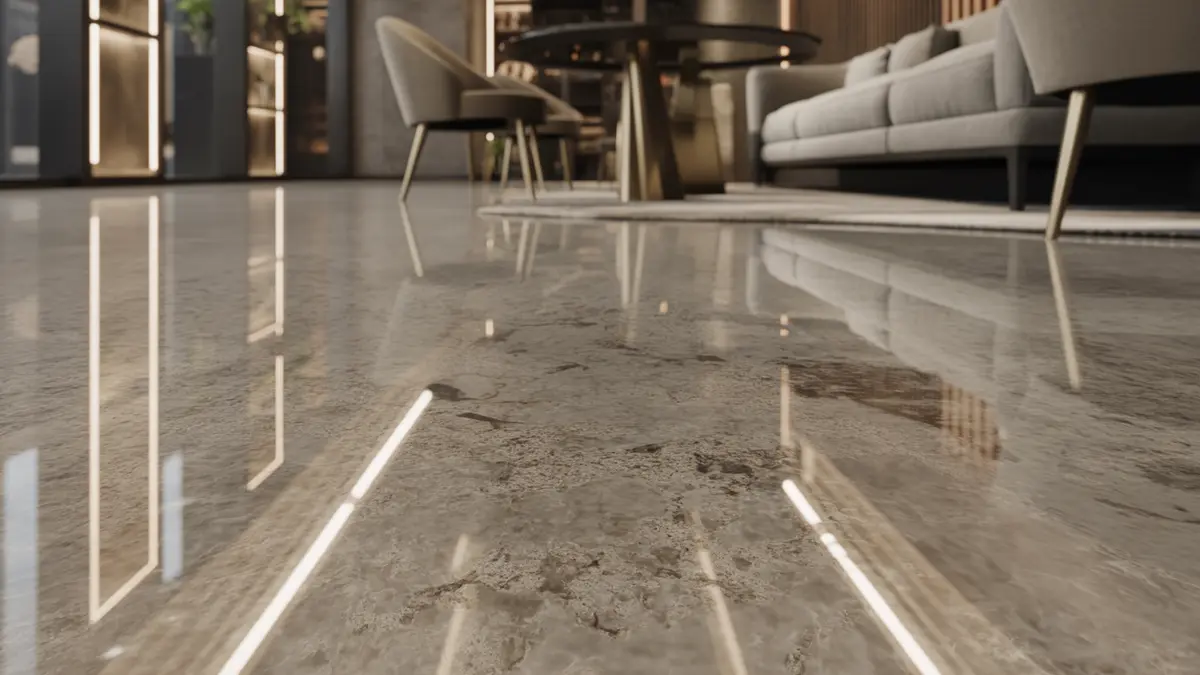
If you are weighing polished concrete against epoxy for a floor in Miami, Fort Lauderdale or Palm Beach County, you are really choosing between two different approaches. Polishing refines the slab you already have into the finished surface. Epoxy covers that slab with a bonded resin film that becomes the new wearing surface. Both can look sharp and last for years, but they cost different amounts, fail in different ways and suit different spaces. This guide focuses on the decision itself, from the installer's side.
If you want the broader case for polishing on its own, we covered that in our guide to polished concrete floor benefits. Here we put the two systems head to head, then look at the South Florida conditions that often settle the question before anyone picks a color: humidity, moisture vapor coming up through the slab, hot tires in garages and the real condition of concrete in older buildings.
How Each System Actually Works
Concrete polishing
Concrete polishing is a mechanical process. We grind the slab with progressively finer diamond tooling, starting with metal-bond diamonds to remove surface paste and flatten high spots, then move into resin-bond diamonds to hone and polish. Partway through, a lithium or sodium silicate densifier is applied to harden the surface. The final grit level sets the sheen, from satin to high gloss, and a penetrating guard is usually applied last to resist spills. The Concrete Network's polished concrete overview is a useful neutral primer on the grit sequence.
Epoxy flooring
Epoxy is a coating. The slab is diamond ground or shot blasted to create a profile the resin can grip, cracks and spalls are repaired, and then a primer, body coat and topcoat are applied. That build can be a solid color, a full broadcast of decorative flakes or a metallic pour with movement and depth. Many garage and commercial systems pair an epoxy base with a polyaspartic or urethane topcoat for better UV stability and scratch resistance. The finished floor is a continuous film on top of the concrete, not the concrete itself.
Polished Concrete vs Epoxy: Side-by-Side Comparison
- Cost: polished concrete typically runs about $3 to $8 per sq ft installed; epoxy typically runs about $4 to $12 depending on the system and slab repair needed.
- Look: polishing shows the real concrete, including aggregate, trowel marks and patches; epoxy hides the slab under a uniform color, flake or metallic finish.
- Durability: a densified polished slab has no film to peel; epoxy handles impact but can scratch, and lifts if prep was poor.
- Slip resistance: polished concrete is reasonable when clean and dry but slick when wet or dusty; epoxy can take aggregate or flake in the topcoat for grip.
- Chemical resistance: citrus, wine and vinegar can etch polished concrete; epoxy and urethane topcoats resist oils and food acids far better.
- Moisture tolerance: polished concrete is breathable, so slab vapor is not trapped; epoxy forms a surface barrier and may need a moisture-mitigating primer.
- Maintenance: polished concrete needs dust mopping, neutral cleaning and periodic burnishing; epoxy needs sweeping, neutral cleaning and an eventual topcoat refresh.
- Downtime: polishing involves very little cure time; multi-coat epoxy usually needs one to three days before light traffic, though polyaspartic topcoats shorten that.
- Lifespan: a polished slab can last as long as the concrete with periodic refreshing; an epoxy system commonly lasts many years before a recoat.
- Repairability: polished concrete can be spot ground and repolished, though patches may show; epoxy can be patched, but partial repairs rarely match perfectly.
Which Is Better for Your Space?
Warehouses and distribution centers
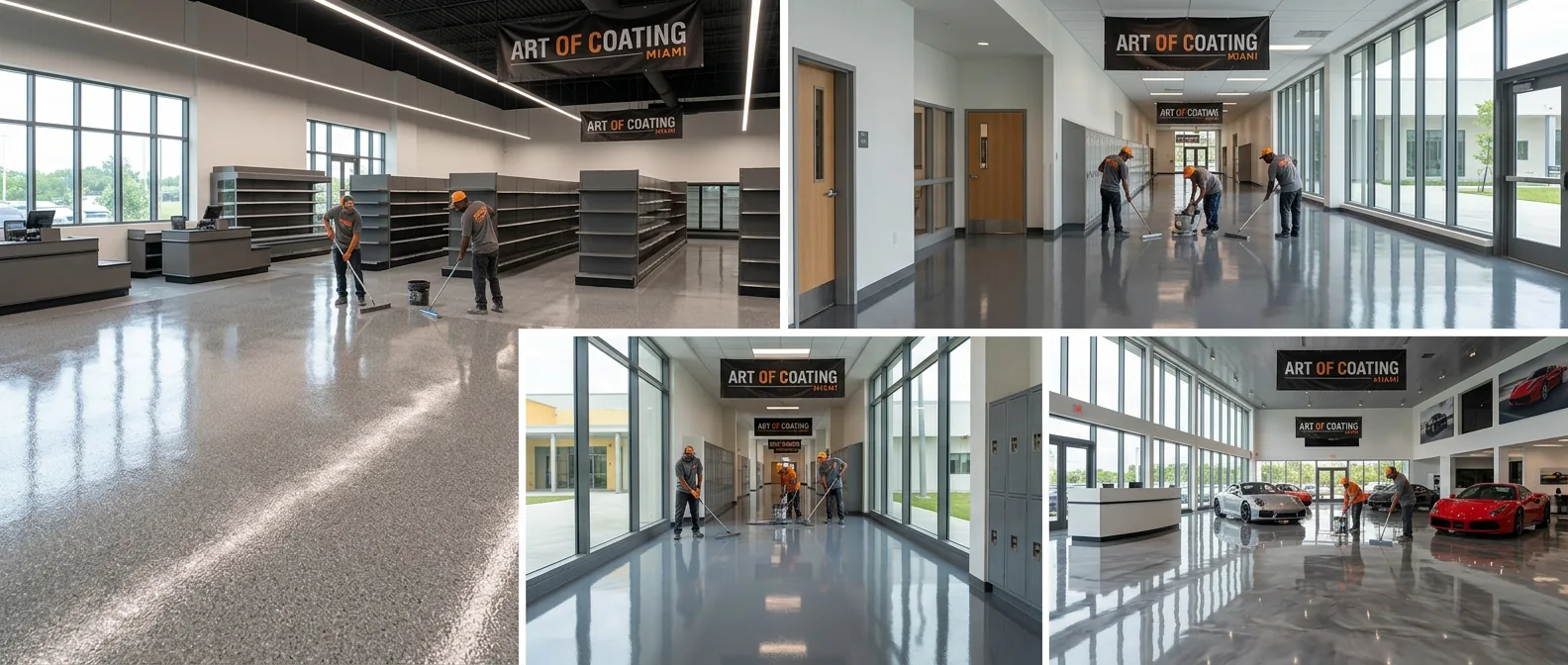
For large open warehouses with forklifts and pallet jacks, polished concrete is often the practical choice. Hard wheels cannot chip a coating that does not exist, the floor reflects light well and downtime stays short across a large footprint. Epoxy earns its place where you need color-coded zones, chemical resistance or washdown areas. Many facilities combine both, polishing aisles and coating charging or maintenance bays.
Retail stores and showrooms
Showrooms and retail floors are where polished concrete shines, literally. A reflective floor fits modern store design and handles foot traffic and carts well. The catch is the slab itself. If it is full of cracks, patches or old adhesive, the polish will show all of it. When the concrete is not presentable, a metallic or solid color epoxy gives a uniform look that can match brand colors.
Restaurants and commercial kitchens
Commercial kitchens are one place we rarely recommend bare polished concrete. Grease, citrus, vinegar, wine, sugary spills and strong degreasers all attack a polished surface. A resin system with a textured topcoat, or urethane cement where hot water and thermal shock are involved, is the safer specification. Front-of-house dining rooms are different; polished concrete can work there with a good guard.
Garages
For residential garages, epoxy and polyaspartic systems are usually the better fit. Polished concrete has no film to lift, but it readily absorbs oil, tire marks, brake fluid and battery acid, and those stains are hard to remove. A properly prepared flake system with a polyaspartic topcoat resists hot tire pickup, wipes clean easily and hides minor slab imperfections and stains.
Homes and modern interiors
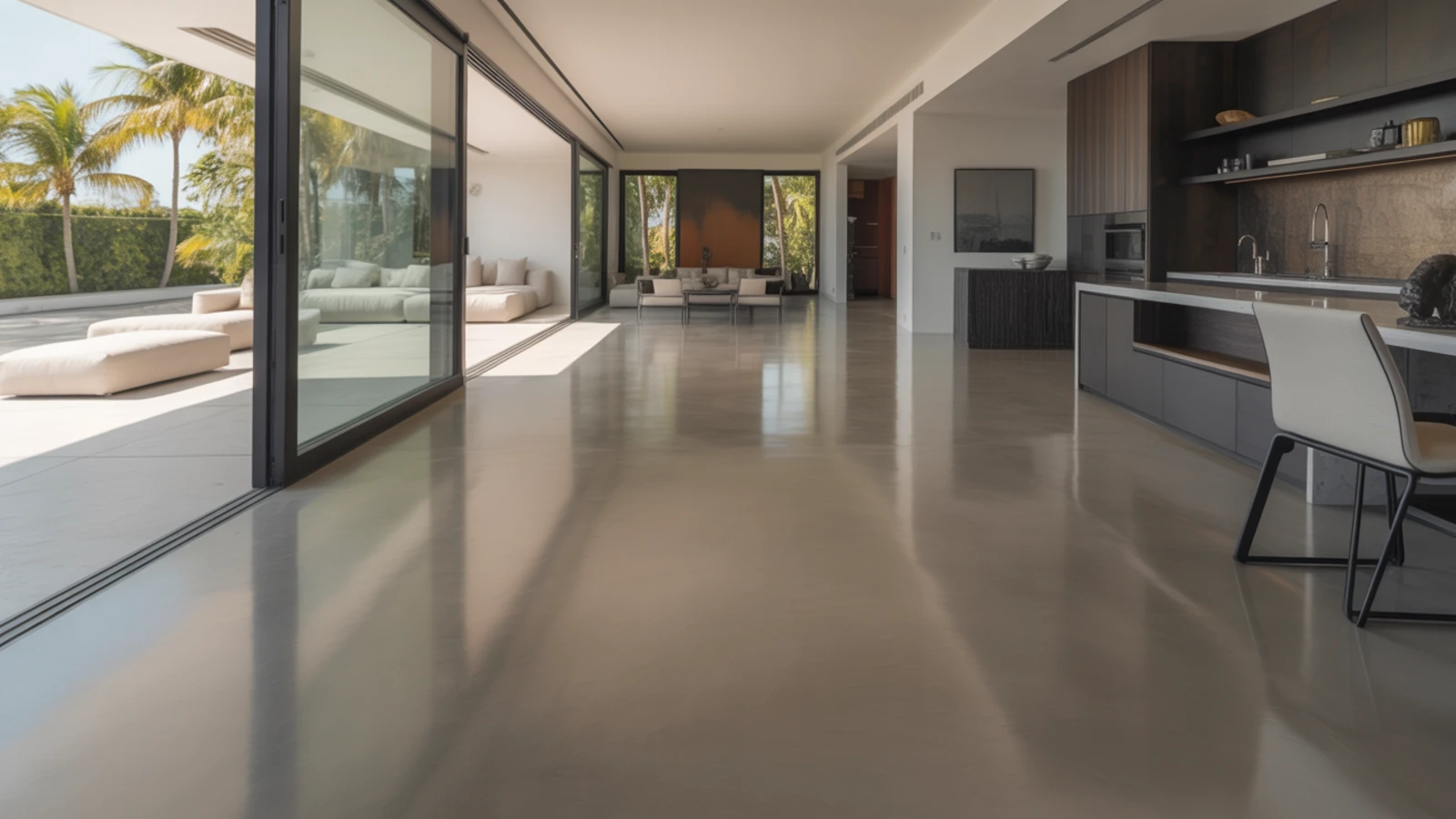
In homes, polished concrete suits ground-floor slabs where tile or carpet comes up and the concrete underneath is in decent shape. It stays cool underfoot and pairs well with minimal interiors. Metallic epoxy is the alternative when you want a more dramatic, glossy look or the slab is too rough to show. Either floor is harder underfoot than wood or carpet, so plan for area rugs.
Outdoor areas and patios
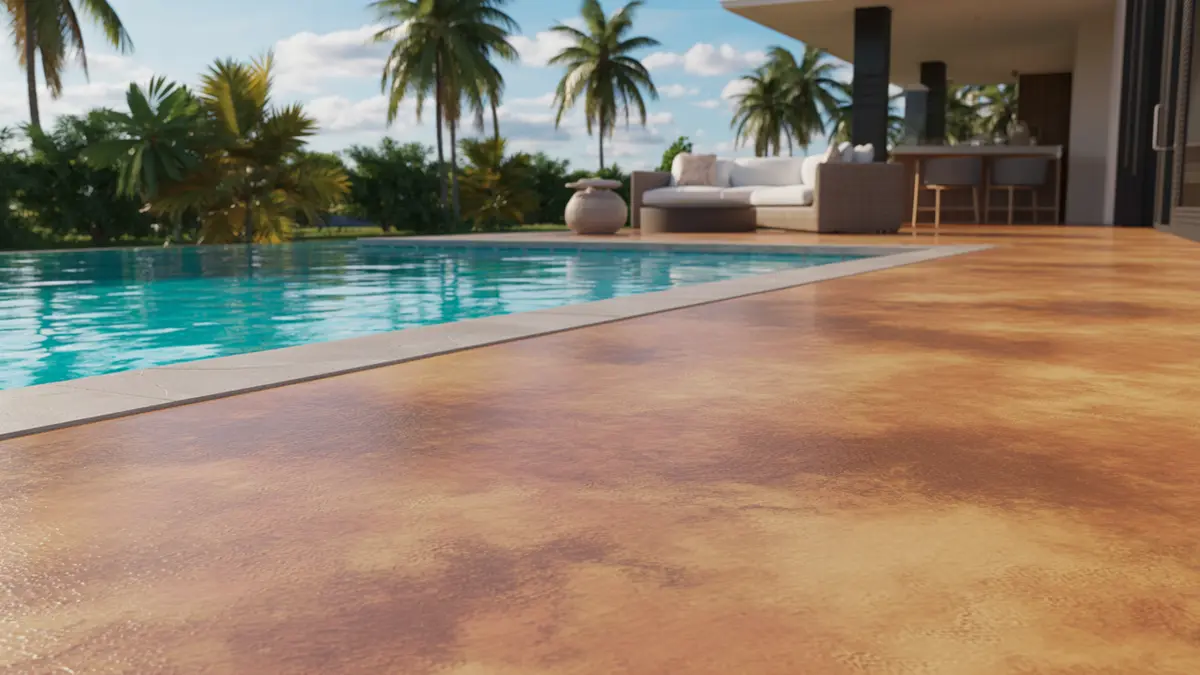
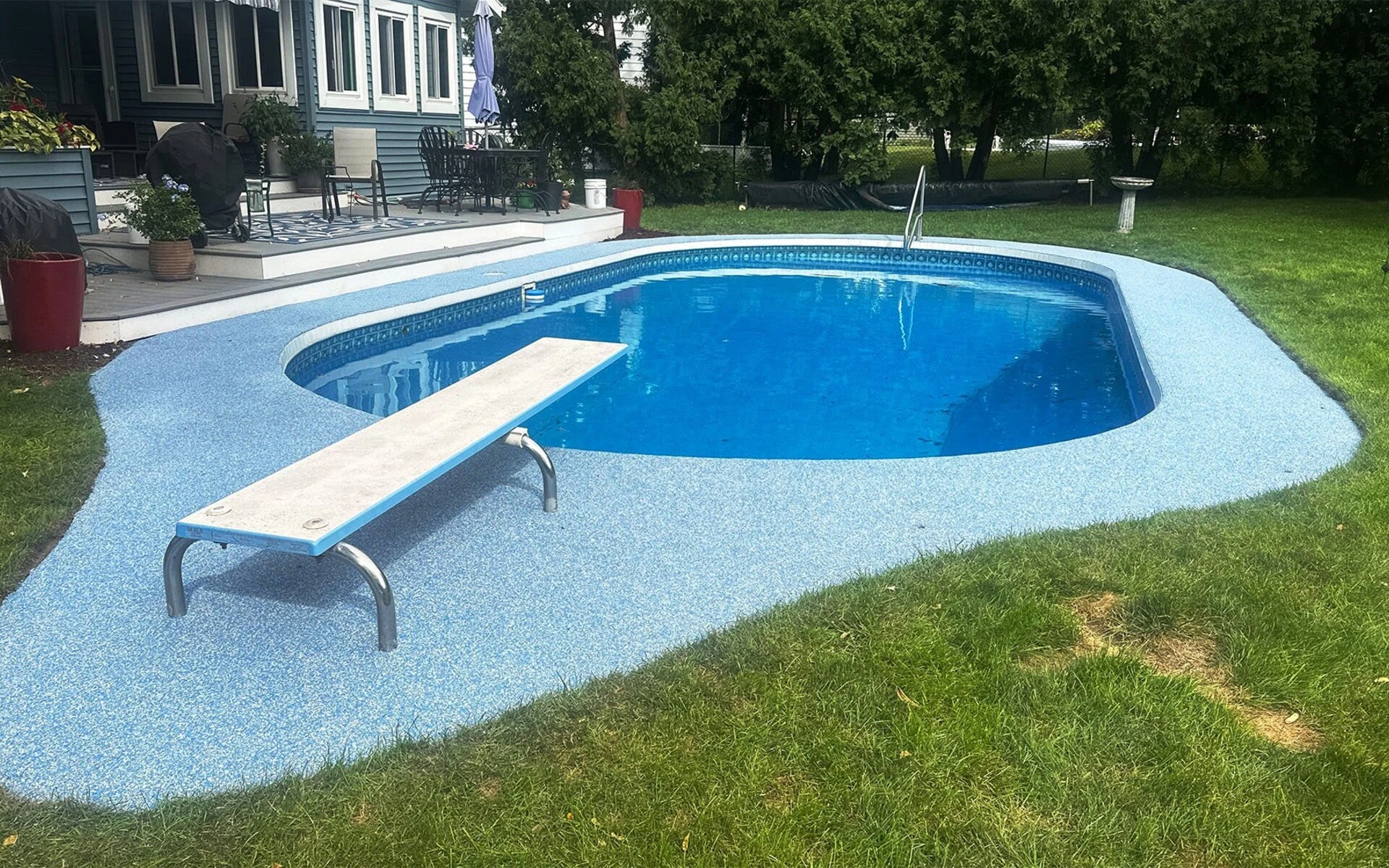
Neither standard epoxy nor a high-gloss polish is ideal outdoors. Most epoxies amber and chalk under Florida sun, and a polished surface gets slippery when rain or pool water sits on it. For patios, pool decks and covered entries, a UV-stable polyaspartic flake system with texture, or microcement with an exterior-rated sealer, is usually better. For an exposed concrete look outside, a low-sheen grind and seal with slip-resistant additive is safer.
High-moisture slabs
Slabs with high moisture vapor emission are where polishing has a real advantage, because a breathable surface lets vapor pass instead of trapping it under a film. Epoxy over a wet slab is a common cause of blistering and delamination. That does not rule epoxy out. It means testing first and budgeting for a moisture-mitigating primer where readings are high.
South Florida Factors That Change the Answer
- Humidity: high humidity slows cure and can cause blushing on epoxy, so we often use faster-curing polyaspartic topcoats.
- Moisture vapor through the slab: many local slabs sit over a high water table, and some older slabs lack an effective vapor retarder, so we test before quoting any coating.
- Hot tires in garages: summer driving heats tires enough to soften weak coatings, which is why cheap one-part garage paints peel.
- Salt air and coastal exposure: salt and sand tracked in near the coast are abrasive, so both floors need regular cleaning, and outdoor coatings must be UV stable.
- Slab quality in older buildings: older condos and commercial spaces often have cracked, patched or uneven slabs plus old adhesive, which decide whether a polish will look good.
Typical Installed Cost in South Florida
Prices vary with square footage, slab condition and finish level, so treat these as typical ranges, not quotes. Polished concrete typically lands around $3 to $8 per square foot installed. The low end is a large open slab in good condition taken to a modest sheen; the high end includes heavy crack repair, coating removal, dye or a high-gloss finish. Epoxy typically lands around $4 to $12 per square foot, with solid color systems at the lower end and flake, metallic or multi-layer commercial systems at the upper end. Two things push either number up quickly: removing an existing coating or tile adhesive, and moisture mitigation. For a deeper breakdown of coating prices, see our post on epoxy flooring cost per square foot in South Florida.
When Polishing Is Not Possible
Not every slab can be polished, and an honest on-site assessment saves money and disappointment later. Polishing exposes the concrete you have, flaws included. In these situations we usually steer clients toward a coating, microcement or one of the hybrid approaches below instead of a full polish, because the finished result would not justify the grinding time and cost involved.
- Badly damaged or weak slabs: heavy spalling, wide cracks or soft, dusty surface paste will not hold a durable polish.
- Existing coatings: paint, epoxy or sealers must be fully ground off first, and residue left in the pores can leave shadows.
- Tile and thinset: the slab under tile was never finished to be seen, so expect a rustic result after removal.
- Gypsum or self-leveling toppings: many underlayments are not structural concrete and cannot be polished.
- Heavily patched slabs: patches cure to a different color and hardness and stand out clearly after polishing.
Hybrid Options Between the Two
- Grind and seal: the slab is ground to a lower grit and sealed with a clear sealer, giving an exposed look for less than a full concrete floor polishing package.
- Polished concrete with a topical guard: a stain-resistant guard improves spill resistance; it is sacrificial and refreshed over time.
- Dyed polished concrete: dyes add color during the polish while keeping the breathable surface.
- Zoned floors: polished concrete in open areas, with epoxy or urethane cement in kitchens, wash bays or charging areas.
- Clear coat over a ground slab: keeps the exposed look with coating-level stain protection, but brings back moisture concerns.
Maintenance Routines for Each Floor
Polished concrete maintenance
- Dust mop daily in commercial spaces; grit is what dulls a polish.
- Damp mop or auto-scrub with a pH-neutral cleaner made for polished concrete.
- Wipe acidic spills such as citrus, wine and soda promptly to avoid etching.
- Avoid bleach, ammonia, vinegar-based cleaners and harsh degreasers.
- Burnish on a schedule matched to traffic, and reapply the guard periodically.
Epoxy floor maintenance
- Sweep or dust mop regularly to remove sand that scratches the topcoat.
- Clean with a pH-neutral cleaner and rinse so no film is left behind.
- Wipe up oil, brake fluid and chemicals promptly.
- Use walk-off mats at entries and pads under heavy furniture or equipment.
- Scuff and recoat the topcoat when traffic lanes lose gloss, before wear reaches the color coat.
Frequently Asked Questions
Is polished concrete cheaper than epoxy in Miami?
Often, but not always. On a large open slab in good condition, polished concrete is usually the lower-cost option per square foot because there is no resin to buy and fewer coats to wait on. On a damaged slab with old coatings or tile thinset, the extra grinding and repair can push polishing above a basic epoxy system. The reliable comparison is to inspect the slab and price both systems.
Which lasts longer, polished concrete or epoxy?
A densified polished slab can last as long as the concrete itself because there is no coating to wear through, though it needs periodic burnishing and guard reapplication. Epoxy systems commonly last many years, and the topcoat can be refreshed as it wears, but coating life depends heavily on surface prep, moisture control and traffic. The better question is which floor suits your specific use.
Is polished concrete slippery?
Clean and dry, polished concrete generally offers reasonable traction for normal foot traffic. It becomes slippery when wet, oily or dusty, which is why we avoid high-gloss polish in kitchens, pool areas and rain-exposed entries without matting. A lower-sheen finish and good entry mats help. Epoxy can be made more slip resistant by adding aggregate or broadcasting flake into the topcoat.
Can you polish concrete in a Miami condo?
Sometimes. It depends on the slab, the building and the association. Many condo floors have tile thinset, lightweight concrete, leveling compounds or acoustic underlayment requirements that make a traditional polish impractical. Grinders are heavy and loud, so building rules on equipment, noise and work hours matter a great deal. When polishing is not workable, microcement can deliver a similar modern look.
Can epoxy be installed over polished concrete later?
Yes, but a polished surface is too smooth and dense for a coating to bond to as it is. It must be mechanically ground back to an open profile, with any guards or sealers removed, before primer goes down. The reverse is also possible, polishing a previously coated slab, but the coating must be fully ground off first, which adds time and cost.
Choosing the Right Floor for Your Slab
The choice between polished concrete and epoxy usually comes down to three things: what the slab looks like today, what will be spilled or driven on it, and how much moisture is coming through it. Art of Coating Miami is a licensed and insured, BBB A+ rated floor coating contractor based in Fort Lauderdale, serving Miami-Dade, Broward and Palm Beach counties. Because we install both polished concrete and resin systems, we can recommend the one that fits. Call (786) 618-4877 or request an on-site assessment and we will evaluate your slab and price the options side by side.
Last updated: October 2026