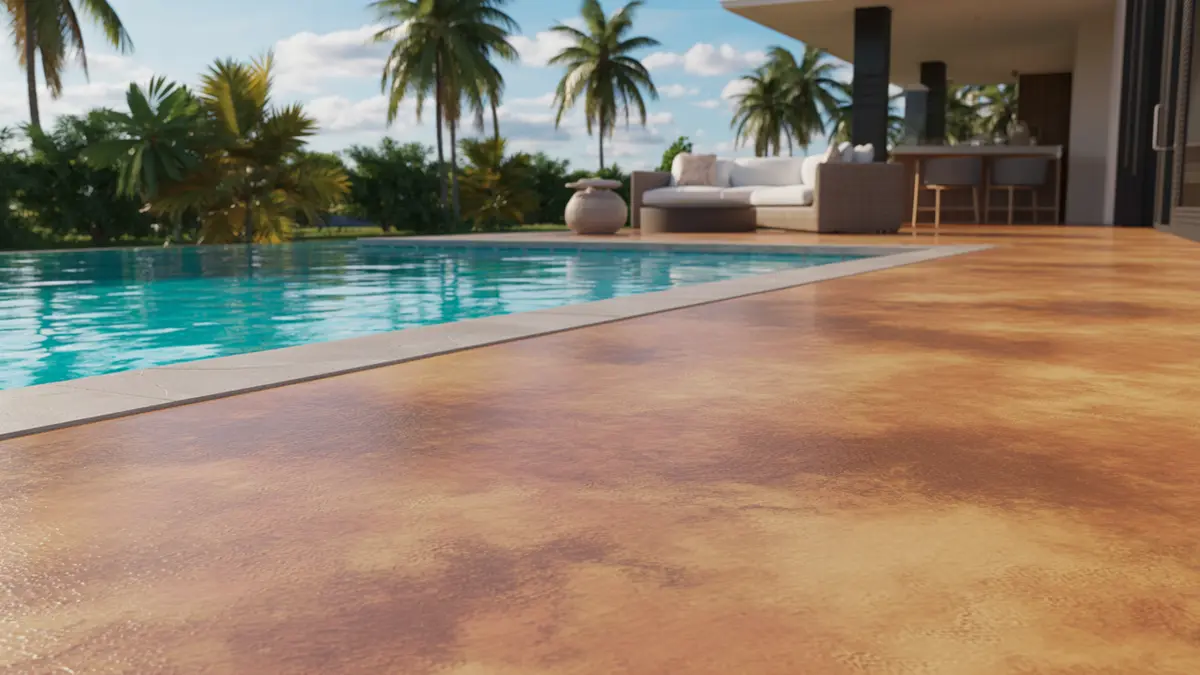
A condo or HOA pool deck is one of the most visible, most used and most scrutinized surfaces a board manages. Residents notice every crack, stain and hot spot, and a slip near the pool edge can turn into a claim against the association. In South Florida, sun, salt air and chlorinated water speed up wear, so boards often face resurfacing sooner than expected. This guide walks board members and property managers through the decisions that matter: what is actually failing, what has to be repaired first, how Florida's condo safety reforms fit in, how to choose a coating system, how to write a bid spec and what a realistic budget looks like.
Why Community Pool Decks Wear Out Faster
A backyard pool deck might see a family and a few guests on weekends. A community deck sees hundreds of residents, guests, maintenance carts, furniture being dragged and daily cleaning. Every one of those uses adds abrasion and point loads, and South Florida's climate adds several stresses on top of that. Understanding the cause of the damage helps the board pick a system that addresses it rather than simply covering it.
- Foot traffic and furniture: heavy lounge chairs scrape coatings and wear through texture in high-use zones.
- Chlorine and pool chemicals: splash-out bleaches and softens older acrylic and paint-type finishes near the coping.
- Salt air: on coastal properties, airborne chlorides migrate into porous concrete and attack embedded steel.
- UV exposure: year-round sun breaks down coatings that are not UV-stable, causing chalking and fading.
- Heat cycling: sun-baked concrete expands by day and contracts at night or after storms, opening hairline cracks that let water in.
- Rebar corrosion: once water and chlorides reach the reinforcing steel, rust expands and pops off pieces of concrete, which is called spalling.
The last two items matter most on coastal condo buildings. Cosmetic wear can be fixed with a new coating. Corroding rebar cannot, and coating over it only hides a problem that will keep growing underneath until it becomes more expensive to fix. That is why any responsible resurfacing project on a community deck starts with an honest assessment of the concrete.
Repair the Concrete First: Spalling, Cracks and Rebar
Before a board compares coating colors, it needs to know the condition of the slab. A qualified contractor should sound the deck with a hammer or chain drag to find hollow or delaminated areas, map cracks, check for rust staining and note any areas where water ponds. Small, shallow spalls and non-structural cracks are routine surface prep: the loose concrete is cut out, exposed steel is cleaned and treated, and the area is patched with a compatible repair mortar before the new system goes down.
Deeper spalling, widespread rust staining, cracks that keep moving, deflection, or any deck that sits over a garage, parking level or occupied space is a different conversation. Those conditions can point to structural issues, and they need to be evaluated by a licensed engineer who can specify the repair method and sign off on it. A coating contractor should apply the finish system after that work, not substitute for it.
Rule of thumb for boards: if a contractor offers to coat over rust stains, open spalls or moving cracks without mentioning repairs or an engineer, treat that as a red flag. The coating is only as durable as the concrete underneath it.
Request a Free QuoteFlorida's Condo Safety Reforms and Your Pool Deck
After the 2021 Surfside collapse, Florida enacted condominium safety legislation in 2022, with follow-up changes in 2023. Among other things, these reforms introduced milestone structural inspections and structural integrity reserve studies for many condominium buildings. Depending on how a deck is built and what it sits on, pool decks and related concrete elements may come up in those inspections or reserve studies. The Florida Department of Business and Professional Regulation condominium resources page is a good official starting point for board members who want to understand the framework.
Because the rules are detailed and apply differently from building to building, boards should confirm with their engineer and association attorney how the requirements affect deck and concrete repairs, how the work should be documented, and how it should be reflected in reserves. A good resurfacing contractor will coordinate with your engineer, follow the repair scope they specify and provide clear records of what was done, but should not be giving the board legal advice.
Resurface or Replace? How Boards Should Decide
Most community pool decks in South Florida do not need full demolition. If the slab is structurally sound and the problems are surface wear, cosmetic cracking, failed old coatings or isolated spalls, resurfacing with a modern system is usually the most practical and cost-effective path. Replacement becomes the better option when the engineer finds widespread deterioration, when the slope is so wrong that water cannot drain, or when repairs would cover so much of the deck that new concrete makes more sense.
- Resurfacing usually makes sense when the slab is sound, drainage works, damage is localized and the existing coating can be fully removed or properly bonded to.
- Replacement is worth evaluating when the engineer identifies extensive delamination or corrosion, when the deck has chronic ponding or settlement, or when it sits over occupied space with active leaks.
- A hybrid approach is common: structural repairs and partial concrete replacement in problem areas, followed by one continuous coating system over the entire deck.
Slip Resistance, Heat and Liability
Slip resistance is not optional on a community deck. Wet-area surfaces need enough texture to provide traction for bare feet without being so aggressive that they scrape skin or trap dirt. With polyurea and polyaspartic systems, traction comes from broadcast aggregate or texture built into the finish, and the amount can be adjusted for wet zones near the coping, steps and showers versus drier lounge areas. Boards should also think about accessible routes, transitions and edges at a high level, and ask their design professional or attorney about ADA and slip-resistance considerations that apply to their property. Clear, consistent texture across the deck helps reduce liability exposure.
Cool-Deck Reflective Systems
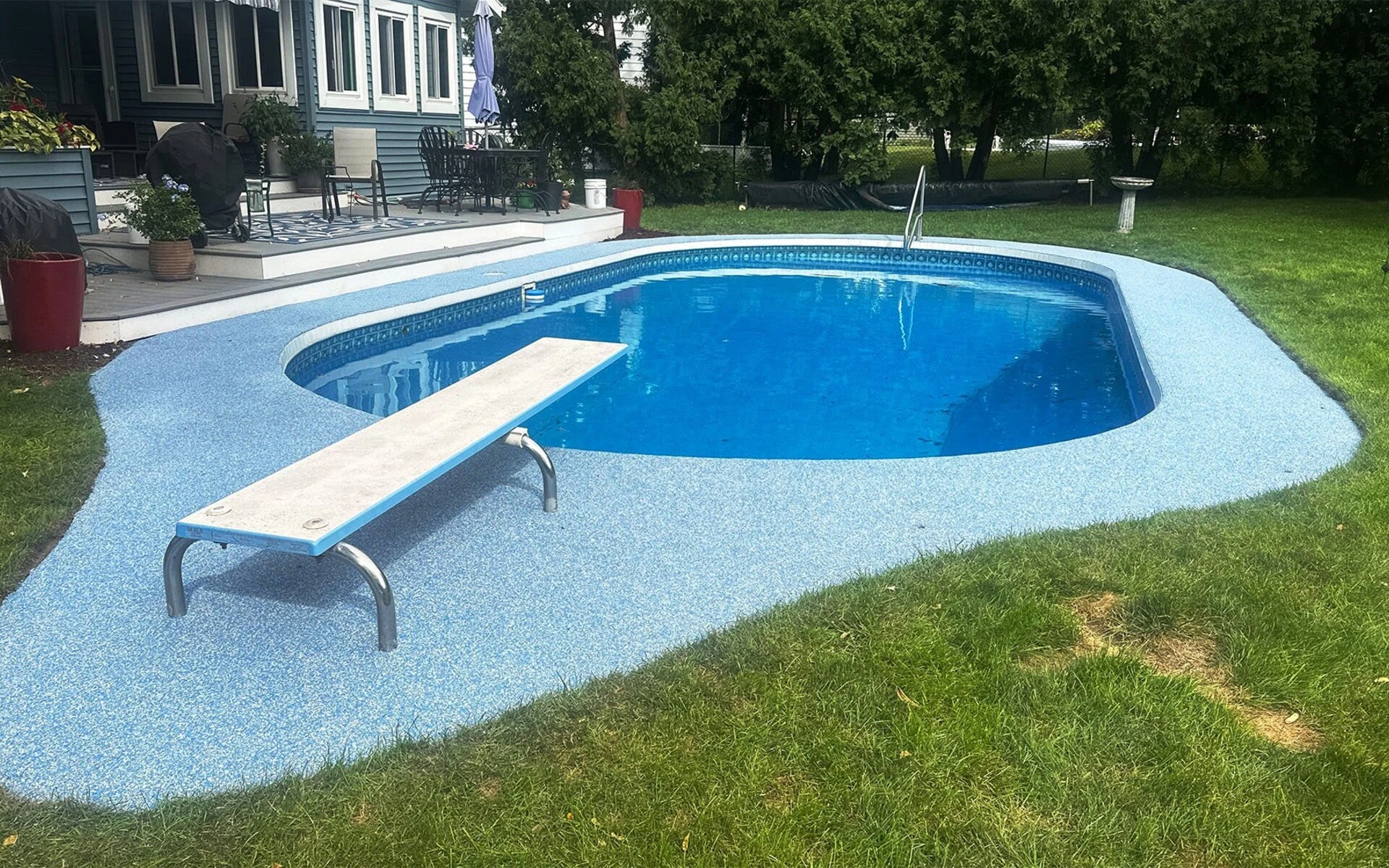
Heat is the complaint boards hear most often in summer. Light-colored, reflective cool-deck finishes stay noticeably more comfortable underfoot than dark or plain concrete, which matters for residents and for children around the pool. Our pool deck flooring systems pair UV-stable polyaspartic topcoats with textured, light-toned finishes designed for Florida sun. For a deeper comparison of coating chemistries, see our guide to the best pool deck coatings for South Florida sun and salt air.
Keeping Residents Happy During the Project
Closing the pool entirely is the fastest way to generate complaints, so ask bidders how they would phase the work. On many decks, the area can be divided into sections so that part of the deck and the pool remain usable while one zone is prepped, repaired and coated. Phasing adds some time and coordination, but it keeps amenities available and avoids a single long closure during peak season. Clear barriers, signage and a defined access path for residents are part of a professional phasing plan.
Residents will also want to know about noise, odor and cure time. Grinding and concrete repair are the loudest steps, so schedule them within the building's permitted work hours and give advance notice. Some coating products have a noticeable odor during application, which matters for units directly above or beside the deck. Polyaspartic and polyurea systems typically cure faster than traditional coatings, allowing foot traffic sooner, but your contractor should confirm the exact return-to-service times for the specific products used and the expected weather.
How to Write a Bid Spec and Compare Proposals
The most common mistake boards make is comparing three proposals that describe three different projects. A short written bid specification fixes that by making every contractor price the same scope. If your engineer has issued a repair scope, attach it. Then require each bidder to address every item below, in writing, so the proposals can be compared line by line.
- Measured square footage, including steps and coping bands, and any exclusions.
- Surface preparation method, such as diamond grinding or shot blasting, and removal of the existing coating.
- Unit pricing for spall and crack repair, and how quantities beyond the allowance are billed.
- The full coating system by product and layer: primer, base coat, texture or aggregate, and topcoat.
- Slip-resistance approach for wet areas and consistent texture across phases.
- Phasing plan, working hours, barriers and return-to-service times.
- Licensing, general liability and workers' compensation insurance, with the association named as additional insured.
- Written contractor and manufacturer warranty terms, including exclusions.
- References from comparable community or commercial pool deck projects.
When proposals come back, look past the bottom line. A low bid that skips grinding, uses a single thin coat or treats repairs as an afterthought will usually cost the association more over the life of the deck. Contractors with commercial flooring experience understand association insurance, resident communication and documentation, which makes the entire project far easier for property managers and boards.
What Community Pool Deck Resurfacing Costs
As a broad range, resurfacing a community pool deck in South Florida often falls roughly between $5 and $12 per square foot. Where a project lands in that range depends on the condition of the concrete, how much spall and crack repair is needed, whether an old coating must be removed, the coating system and number of layers, the amount of texture, access for equipment and how the work is phased. Engineered structural repairs and any concrete replacement are typically priced separately. For reserve planning, ask contractors to separate surface prep, concrete repairs and the coating system into their own line items, which makes bids easier to compare and the expense easier to explain to owners.
Maintenance Schedule for Condo and HOA Pool Decks
- Daily or weekly: rinse with fresh water to remove chlorine splash-out, salt residue and sunscreen.
- Monthly: clean with a pH-neutral cleaner and check that drains are clear and water is not ponding.
- Quarterly: walk the deck to look for new cracks, rust staining, hollow-sounding areas and worn texture near the coping.
- Annually: have the contractor inspect the coating, touch up worn areas and confirm slip resistance in wet zones.
- Every few years: plan a maintenance topcoat before base layers are exposed, and share concrete observations with your engineer and reserve study.
Frequently Asked Questions
How long does a condo pool deck resurfacing project take?
It depends on deck size, the amount of concrete repair and whether the work is phased. A straightforward deck with minimal repairs can move quickly, while a large deck with engineered repairs and phasing will take longer. Ask each bidder for a written schedule that shows prep, repair, coating and cure time for each phase, plus how weather delays will be handled.
Can we keep the pool open during the work?
Often, yes, at least partially. Many community decks can be divided into zones so residents keep access to the pool and part of the deck while one section is under construction. The contractor should provide barriers, signage and a safe access route, and the board should confirm any health department or insurance requirements that apply to operating the pool during work.
Is polyaspartic or polyurea better than acrylic cool deck for a community pool?
For high-traffic community decks, polyurea and polyaspartic systems are generally more abrasion- and chemical-resistant than traditional acrylic finishes, and UV-stable polyaspartic topcoats resist fading in Florida sun. The right choice depends on the condition of the slab, budget and the look the board wants, so ask bidders to explain in writing why they recommend a specific system for your deck.
Do we need an engineer before resurfacing?
If there is significant spalling, rust staining, moving cracks, leaks below the deck, or the deck sits over a garage or occupied space, involve a licensed engineer before any coating work so repairs are properly specified. Boards should also ask their engineer and attorney whether the deck falls within the scope of the building's milestone inspection or structural integrity reserve study.
How do we compare bids fairly?
Issue one written scope, ideally with the engineer's repair plan attached, and require every bidder to price the same square footage, preparation method, repair approach and coating layers. Then compare unit prices for repairs, warranty terms, insurance, phasing plans and references from similar community projects, not just the total price. Invite the top bidders to walk the deck with your manager before the board votes.
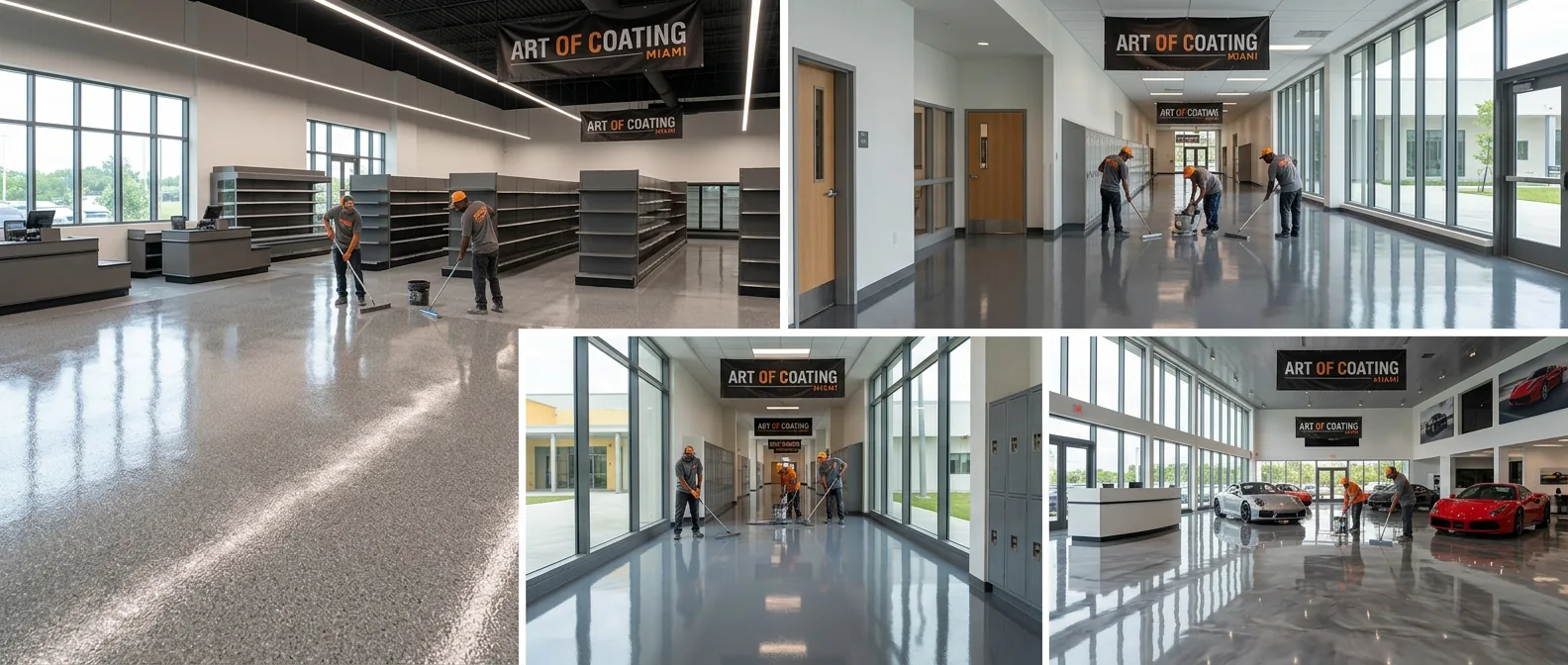
Art of Coating Miami is a licensed and insured, BBB A+ rated floor coating contractor based in Fort Lauderdale, resurfacing pool decks for condominium associations, HOAs and homeowners across Miami-Dade, Broward and Palm Beach counties. We work alongside your engineer and management team, provide clear line-item proposals and phase projects to keep amenities open where possible. Property managers can request a site assessment and proposal or call (786) 618-4877 to schedule a walk-through of your community's pool deck.
Last updated: October 2026