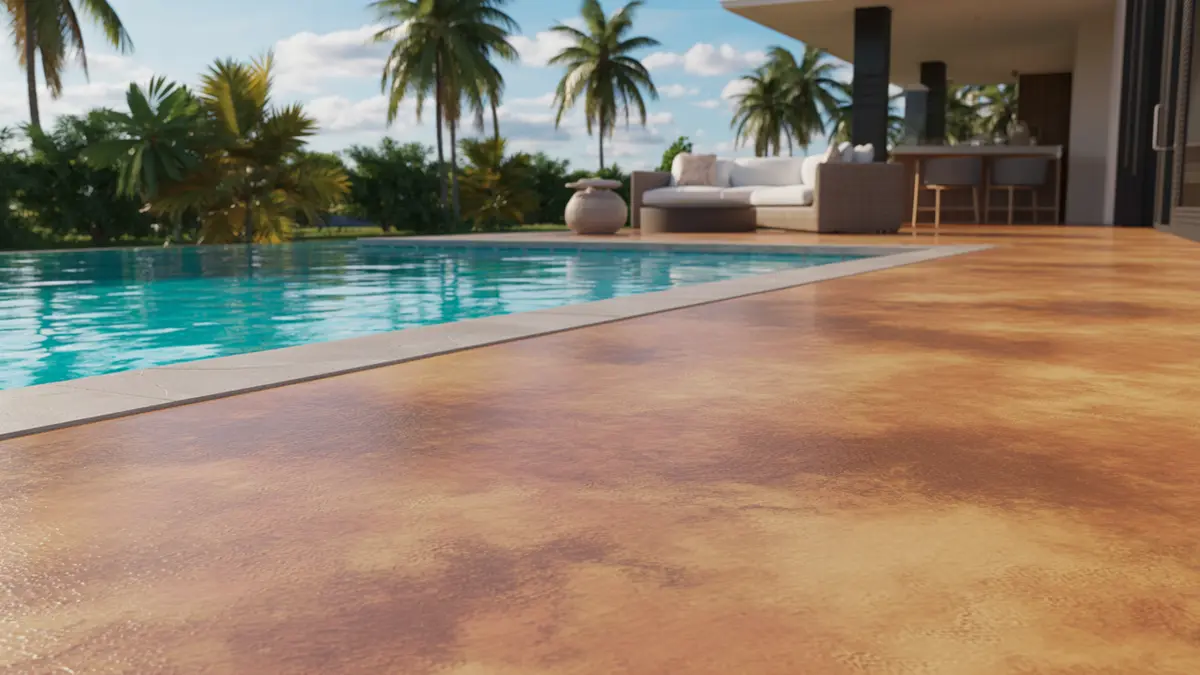
A pool deck in South Florida lives in one of the harshest outdoor environments in the country. Between UV that pushes surface temperatures past 90°F, salt air rolling off the coast, chlorinated splash-out, sunscreen, and sudden downpours on hot concrete, an unprotected or poorly coated deck cracks, fades, chalks, and turns slick within a few seasons. Choosing the right coating is not about picking a color — it is about picking a system that can actually survive sun and salt for years. This guide ranks the best pool deck coatings for South Florida conditions, explains what separates them, and shows what to look for before you sign a contract. For the systems we install, start with our pool deck coating page.
What South Florida Sun and Salt Actually Do to a Pool Deck
Two forces do most of the damage here, and they attack differently. Ultraviolet radiation breaks down the chemical bonds in many coatings, causing them to yellow, chalk, and lose adhesion — a process that can start within months on a sun-exposed deck. Meanwhile, chloride-rich salt air (and the chlorine from the pool itself) works into porous concrete and any weak coating film, corroding and degrading it from the surface down. Add a high water table pushing moisture vapor up through the slab from below, and thermal shock from a cool rainstorm hitting a baking deck, and you have four separate failure modes hitting the same surface at once.
That is why a coating that performs beautifully in a dry, temperate climate can fail fast in Miami, Fort Lauderdale, or the barrier-island communities. The best pool deck coatings for South Florida are the ones specifically engineered against all four forces — not just the prettiest sample in the showroom.
What to Look for in a South Florida Pool Deck Coating
Before comparing product types, judge every option against the criteria that actually matter in this climate:
- UV stability: aliphatic chemistry that will not yellow or chalk in direct sun
- Salt and chlorine resistance: a dense, non-porous film that shrugs off coastal air and pool chemistry
- Cool-touch performance: reflective pigments so the deck is barefoot-comfortable at peak sun
- Slip resistance: a fine-aggregate texture for reliable wet-area grip
- Moisture tolerance: proper prep and vapor mitigation so the coating will not blister from below
- A written warranty: proof the installer stands behind the prep, not just the product
The Best Pool Deck Coatings, Ranked for Sun & Salt Air
1. Polyaspartic / Polyurea — Best Overall
For South Florida, polyaspartic (and its polyurea cousin) is the top choice, and it is what we install most. Its aliphatic chemistry is inherently UV-stable, so it does not yellow or fade in the sun; its dense, non-porous film resists salt air, chlorine, and pool chemicals; and it stays flexible enough to handle thermal movement without cracking. It also cures fast — most decks are back in use within about a day — which matters for busy homes and rentals. Applied with a fine-aggregate broadcast, it delivers excellent wet grip while staying cool and comfortable underfoot. The trade-off is cost: it sits at the higher end of the range, but for a coastal, sun-exposed deck it is the system most likely to still look new in five years. See how we apply it on our polyaspartic floor coating page.
2. Textured Cool-Deck / Acrylic Systems
Acrylic-based cool-deck systems (including knockdown and textured overlays) are a popular, budget-friendlier option that genuinely excels at one thing: staying cool. Their textured, reflective surface keeps bare feet comfortable and provides good slip resistance. The caveat for South Florida is durability — acrylics are thinner and more porous than polyaspartic, so they need more frequent resealing and are more vulnerable to salt and chlorine over time. They are a solid mid-tier choice for shaded or lower-traffic decks, or for homeowners who prioritize a cool, textured feel and are comfortable with a periodic maintenance recoat.
3. Epoxy — Great Indoors, Risky on an Open Deck
Epoxy is a superb garage and interior floor system, but on an open, sun-exposed pool deck it comes with a real caveat: standard epoxy contains aromatic compounds that yellow and chalk under UV, sometimes within a single season. It can work on a pool deck only when it is used as a base coat under a UV-stable polyaspartic topcoat — the hybrid approach — so the epoxy provides build and adhesion while the polyaspartic protects it from the sun. On its own, uncoated by a UV-stable topcoat, epoxy is the wrong pick for a Florida deck. If you love epoxy’s look, ask specifically for a polyaspartic-topcoated system.
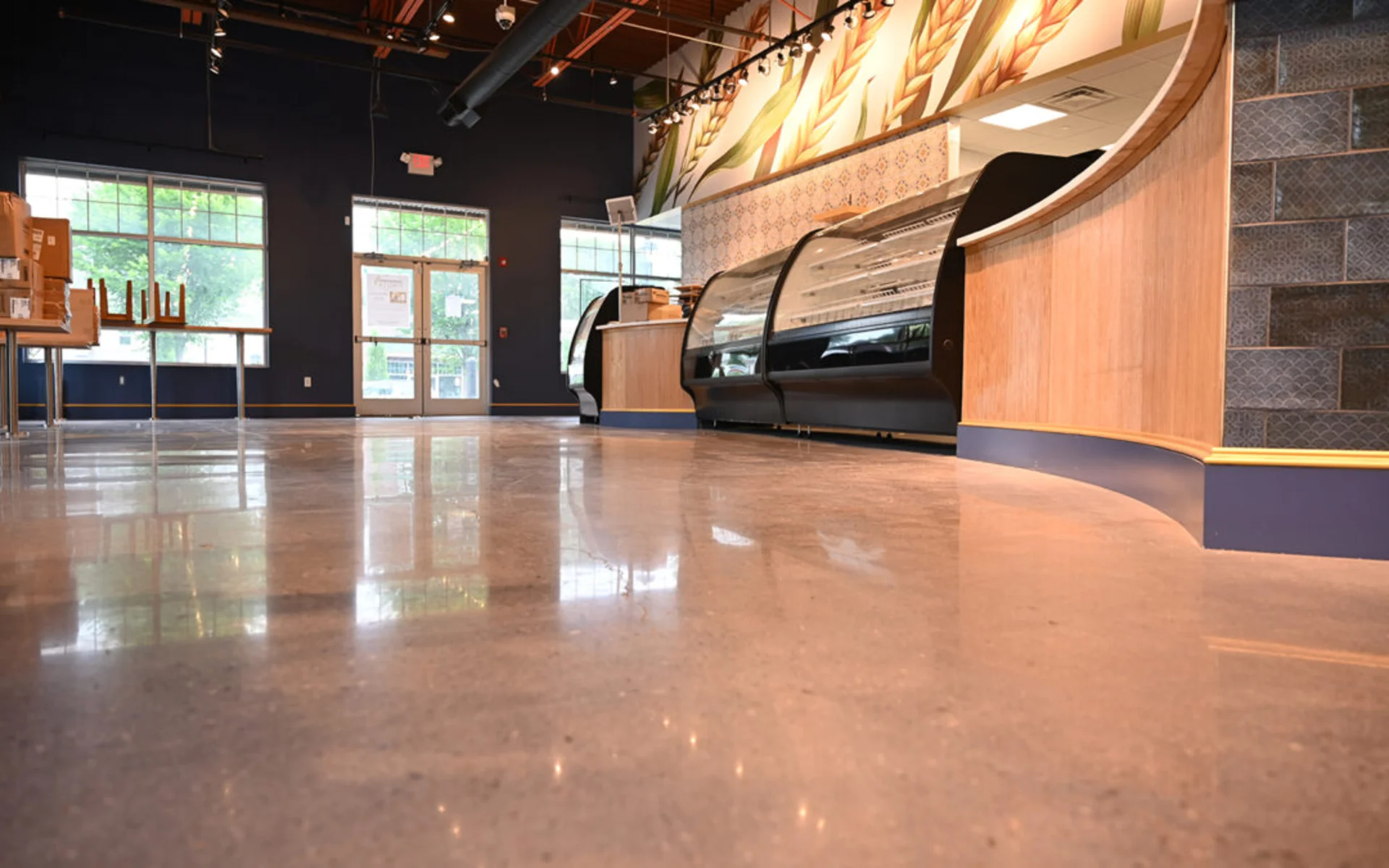
4. Polished or Stained Concrete
Decorative concrete — stained, dyed, or lightly polished with a sealer — offers a natural, high-end look with no coating film to peel. It can be a beautiful choice, but for a pool surround it needs a slip-resistant, UV-stable sealer and regular resealing to hold up to salt and chlorine, and it does not deliver the cool-touch benefit of a reflective textured coating. It shines for modern, design-forward patios adjacent to the pool more than for the wet splash zone right at the water’s edge.
What About Pavers and Travertine?
Pavers and travertine look great but bring grout and joint lines that harbor mildew, shift, and pop loose in South Florida’s heat and moisture — and individual pieces can get hot and slick. A seamless, textured coating over a sound base avoids those issues, which is why many homeowners resurface an aging paver deck rather than replace it. When the existing pavers are structurally fine, resurfacing over them is faster and far less expensive than a tear-out.
How Much Does a Pool Deck Coating Cost in South Florida?
Most residential pool deck coating and resurfacing projects in South Florida fall in these installed ranges (materials, prep, and labor included):
- Textured acrylic / cool-deck systems: $3–$7 per sq ft
- Polyaspartic / polyurea systems: $5–$10 per sq ft
- Decorative stained or polished concrete: $5–$12 per sq ft depending on design
- A typical residential deck resurfaced over existing concrete or pavers: a few thousand dollars, versus far more for a full tear-out and re-pour
Resurfacing over your existing surface is what keeps the number reasonable — you avoid demolition and a new pour. For a deeper breakdown of what drives coating pricing, see our guide on epoxy flooring cost per square foot in South Florida.
Why Professional Prep Matters More Than the Product
Here is the truth most sales pitches skip: the coating you choose matters less than how the deck is prepared. The majority of failed pool decks we are called to fix were not product failures — they were prep failures. A quality installer pressure-cleans, repairs cracks and spalling, profiles the concrete to a recognized standard such as ASTM D4258 (see ASTM International), and tests for and mitigates moisture before a single coat goes down. Slip safety is engineered in, not assumed — the National Floor Safety Institute attributes most pool-area injuries to slick surfaces, so the right aggregate and texture are part of a professional spec. Cutting those steps to hit a lower price is exactly why bargain decks fail in a season.
The Bottom Line
For most South Florida pool decks, a polyaspartic (or epoxy-base-plus-polyaspartic hybrid) system is the best all-around choice: UV-stable, salt- and chlorine-resistant, cool, slip-safe, and fast-curing. Textured acrylic cool-deck systems are a good value for shaded or lower-traffic decks, and decorative concrete suits design-forward patios away from the splash zone. Whatever you choose, insist on proper surface prep, moisture mitigation, real slip texture, and a written warranty. Explore the systems we install on our pool deck coating page, or see our work in your area — from Miami Beach to Fort Lauderdale.
Want a recommendation for your specific deck? Art of Coating Miami offers free on-site consultations across Miami-Dade, Broward, and Palm Beach. Call (786) 618-4877 and we will assess your surface, sun exposure, and salt exposure and send a written estimate within 24 hours.
Request a Free QuoteSlip Safety: The Spec That Matters Most
Around water, traction outranks every other feature. The best pool deck coating in the world is a liability if it turns slick when wet, which is why professional installers engineer slip resistance into the finish with a fine broadcast aggregate rather than hoping for it. The National Floor Safety Institute ties the majority of pool-area injuries to slippery walking surfaces, so a proper texture is not an upgrade, it is a core part of the spec. We balance that grip against barefoot comfort so the deck is genuinely safe without being harsh on skin and swimsuits. See the systems we broadcast on our pool deck flooring page.
Color and Texture for a Cooler Deck
In full South Florida sun, color is a comfort and safety decision. Light, reflective tones such as sand, pale gray, and soft terracotta stay markedly cooler underfoot than dark charcoals or deep blues that soak up solar heat all afternoon. The texture does double duty: a fine aggregate provides the wet traction above while also diffusing glare off the surface. Choosing the right combination means you can walk the deck barefoot at midday without wincing, which matters as much to daily enjoyment as any durability rating on a product sheet.
- Light, reflective colors stay cooler for bare feet at peak sun
- Fine broadcast aggregate delivers wet grip without harshness
- UV-stable chemistry prevents the fading and chalking sun causes
- Seamless coatings avoid the hot, slick joints of pavers and tile
Maintenance and Recoat Timelines
How long a pool deck looks new depends on both the system and the upkeep. Acrylic cool-deck finishes are cost-effective but need recoating every few years under intense UV, while polyaspartic systems hold color and performance far longer before a light maintenance recoat is due. In every case, rinse salt and chlorine residue off regularly so they never concentrate, sweep away abrasive sand, and clean with a pH-neutral product rather than harsh acids. That simple routine stretches the interval between recoats and keeps both traction and color intact for years.
Resurfacing a sound existing deck avoids demolition and permitting, so a cooler, safer, UV-stable surface usually costs a fraction of tearing out and re-pouring the concrete.
Request a Free QuoteIt is worth remembering why prep decides the outcome. The majority of failed pool decks we are called to fix were not product failures but prep failures, decks coated over dirt, cracks, or a wet slab to hit a lower price. A quality installer pressure-cleans, repairs spalling, profiles the concrete, and tests for moisture before the first coat, which is exactly what keeps a premium system from peeling in its first summer by the water.
Knowing when to resurface rather than patch also protects your investment. Hairline cracks that keep widening, chalky or peeling color, hollow-sounding spots underfoot, and a surface that has turned slick despite cleaning are all signs a deck has reached the end of its current finish. Addressing those early, while the underlying slab is still sound, keeps the project in resurfacing territory instead of a full tear-out. Wait too long and water works into the cracks, undermining the concrete and turning an affordable weekend refresh into a major rebuild. A quick annual look at your deck, especially after storm season, is the easiest way to catch problems while they are still inexpensive to fix.
For most South Florida decks the winning formula is a UV-stable, salt-resistant polyaspartic or hybrid system, finished in a light color with engineered slip texture and backed by proper prep and a written warranty. If you want a recommendation tailored to your deck's sun and salt exposure, request a free on-site estimate through our contact page, or see how we handle coastal conditions across the Fort Lauderdale and Boca Raton areas.
Last updated: October 2026