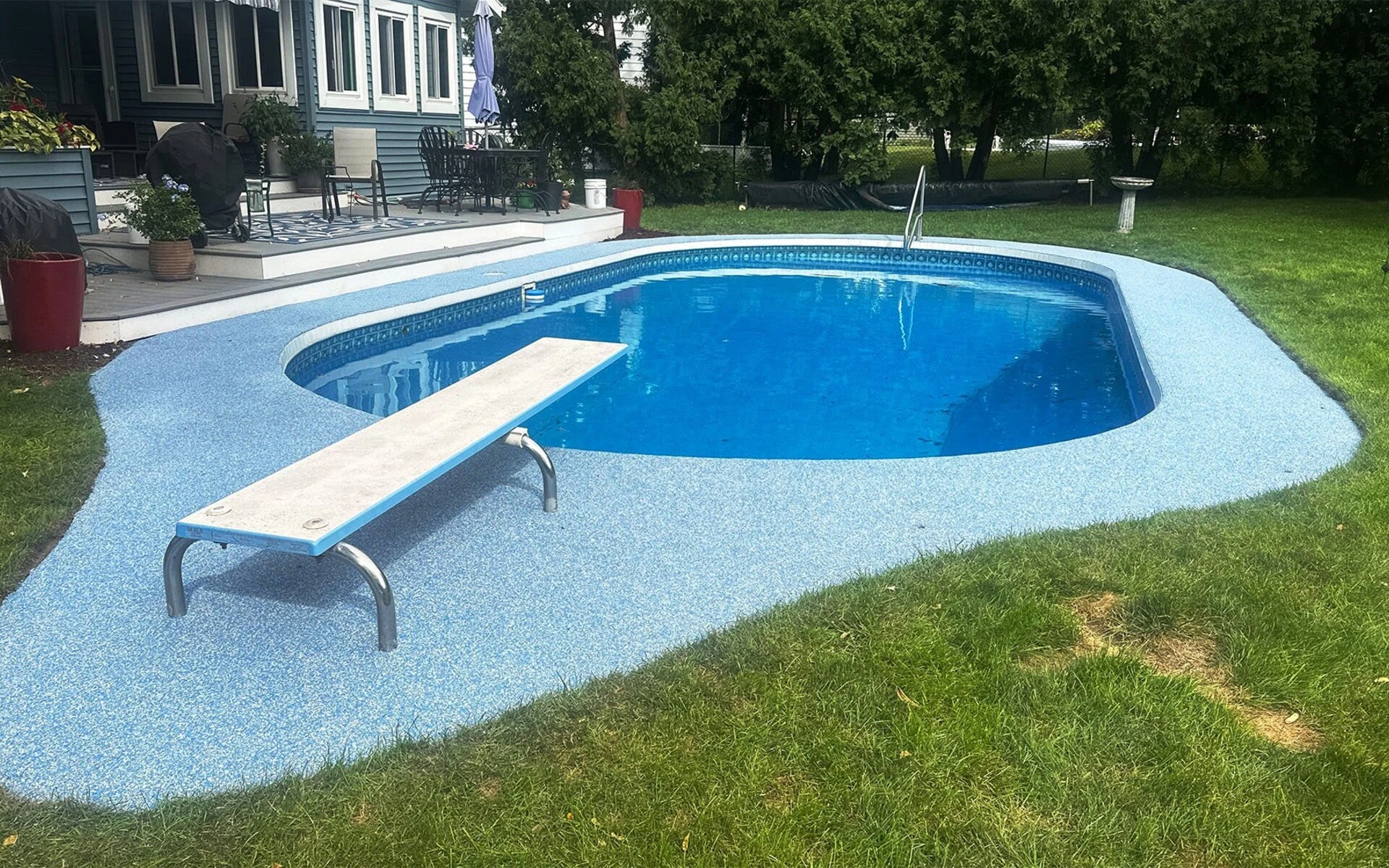
Almost every call we get about a slippery floor starts the same way: someone already fell, or nearly did. In South Florida that usually means a pool deck after an afternoon storm, a glossy garage floor that turns slick when a car drips rainwater, or a restaurant line where grease and mop water meet. The good news is that slip resistance can be engineered into a coating from day one. The catch is that no single non-slip product works everywhere. The right answer depends on what gets on the floor, who walks on it, what they wear on their feet and how the surface will be cleaned.
Why South Florida Floors Get Slippery
Raw, broom-finished concrete has decent grip. Problems start when it gets sealed, polished or coated with a smooth film, and then something sits between the shoe and that film. In our climate there is almost always something there, often several things at once, and most of them are invisible until someone slips. The contaminants behind most slips we see in Miami-Dade, Broward and Palm Beach fall into a handful of categories.
- Rain and standing water on decks, driveways and garage aprons.
- Condensation when humid air meets a cooler slab in air-conditioned garages and warehouses.
- Pool splash and wet feet carrying water well beyond the coping.
- Sunscreen and body oils that form a greasy layer water will not rinse away.
- Kitchen grease and food soil spread around by mops.
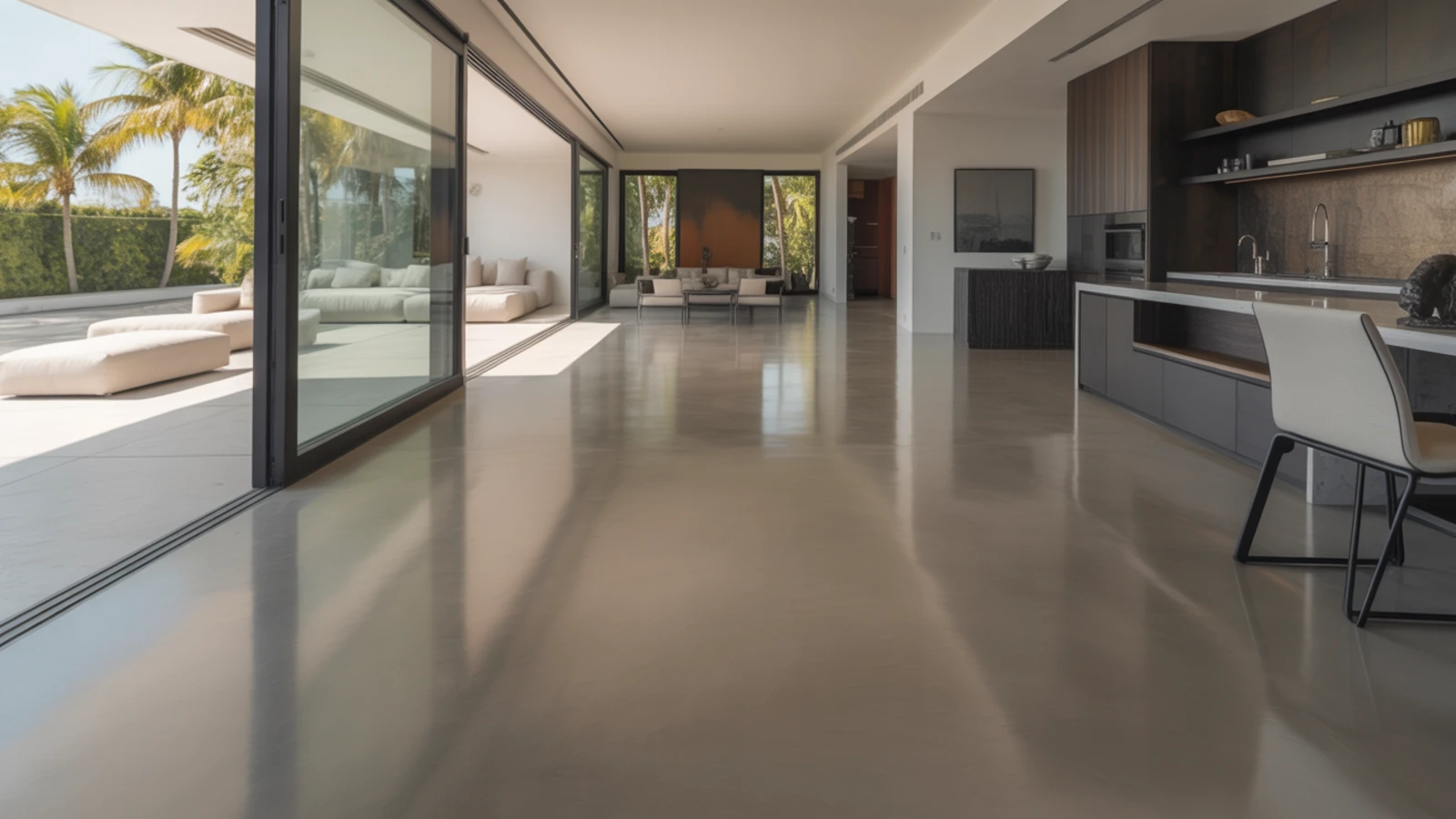
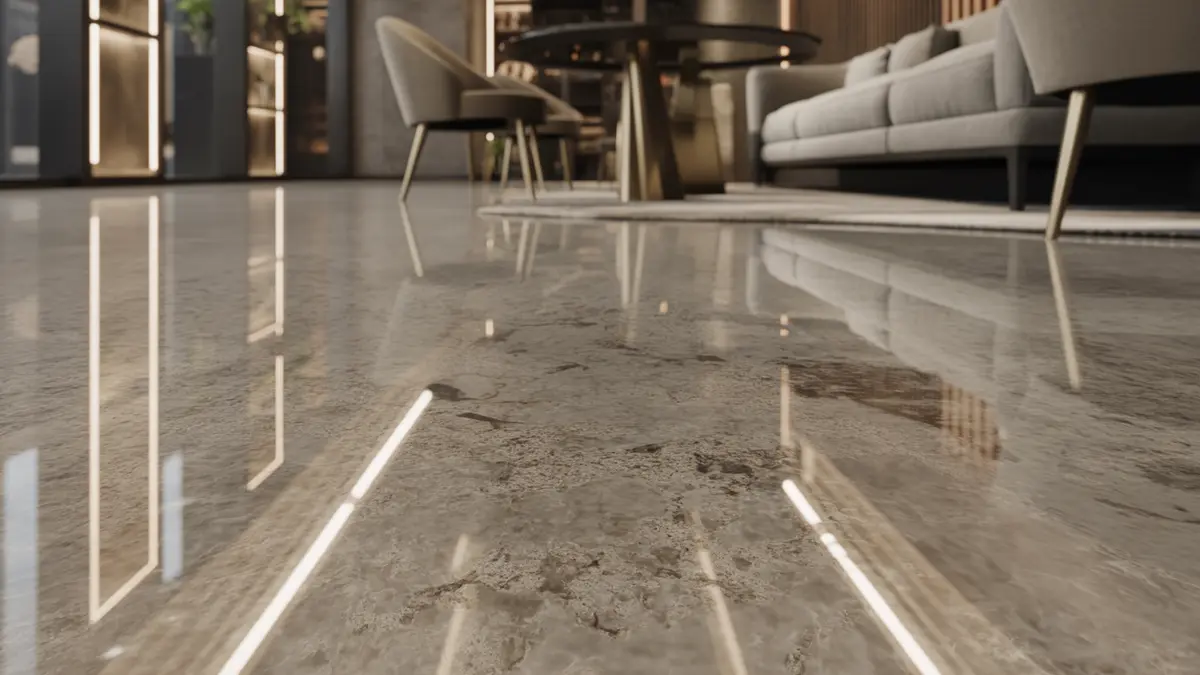
- Smooth sealed concrete, such as high-gloss sealer or untextured epoxy, that turns slick with any of the above on top.
The combination matters more than any single factor. A glossy floor that is dry is usually fine, and a textured floor with a little water is usually fine. A glossy floor with water and sunscreen, or grease and mop water, is where people go down. Our job is to break that combination by giving the surface enough texture to push through the contaminant layer and make real contact with the shoe or foot.
How Slip Resistance Is Built Into a Coating
In a professional system, slip resistance is designed into the build rather than sprinkled on at the end. Most of the time that means broadcasting a hard aggregate into a wet coat, or blending a fine grit into the topcoat, so the cured surface has a consistent texture that does not wear off in a few months. The aggregate you choose drives how aggressive the texture feels and how long it lasts.
- Aluminum oxide: very hard and wear-resistant. Our go-to for kitchens, ramps and high-traffic commercial floors.
- Silica or quartz sand: a cost-effective, sharp texture for full-broadcast systems; colored quartz doubles as decoration.
- Polymer grit: softer, rounded beads for barefoot or light-traffic areas, though it wears faster than mineral aggregate.
- Flake texture: a full broadcast of vinyl flakes leaves a mild profile under the clear topcoat.
- Textured topcoats: polyaspartic or urethane topcoats with grit mixed in to fine-tune grip.
The biggest decision is grit size, and it is always a trade-off. Coarser grit grips better when the floor is wet or greasy, but it traps dirt, is harder to mop and can feel rough on bare skin. Finer grit cleans easily and feels smoother, but gives less margin when contamination gets heavy. We also control how much of the aggregate the topcoat covers, because grit that is fully encapsulated feels smoother than grit standing proud of the surface.
Recommended Texture by Area
Pool Decks
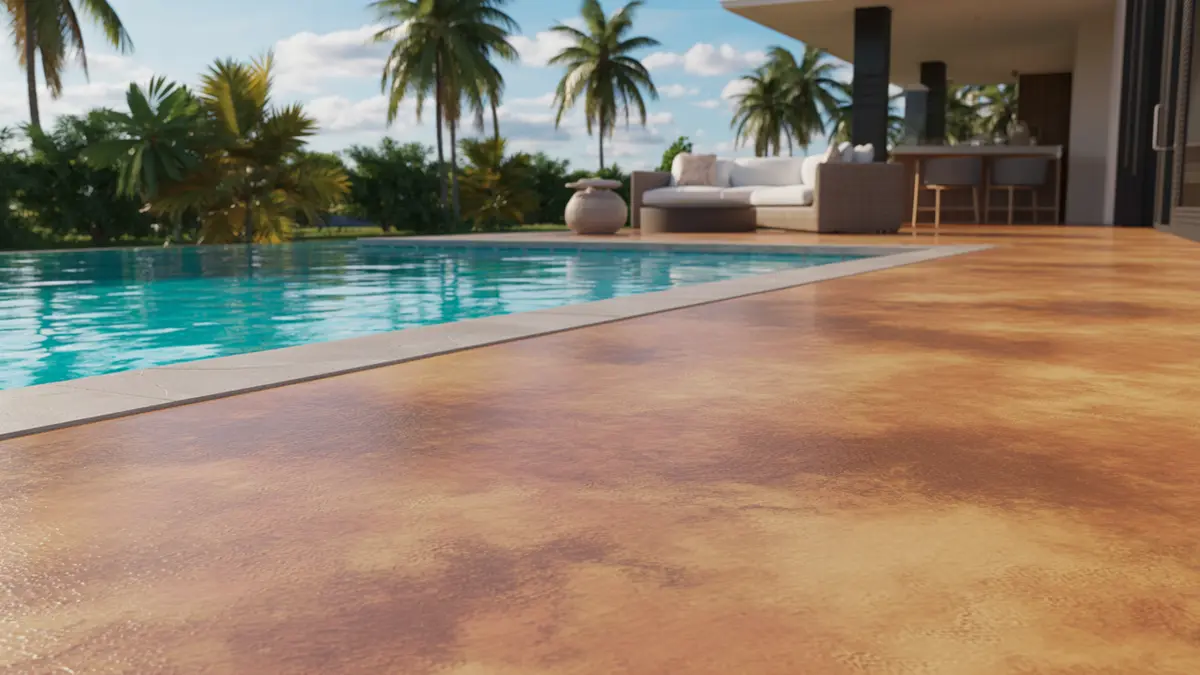
Pool decks need grip for wet bare feet without feeling like sandpaper. We typically use a UV-stable polyaspartic or a cementitious deck system with fine-to-medium aggregate, keeping texture consistent right up to the coping where people step out of the water. Drainage slope matters as much as the coating, because ponding water is a hazard on any surface. Our pool deck flooring page covers the system options and how they handle sun, heat and salt air.
Garages
A non slip garage floor has to handle rainwater dripping off cars, the occasional oil spot and people walking in socks or flip-flops from the house. A full-broadcast flake system with a polyaspartic topcoat already has some texture, and adding fine aluminum oxide or polymer grit to the final coat gives meaningful extra grip without making the floor hard to sweep. See our garage flooring options for finishes.
Commercial Kitchens and Restaurants
Kitchens are the most demanding floors we coat. Grease, hot water, steam, thermal shock from washdowns and constant traffic all hit at once. Urethane cement is usually the right base because it tolerates heat and moisture, and we broadcast a medium-to-coarse aggregate into it for real wet-and-greasy traction. Texture often varies by zone, heavier at the fryer line and dish area and finer in dry storage. Our restaurant flooring systems are built around exactly these conditions.
Warehouses and Loading Docks
Here the concern is condensation and rain blowing in through open dock doors, plus forklift and pallet-jack traffic. Wheels need a surface they can turn on without chewing up tires, while people on foot need grip. We usually specify a medium aluminum oxide broadcast in walkways, dock aprons and ramps, with finer texture in forklift aisles. Safety striping and texture zones can be laid out together so the floor itself shows people where to walk.
Ramps and Stairs
Any slope amplifies a slippery surface, so ramps and stair treads get more aggressive texture than the flat floor around them. On stairs we focus on the nosings, where most slips start, and often add a contrasting color so the edge is easy to see. Ramps into pool areas, parking structures and building entries should be specified as their own zone rather than coated like the adjoining slab.
Showers and Locker Rooms
Barefoot, soapy and constantly wet, these spaces need texture that grips skin but can still be scrubbed clean. Fine aluminum oxide or polymer grit in a moisture-tolerant coating usually hits the balance. Soap scum and body oils behave a lot like sunscreen on a pool deck, so the cleaning plan matters as much as the texture, and drains and slope need to be right before any coating goes down.
Retail Entries
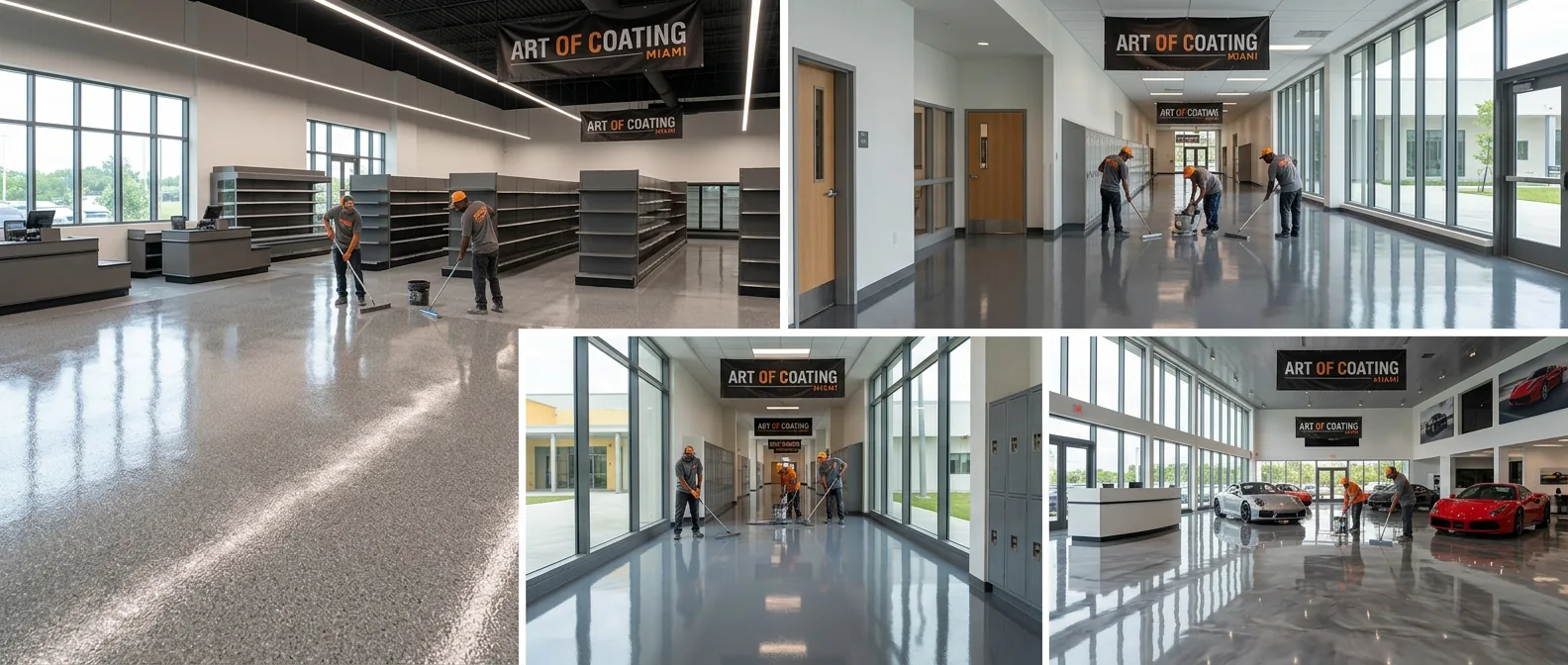
Store entrances in Miami see tracked-in rainwater for months of the year. We often keep the sales floor at a fine, easy-clean texture for appearance and add a heavier texture band in the first several feet inside the door, combined with walk-off matting. That keeps the polished look retailers want while addressing the zone where wet shoes actually meet the floor.
How Slip Resistance Is Measured
Slip resistance is usually expressed as a coefficient of friction, a measure of grip between a test material and the floor. For hard surfaces in the US, the commonly referenced method is wet dynamic coefficient of friction, or DCOF, measured with a calibrated tribometer that moves a standardized sensor across the floor while it is wetted with a test solution. ANSI A326.3 is the US standard that defines how wet DCOF is measured on hard surface flooring and how results relate to intended use.
Two practical points matter for owners. A result reflects the conditions tested, usually clean water, so a floor that tests well wet may behave differently with grease or sunscreen on it. And a lab result on a sample panel is not the same as a field test on your installed floor after months of wear. If slip resistance is a liability concern, ask for a field measurement after installation and periodically afterward, and keep the records.
Workplace Floors and OSHA's General Duty
OSHA's walking-working surfaces standards require employers to keep workplace floors clean, orderly and, as far as possible, dry, and free of hazards such as spills. Where wet processes are used, drainage and dry standing places are expected. A properly textured coating is one practical way to support that duty in kitchens, wash bays and warehouses, but it works alongside housekeeping, matting, drainage and footwear policies rather than replacing them.
Maintenance That Keeps Floors Non-Slip
The most common reason a textured floor becomes slippery again is not wear. It is the wrong cleaning routine. Residue gradually fills in the texture, and the floor loses its bite even though the grit is still there. We see this constantly in restaurants and on pool decks that were installed correctly but cleaned with the wrong products. A few simple habits make a large difference to how long a floor stays safe.
- Degrease regularly with a deck brush or auto-scrubber that reaches into the texture, then rinse with clean water.
- Avoid wax, polish and mop-and-shine cleaners, which leave a film slicker than the coating.
- Change mop water often so grease is not redeposited.
- Rinse pool decks periodically to remove sunscreen, salt and chemical residue.
- Re-texture worn traffic lanes with a fresh textured topcoat instead of replacing the full system.
DIY Anti-Slip Additives vs Professional Systems
Hardware stores sell anti-slip additives you stir into paint or sealer, and they do add some texture. The problems with DIY results are predictable. Grit settles in the can, so coverage is uneven. The base product is often a thin sealer or paint that wears through quickly in Florida sun, taking the texture with it. And without proper surface preparation the coating can peel, creating new hazards. For a small, low-risk area a DIY additive can be a reasonable stopgap.
A professional anti-slip epoxy or polyaspartic system starts with mechanical preparation, typically diamond grinding, so the coating bonds properly. Aggregate is broadcast or back-rolled at a controlled rate so texture is consistent, and the topcoat is chosen for UV stability, chemical resistance or heat tolerance depending on the space. For a pool deck, a business or any floor where a fall would be serious, that consistency is the point.
What Anti-Slip Adds to the Cost
On most projects, anti-slip aggregate is a modest part of the total cost. The bigger drivers are surface preparation, crack and joint repair, the coating system itself and the size and access of the area. Aggressive textures or multiple texture zones add a little more material and labor, but texture is rarely the line item that makes or breaks a budget. We include it as part of the system on every quote so there are no surprises.
Frequently Asked Questions
Can you make my existing epoxy floor non-slip without replacing it?
Often, yes. If the existing coating is well bonded and not peeling, we can clean it, abrade the surface so a new coat will stick, and apply a textured topcoat with aggregate. If the original coating is delaminating, has moisture problems or is badly worn, adding texture on top will not fix the underlying failure, and we will recommend removing it and starting over.
Will a non-slip coating be uncomfortable on bare feet?
It does not have to be. For pool decks, showers and other barefoot areas we use finer aggregate or polymer grit and control how much of it stands above the topcoat. The goal is a surface that grips a wet foot without feeling abrasive. We can show you texture samples before installation so you can feel the difference and choose.
Does anti-slip texture make floors harder to clean?
Somewhat, and the effect grows with grit size. A fine texture cleans almost as easily as a smooth floor with a mop or soft brush. Coarse texture in kitchens or on ramps is better cleaned with a stiff deck brush or auto-scrubber. That is why we match texture to the actual risk in each zone instead of putting the most aggressive grit everywhere.
Is a flake garage floor already slip resistant?
A full-broadcast flake floor has more texture than smooth, solid-color epoxy, and many homeowners find it perfectly adequate when the floor is dry. With water from a wet car or a storm, though, the clear topcoat can still feel slick. Adding fine anti-slip aggregate to the final topcoat is an inexpensive upgrade that noticeably improves grip without changing how the floor looks.
How long does the non-slip texture last?
It depends on traffic, cleaning methods and the aggregate used. Hard mineral aggregates like aluminum oxide outlast polymer grit, and residential floors keep their texture much longer than busy commercial lanes. Walk and check the high-traffic paths every few months. When they feel smoother than the rest of the floor, a refresh topcoat with new aggregate restores the texture before it becomes a problem.
Get a Non-Slip Floor Built for How You Use It
Art of Coating Miami is a licensed and insured floor coating contractor based in Fort Lauderdale, serving Miami-Dade, Broward and Palm Beach counties. Whether it is a pool deck that gets slick after every storm, a garage you want safer for the family or a commercial kitchen that needs real traction under grease and washdowns, we will look at how the floor is used and recommend the right texture and system. Call (786) 618-4877 or request your free estimate and we will walk the space with you and bring texture samples.
Last updated: October 2026