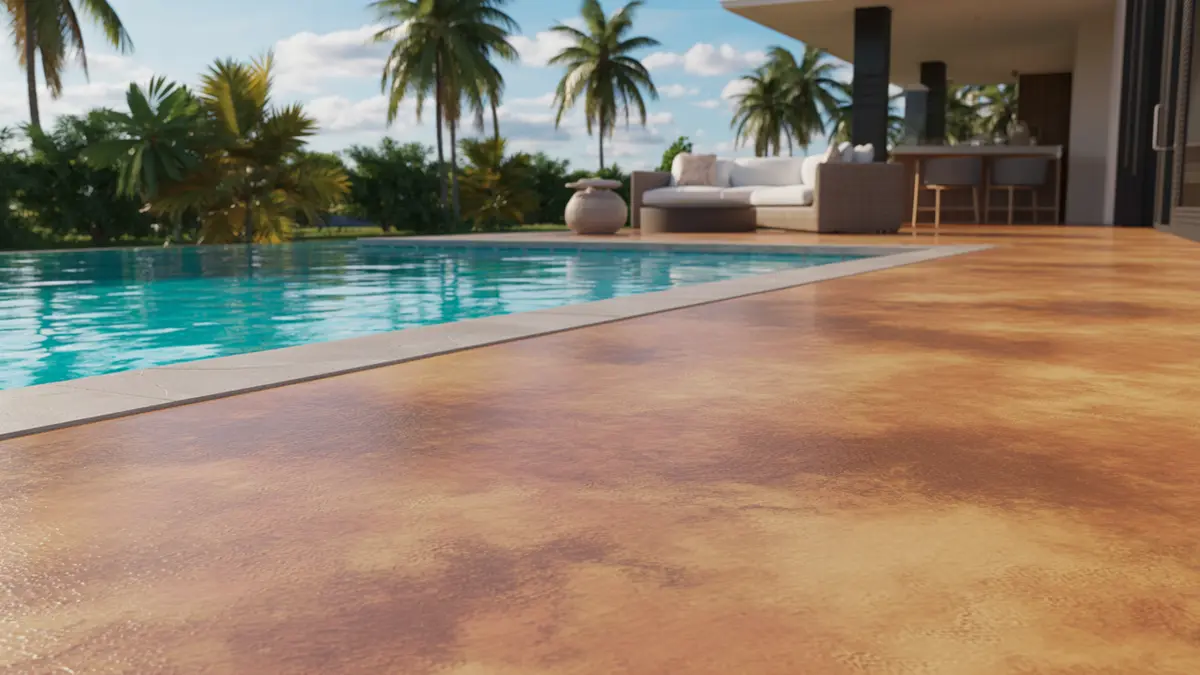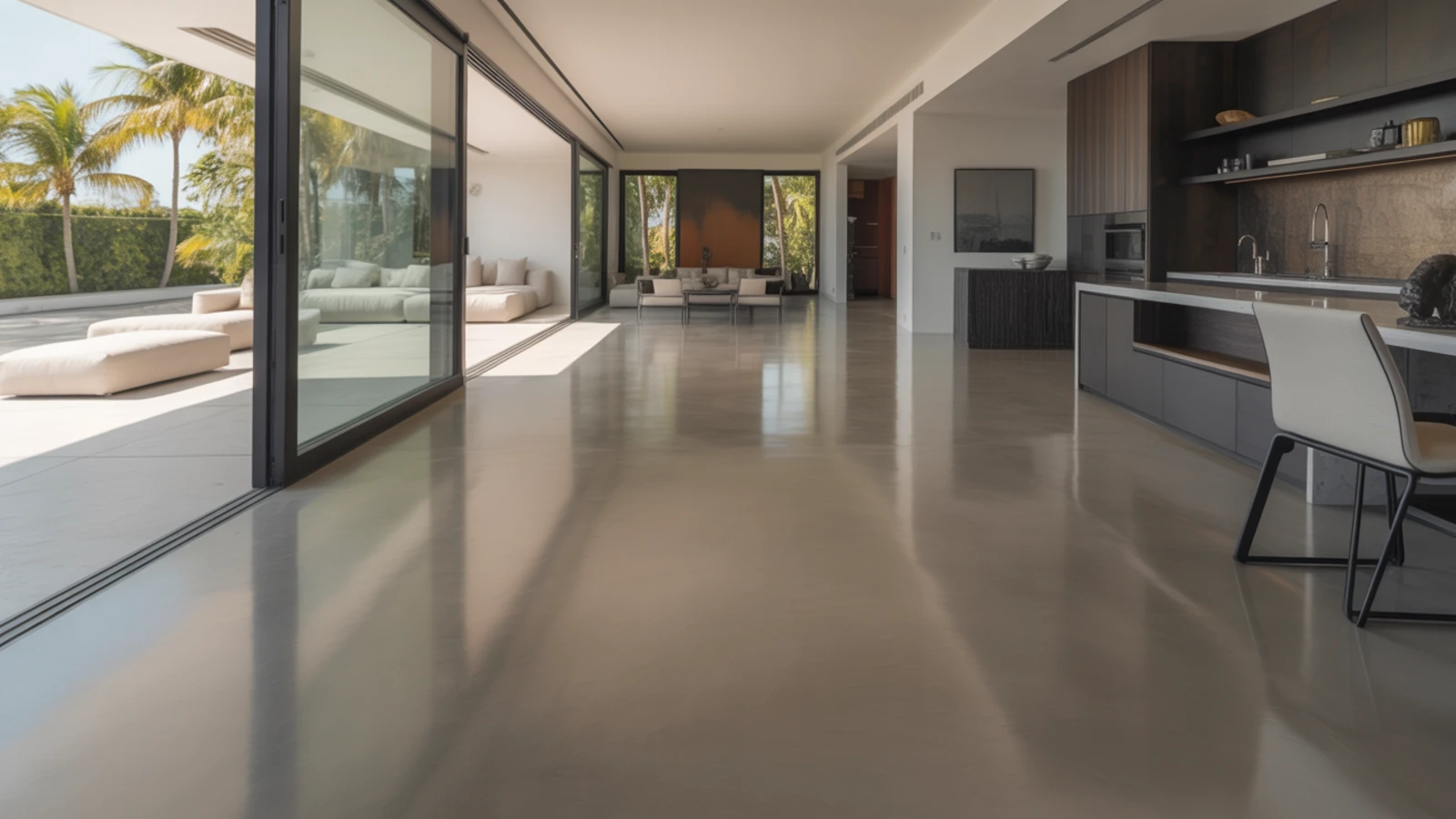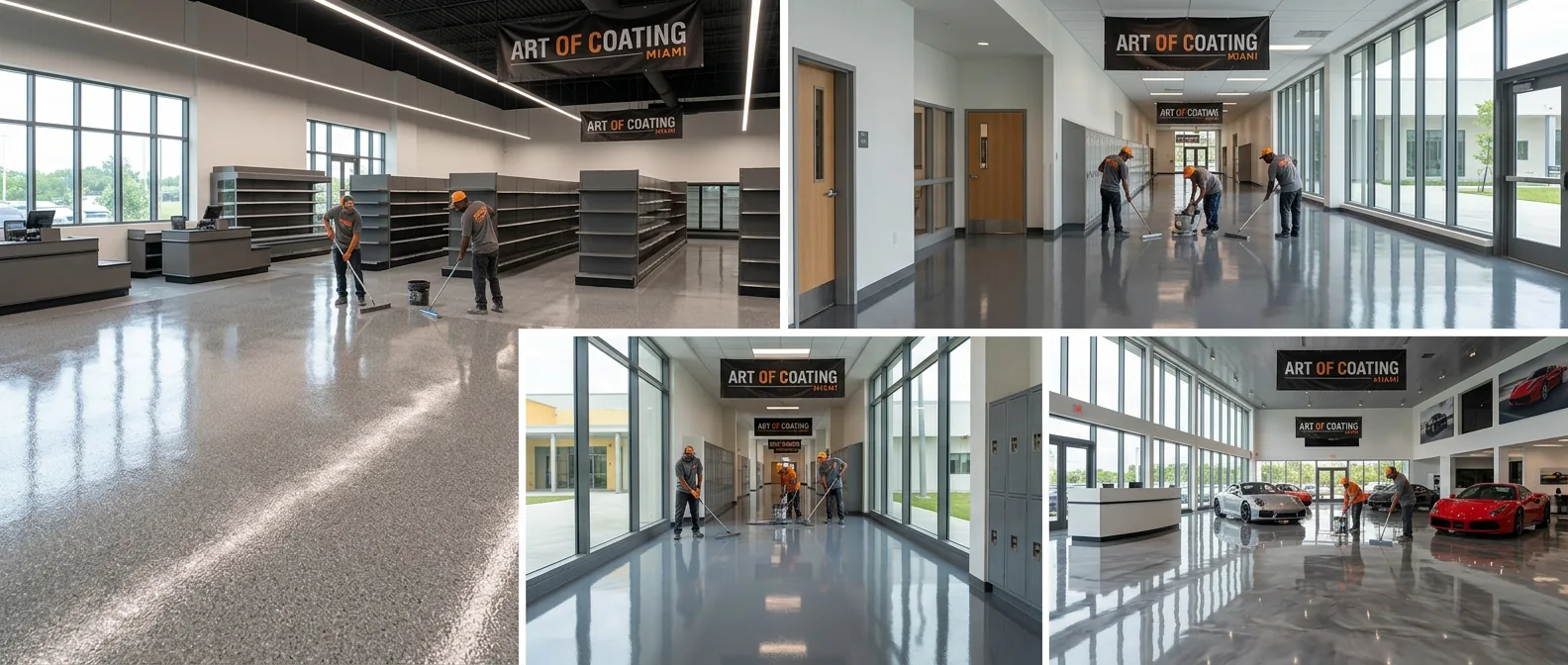
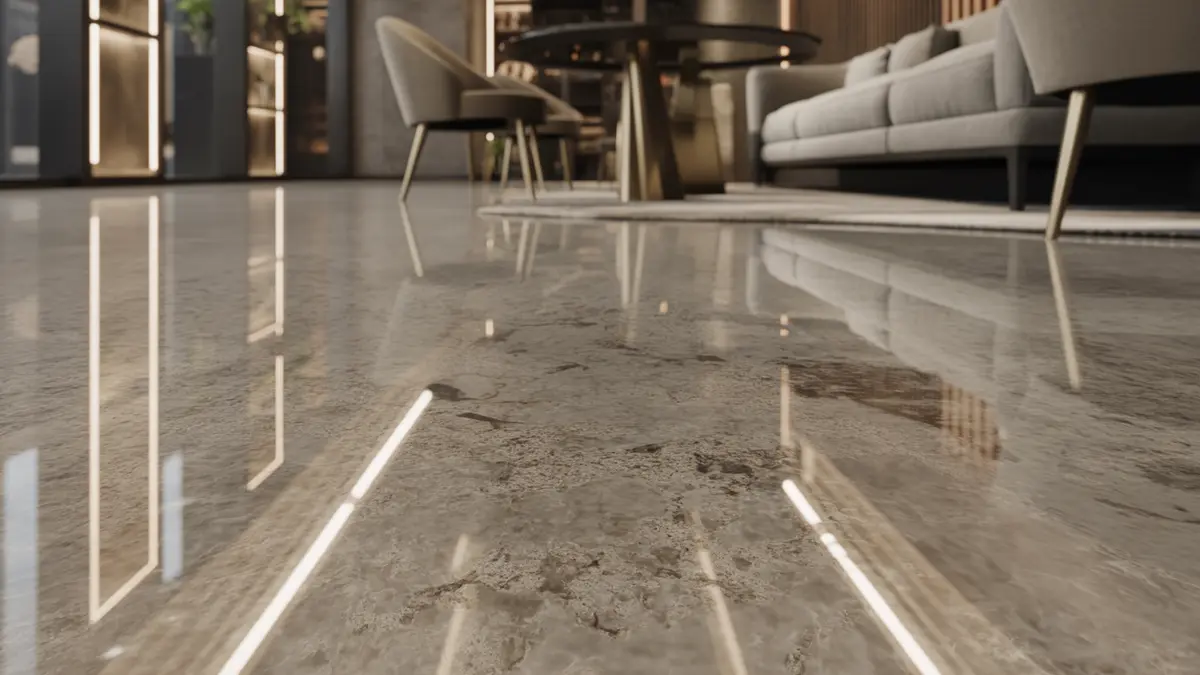
Walk into any trendy Miami restaurant, boutique hotel lobby, or modern office space and there is a good chance you are standing on polished concrete. This flooring option has exploded in popularity across South Florida commercial design — and for good reason. Polished concrete delivers an unmatched combination of aesthetics, performance, and sustainability that traditional flooring materials simply cannot match.
1. Unmatched Durability
Polished concrete is the hardest, most abrasion-resistant flooring surface available for commercial use. The multi-step diamond polishing process densifies the concrete surface, making it up to 400% more resistant to wear than untreated concrete. Polished floors in high-traffic commercial environments routinely last 20+ years with minimal maintenance — far outlasting carpet (5–7 years), VCT (8–12 years), and even hardwood (10–15 years in commercial settings).
2. Virtually Zero Maintenance Cost
Polished concrete eliminates the ongoing costs of waxing, stripping, and recoating that other flooring types demand. Daily dust mopping and periodic damp mopping is all that is required. Over a 20-year lifecycle, polished concrete saves an average of $2.50 per square foot annually in maintenance costs compared to VCT, and $1.75 per square foot compared to sealed concrete.
3. Sustainable & LEED-Friendly
Polished concrete is one of the most environmentally sustainable flooring options available. It uses the existing concrete slab, eliminating the need for additional flooring materials, adhesives, and their associated VOC emissions. The high reflectivity of a polished floor (up to 70% light reflectance) reduces artificial lighting requirements, and the thermal mass of concrete helps moderate building temperature.
For LEED-certified projects in Miami, polished concrete contributes to multiple credit categories: Materials & Resources (existing materials), Indoor Environmental Quality (low VOC), and Energy & Atmosphere (reduced lighting).
4. Design Flexibility
Modern concrete polishing techniques offer far more design options than people expect. Dyes and stains can create virtually any color. Scoring and saw-cutting allow for custom patterns, logos, and zone demarcation. Aggregate exposure levels range from cream (no aggregate visible) to full aggregate, where the natural stone within the concrete becomes a design feature. Many of Miami's most architecturally significant commercial spaces use exposed-aggregate polished concrete as a statement design element.
5. Superior Performance in South Florida Climate
South Florida's high humidity is a major concern for flooring. Polished concrete is completely moisture-resistant — it will never warp, buckle, delaminate, or grow mold. Unlike wood, laminate, or carpet, polished concrete performs flawlessly in humidity levels that would destroy other flooring materials. The densified surface also eliminates concrete dusting, a common problem in South Florida where moisture vapor transmission through slabs is prevalent.
Cost of Polished Concrete in Miami
Polished concrete in the Miami market ranges from $3 to $12 per square foot depending on the level of polish, dyeing requirements, and existing slab condition. When compared to the installed cost plus 20-year lifecycle maintenance of other commercial flooring options, polished concrete is consistently the lowest total cost of ownership.
Interested in polished concrete for your Miami commercial project? Art of Coating Miami specializes in high-end concrete polishing for restaurants, offices, retail, and hospitality. Free estimates — call (786) 618-4877.
Request a Free QuoteHow Concrete Polishing Actually Works
The mirror-like shine on a polished concrete floor is earned mechanically, not sprayed on. We run progressively finer diamond-impregnated abrasives across the slab, much like sanding wood from coarse to fine grit, while applying a chemical densifier that hardens the surface from within. The result is measured on a gloss and clarity scale, from a soft satin matte to a high-gloss reflective finish you can see yourself in. Because the shine comes from the concrete itself rather than a topical film, it cannot peel, chip, or delaminate the way a coating can. See the full process and finish levels on our concrete floor polishing page.
Polished Concrete vs. a Polished Overlay
Not every slab is a candidate for true mechanical polishing. If the existing concrete is badly cracked, patched, or was never troweled smooth, a thin cementitious overlay or a microcement finish can deliver a similar look on a surface that would otherwise polish poorly. True polished concrete is best when you have a sound, relatively clean slab to reveal; an overlay gives you more design control over color and aggregate exposure. During our assessment we test slab hardness and flatness to recommend the honest option for your space, not just the one that sounds most premium on paper.
Where Polished Concrete Performs Best
- Restaurants and breweries: seamless, sanitary, and easy to mop
- Retail and showrooms: high light reflectance brightens product displays
- Offices and lobbies: modern aesthetic with near-zero upkeep
- Warehouses and distribution: extreme abrasion resistance for forklifts
Polished concrete also earns its reputation as a low-impact choice. Because it reuses the existing slab and avoids adhesives, tile, and carpet, it generates very little waste, and its reflectivity can cut lighting energy, a point echoed in sustainable building guidance from the U.S. Environmental Protection Agency. For many Miami commercial projects that combination of green credentials, longevity, and minimal lifecycle cost is the deciding factor over tile or VCT.
Polished concrete is only as good as the slab beneath it. A professional moisture test and hardness check before polishing prevents disappointing results on soft or vapor-prone floors.
Request a Free QuoteKeeping a Polished Floor Looking New
Maintenance is refreshingly simple: dust mop daily to remove abrasive grit and damp mop with a pH-neutral cleaner as needed. Avoid acidic or citrus cleaners, which etch the densified surface and cloud the shine over time. In very high-traffic spaces, a periodic burnish restores gloss without any recoating or downtime. With that light routine, a polished floor holds its finish for decades, which is exactly why restaurants and retailers favor it over materials that need waxing and stripping.
One practical point many owners overlook is how polished concrete interacts with existing utilities and timelines on a build-out. Because polishing works with the slab already in place, there is no demolition debris to haul and no thick new floor height that throws off door clearances, thresholds, or ADA transitions. That makes it especially friendly for tenant improvements on a tight schedule, where every day of closure costs rent and revenue. We can often polish in off-hours or phase the work room by room so a restaurant or shop keeps operating, and because the finish needs no off-gassing cure like some coatings, the space is typically ready for traffic very soon after the final burnish.
For most Miami commercial spaces, polished concrete delivers the rare trifecta of beauty, durability, and the lowest total cost of ownership available. The key is honest evaluation of your slab up front so the finish lives up to its promise. If you are weighing polished concrete for a restaurant, office, or retail build-out, request a free consultation and finish recommendation through our contact page, or explore completed installs in our project gallery.
Last updated: October 2026