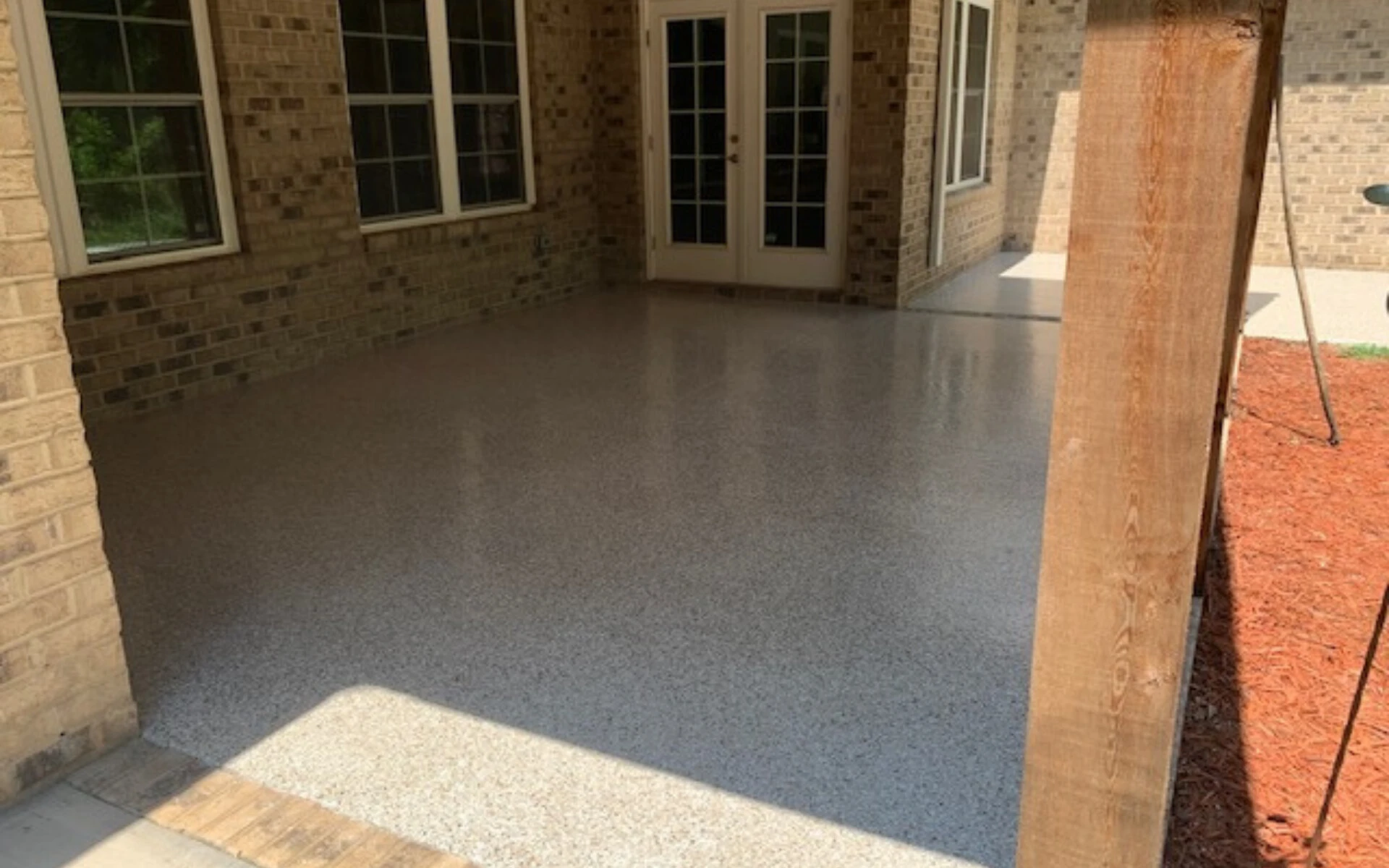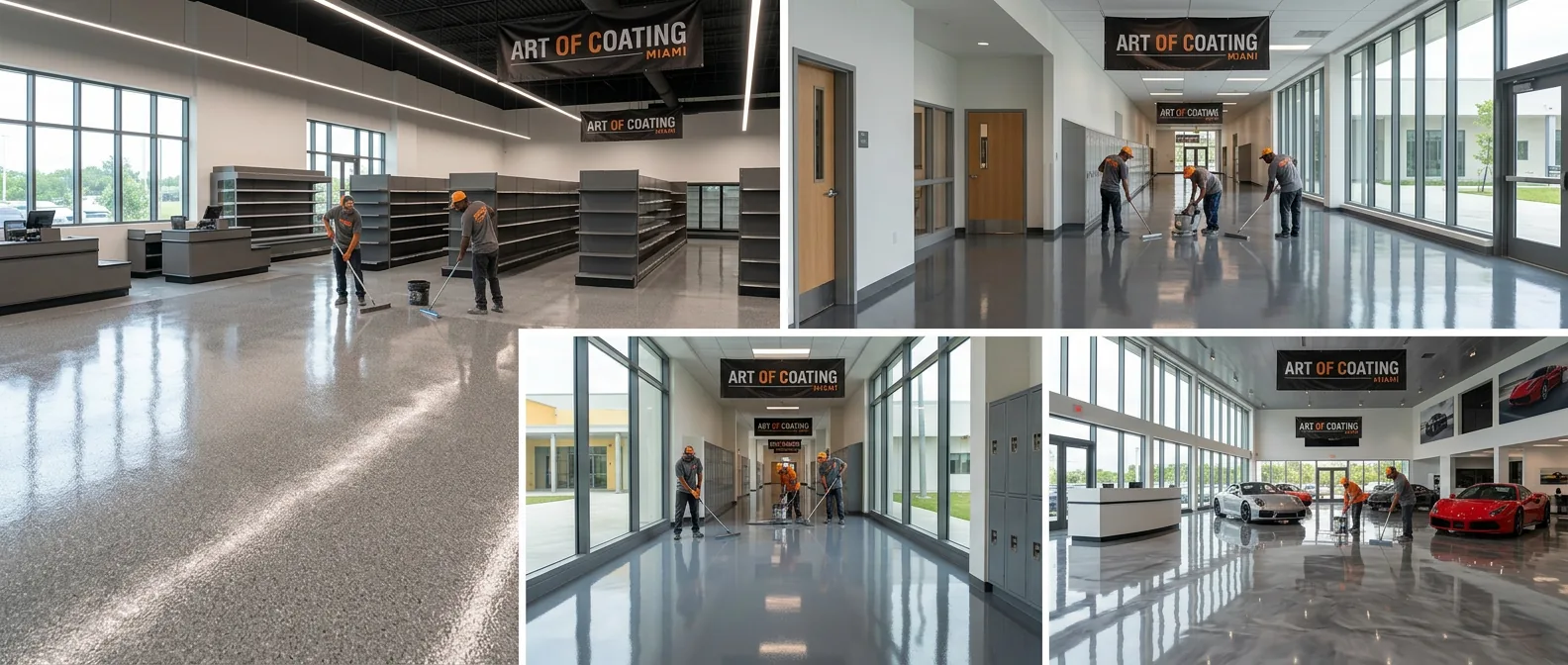

The short answer: polished concrete in the Miami area usually runs about $3 to $10 per square foot installed. A grind-and-seal or satin finish on a sound, clean slab sits at the low end. High-gloss finishes, dyed color, deep decorative aggregate exposure and slabs that need heavy crack repair, patching or adhesive removal sit at the high end. The slab you start with, more than the shine you pick, usually decides where your number lands.
Request a Free QuotePolished concrete quotes in South Florida can look far apart for floors that seem identical. The gap usually comes from three things: how deep the slab is ground, how many passes it takes to reach your sheen, and how much repair and removal happens first.
Below, those cost drivers are broken down the way an installer reads them on site, so you can compare bids for polished concrete in Miami on the same terms.
Where Your Floor Lands in the $3 to $10 Range
Polished concrete is priced per square foot because most of the cost is machine time, diamond tooling and labor, and all three scale with area. The range is wide because the term covers everything from a lightly honed, sealed slab to a deeply ground, dyed, mirror-gloss floor that took many more passes.
- Low end: grind-and-seal or a satin finish, cream or light salt-and-pepper exposure, natural gray color, a sound slab with few cracks and nothing to remove.
- Middle: a semi-gloss polish with salt-and-pepper exposure, routine crack and joint filling and normal edge work.
- High end: high gloss, dye or stain, medium to large aggregate exposure, saw-cut patterns, or a slab that needs adhesive removal, heavy patching or flattening first.
Cream, Salt-and-Pepper or Aggregate: How Deep the Grind Goes
The first choice that moves the price is how much of the stone inside the concrete you want to see. Industry groups such as the Concrete Polishing Association of America classify finishes by aggregate exposure, and in plain terms there are three looks.
A cream finish removes only the thin top paste. You see smooth, mostly even gray with little or no stone. It takes the least grinding, but it is also the least forgiving: trowel marks, old patches and color changes in the paste stay visible, and any low spot the grinder cuts through shows up as a patch of sand or stone.
Salt-and-pepper exposure cuts a little deeper to reveal fine sand and the tips of small stones, giving a speckled look. It is the most common choice for retail and residential floors because it hides minor flaws and everyday wear well.
Aggregate exposure grinds deeper still, until larger stones are cut open across the floor. It costs more because it means extra passes with coarse metal-bond diamonds, more tooling wear and more hours. You also only get the stone that was placed in the original pour, so a small test area is the honest way to see what your slab holds.
Grit Sequence, Sheen and the Chemistry Behind the Price
After the initial grind, the floor is refined with progressively finer diamonds. A typical sequence starts around 30 to 40 grit with metal-bond tooling to flatten and open the surface, then moves into resin-bond diamonds, stopping around 400 grit for a satin look, around 800 for semi-gloss and somewhere between 1,500 and 3,000 for high gloss. Every step is another full pass, so high gloss takes more machine hours. Skipped steps usually show as a hazy, scratchy finish under store lighting.
Between grinding steps, a liquid densifier, usually a lithium or sodium silicate, soaks in and reacts with the cement to harden the surface. That is what makes polished concrete dust-proof and helps it hold a shine. Most floors then get a penetrating guard that helps resist oil, wine and coffee. Ask which guard is included, because a cheap topical product can wear off in traffic lanes.
Color adds cost as well. Dyes are applied during the polishing sequence and locked in by the densifier and guard, and saw-cut lines, borders or logos add layout and cutting time. Because dye reads differently on every slab, expect a sample area before full application.
Slab Condition, Repairs and Removal of Old Flooring
Polished concrete is the slab itself, so everything that has happened to that slab becomes part of the finish. This is the biggest reason two quotes for the same square footage can differ.
Cracks and control joints are filled before polishing, typically with a semi-rigid epoxy or polyurea filler ground flush. Filled cracks stay visible as lines: tidy and level, not invisible. Spalls, chipped joint edges and old plumbing trenches need patching, and patches rarely match the surrounding color or stone. A slab that has had walls moved or fixtures anchored may carry many of these scars, and each adds time.
Removal is often the largest hidden cost. Tile, thinset, carpet glue, vinyl adhesive and old coatings all have to come off first, and each needs different equipment. Thinset and mastic clog diamonds, and old epoxy takes aggressive grinding. Some black adhesives in older buildings contained asbestos, so test them before anyone grinds. A clear quote lists removal on its own line.
Slab age and quality matter too. Hard, well-finished concrete polishes beautifully but grinds slowly. Soft or poorly cured concrete grinds fast but may not hold a high gloss. If the slab is too patched or uneven for the look you want, a polished overlay or microcement is sometimes the more honest recommendation.
Square Footage, Access and Occupied Spaces
Setup, transport and cleanup take similar effort for a single room or an open showroom, so small jobs carry a higher per-foot price. Edges are worked with hand grinders that are much slower than the large planetary machines used in open areas, and rooms with many walls or columns have more edge per square foot.
Access is a real factor in Miami. In a high-rise condo, equipment usually travels in a service elevator that has to be booked, buildings often limit noisy work to set hours, and propane machines are often not permitted in occupied residential buildings, so crews run electric grinders with dust extraction. Occupied retail stores and restaurants often need work done after closing or in phases, which stretches the schedule and adds labor.
Dust control is part of the price, not an extra. Grinding concrete releases respirable crystalline silica, and OSHA's construction silica standard sets out controls such as grinders fitted with vacuum dust collection and HEPA filtration. Wet grinding avoids dust but produces slurry that has to be contained, which matters in finished interiors. If one quote is far below the others, ask how dust will be handled.
Moisture and Long-Term Upkeep: Polished Concrete vs Epoxy
Moisture is one place polished concrete can save money. Epoxy and other film-forming coatings sit on top of the slab, and if too much vapor rises through the concrete it can push them loose. That is why coated floors often need moisture testing and sometimes a vapor-mitigating primer. Polished concrete has no film to lift. The slab keeps breathing through the densified surface, which suits South Florida's high water table and older slabs poured without a good vapor barrier.
That does not make moisture irrelevant. Very damp slabs can make dye colors uneven, weaken topical guards and carry salts to the surface as white efflorescence, so a quick moisture check is still worth doing before a dyed or high-gloss floor.
Upkeep is where totals separate over the years. A polished floor needs dust mopping, a pH-neutral cleaner and periodic re-burnishing, with the guard refreshed as traffic wears it. There is no stripping, waxing or full recoat. A professional epoxy floor typically lasts 10 to 15 years, then has to be abraded and recoated, which brings back prep cost and downtime. Residential epoxy also starts higher, at about $5 to $12 per square foot. Our polished concrete vs epoxy comparison covers where each floor makes more sense.
Homes, Retail and Warehouse Floors Price Differently
Residential polishing usually means smaller rooms with plenty of edges, often right after tile removal, and homeowners tend to want salt-and-pepper or aggregate looks. That pushes homes toward the middle or upper part of the range, even though the total project is smaller.
Retail stores, showrooms, galleries and restaurants are driven by appearance and schedule. Higher gloss reflects lighting and shows off product, dyes and logos are common, and work often has to happen overnight. Converted warehouses in Wynwood often have older slabs whose patches owners keep as character, a look covered on our page about polished concrete for Wynwood galleries and shops. For coatings alongside polishing, see retail store flooring.
Warehouses and distribution floors are where polishing is often most economical per foot. Large open areas let big machines run efficiently, and many owners choose a lower sheen focused on dust-proofing and easy cleaning rather than shine. Forklift traffic and worn joint edges drive the prep more than looks. Where chemical spills or heavy wet cleaning are part of daily operations, warehouse floor coatings may suit some zones better.
How to Read a Polished Concrete Quote
A useful quote tells you what finish you are buying, not just a total. When you compare bids, check that each one spells out:
- Aggregate exposure and target sheen, tied to a sample area.
- Grit sequence or number of passes, plus densifier and guard products with data sheets.
- Crack, joint and patch repair, and how much is included.
- Removal of tile, adhesive or coatings as its own line, including any testing.
- Dye color, saw cuts or logos, if any.
- Dust control, work hours, phasing and protection of walls and fixtures.
- Return-to-service timing, cleanup and aftercare.
When one bid is much lower, it often leaves out removal, assumes a cream finish when you expected exposed stone, or ends the grit sequence early. Ask each contractor to describe the same finish in the same words, and the numbers usually move much closer together.
Frequently Asked Questions
Why does a small room cost more per square foot to polish?
Setup, equipment transport, edge work and cleanup take about the same effort on a small job as on a larger one, and that cost is spread over fewer square feet. Small rooms also have a higher share of edges and corners, which are polished with slower hand tools. That is why a bedroom or small office often prices near the top of the range.
Is grind and seal cheaper than a full polish?
Usually, yes. Grind and seal opens and smooths the slab with fewer grinding steps, then relies on a sealer for its look instead of working up to a mechanical shine. It suits garages, back-of-house areas and tight budgets. The tradeoff is that the sealer wears and needs reapplying, while a densified, mechanically polished surface holds its sheen longer with simple burnishing.
Will old tile lines and patches show after polishing?
Often, yes. Polishing reveals what is in the slab, so old wall lines, filled anchor holes, plumbing trenches and thinset stains can remain visible as shadows or color changes. Grinding deeper removes some surface staining, and dyes can blend color, but patches rarely disappear. If you want a uniform look, ask about a polished overlay or a coating instead.
How often does polished concrete need maintenance work?
Regular dust mopping and a pH-neutral cleaner handle routine care. Grit is what dulls the shine, so walk-off mats at entries help a lot. In busy retail aisles, periodic high-speed burnishing restores gloss, and the guard is refreshed as traffic wears it, often every few years. Those visits cost far less than recoating a coated floor because there is no stripping and no new film to apply.
Getting an Accurate Number for Your Slab
The price of polished concrete is set by what is under your feet: how hard the slab is, what has been glued to it, how many cracks it carries and how deep you want to cut. A site visit tells you far more than a phone quote. Request a free on-site assessment for a written, itemized estimate that spells out exposure, sheen, repairs and removal, so you can compare it line by line with any other bid.
Sources & standards referenced
- Concrete Network: Levels of Concrete Polishing, Sheen and Aggregate Exposure
- Concrete Network: Polished Concrete Cost
- Concrete Network: Polished Concrete Maintenance
- American Concrete Institute: Topics in Concrete, Concrete Floors
- OSHA: Crystalline Silica, Construction Standard
- ASTM F2170: Relative Humidity Testing in Concrete Floor Slabs
Product limits always come from the coating manufacturer's technical data sheet for the system installed.
Last updated: November 2026