The short answer: for an open Miami patio that gets direct sun, choose a UV-stable aliphatic polyaspartic system or a textured cool-deck overlay sealed with a polyaspartic topcoat. Plain epoxy ambers and chalks in sunlight, so save it for fully covered lanais, and even there put a UV-stable topcoat over it. Sound pavers usually only need cleaning, re-sanding and sealing. Outdoor resurfacing typically runs about $4 to $9 per square foot.
Request a Free QuoteMost patio questions in Miami-Dade, Broward and Palm Beach counties start the same way: the slab looks tired, there are rust rings from the patio set and streaks from the sprinklers, and the homeowner is unsure whether to seal it, coat it or tear it out for pavers. The answer depends on where the patio sits, how much sun it gets, who walks on it barefoot and how water leaves it after a storm.
This guide compares the main options for concrete patios, lanais, covered porches, screened enclosures and outdoor kitchens, with honest notes on where each one fails. If you already know you want a coated slab, our page on patio epoxy coating in Miami walks through the full installation process.
Start With Where the Patio Sits: Open Sun, Lanai or Screen Room
Sun exposure decides the chemistry. An open patio off the back door takes overhead sun for most of the day, and Miami regularly reaches the very high and extreme bands of the EPA's UV Index scale in the warmer months. A covered lanai or porch under a solid roof gets far less direct UV, although the outer few feet still catch low morning or late afternoon sun. A screened enclosure is the one people misjudge. The screen softens the light and keeps bugs out, but it does not stop UV, so treat a screened patio like an open one when you pick the topcoat.
Outdoor kitchens add grease, marinades, wine and citrus spills, dropped tools and heat near the grill, so those zones need a topcoat with good stain and chemical resistance and a texture you can still scrub. Before you collect quotes, note which parts of the patio are open, covered, screened or used for cooking, because one slab can need more than one system.
Why Plain Epoxy Ambers and Chalks in Full Sun
Most standard epoxies are aromatic resins. UV light breaks down their structure, which shows up first as a yellow or amber cast, then as a chalky, dull surface that loses gloss and can turn brittle. Epoxy also cures slowly and can blush or cloud when it goes down in humid air, which describes most of our summer.
Under a solid roof, epoxy is a different story. On a deep covered lanai or porch where sun rarely touches the floor, an epoxy base coat with decorative flake works well, as long as it is sealed under a UV-stable topcoat. That topcoat protects the edge that does catch sun and adds scratch resistance for chairs and tables. What we avoid is plain epoxy as the final, exposed layer on any slab that sees direct sunlight.
Polyaspartic: The UV-Stable Choice for Open Patios
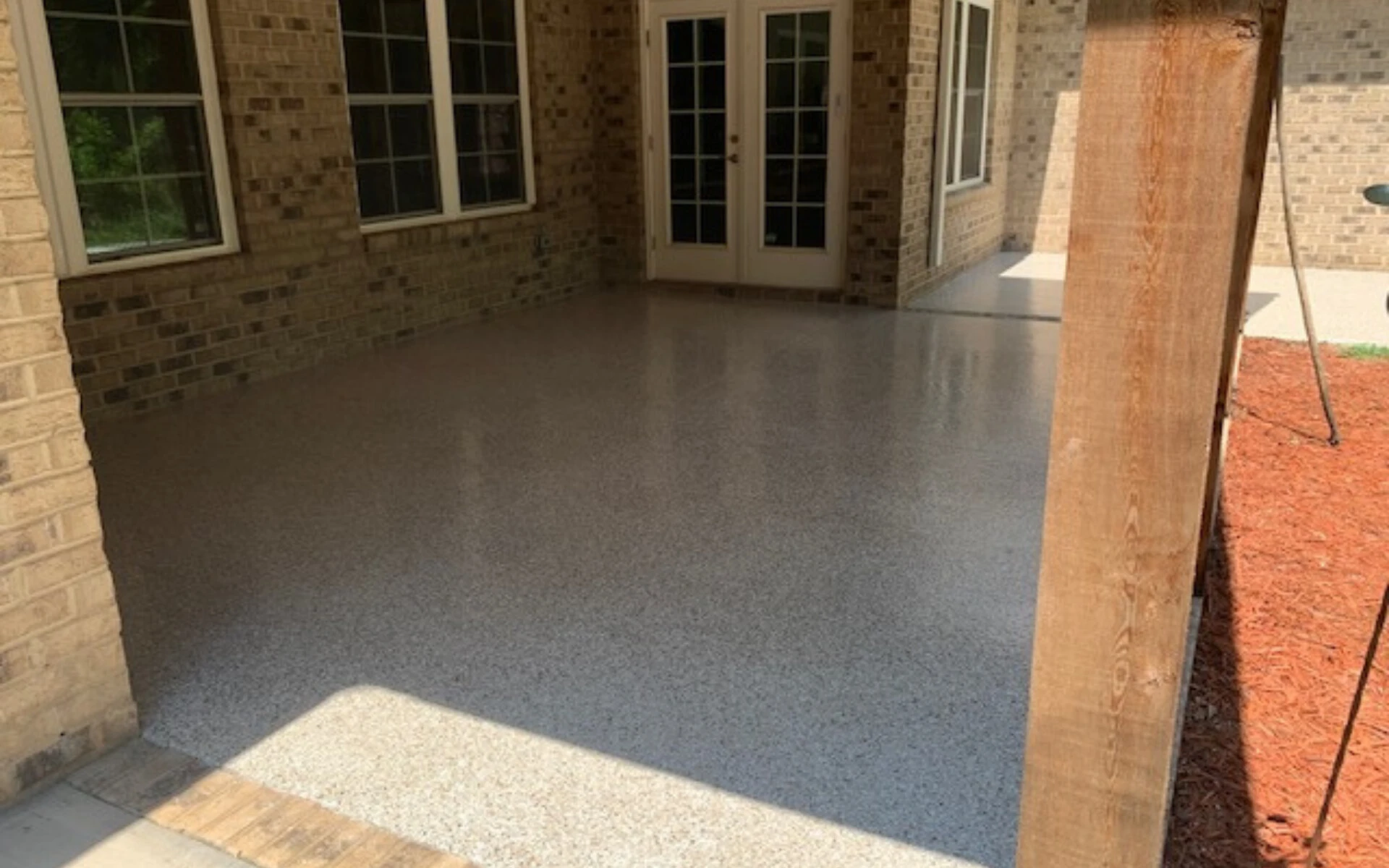
Aliphatic polyaspartic coatings hold their color and gloss in sunlight, which is why they are the default for open patios and screened pool areas here. They cure quickly, bond well to a properly ground slab, and resist food stains, pool chemicals and salt air. A typical system is a base coat, a broadcast of flake, quartz or color, and a clear polyaspartic topcoat with slip-resistant aggregate. Our polyaspartic floor coating systems use the same chemistry indoors and out, with the texture adjusted for wet, barefoot use.
Fast cure cuts both ways. In Miami heat, polyaspartic has a short working time, so crews mix small batches and usually start early, before the slab heats up and before the afternoon storm builds. Broward homeowners can read more on our polyaspartic patio coating in Fort Lauderdale page.
Cool Deck, Knockdown and Stone-Look Overlays
Cool Deck and Knockdown for Barefoot Heat
If kids and guests walk barefoot from the pool to the patio, surface heat matters as much as durability. Cool-deck and knockdown finishes are thin cementitious or polymer-modified overlays troweled over the slab and then textured. The light color reflects more sun and the texture means less skin contact, so they stay more comfortable than a dark, smooth coating. On their own they are porous, so they should be sealed with a UV-stable topcoat to resist mildew and staining.
Textured and Stone-Look Overlays
Stone-look and stamped-texture overlays imitate travertine, flagstone or tile using the same thin-overlay approach, finished with color washes and a protective topcoat. They cost more than a plain knockdown because of the hand work involved, and the realism depends on the crew, so ask to see a finished sample in daylight. They suit a patio that adjoins a pool, since the same finish can continue onto the deck as part of a pool deck resurfacing project.
Sealing vs Coating, and When to Keep Your Pavers
A sealer protects the surface you have. A coating builds a new one. If your concrete patio is sound, you like how it looks and you mainly want less staining and mildew, a penetrating sealer is the low-cost route, though it needs reapplying every few years. If the slab is stained, patched, spalled or simply unattractive, sealing locks in what you already dislike, and a coating or overlay is the better spend. We compare penetrating and acrylic sealers in more detail in our guide to driveway and outdoor concrete coatings.
When to Keep Your Pavers
Pavers are a good patio surface in their own right. They flex with minor settlement, and a cracked or stained paver can be swapped without touching the rest. If your pavers are level, the joints are tight and the main complaint is fading, weeds or ants, clean them, re-sand the joints and seal them. Where pavers have sunk, rock underfoot or washed out at the edges, the base needs repair before any sealer or coating.
Slip Resistance, Drainage and Slope
Rain is the real slip test. A patio that feels fine dry can turn slick in a summer downpour, especially once mildew or pollen builds up. Traction in a coating comes from aggregate broadcast into the topcoat and sized for the use: finer grit where people walk barefoot, coarser grit on steps and on the slope toward the yard. Smooth paint and high-gloss sealers are the usual offenders.
A coating will not fix bad drainage. Patios should fall away from the house so water runs to the lawn or a drain, not toward the slider. Low spots that still hold a puddle after the storm passes should be patched and feathered before coating, because standing water feeds mildew and wears the topcoat. Keep drains and the gap under the screen enclosure's kick plate clear, and make sure the new surface does not build up enough thickness to push water under a door threshold.
Rust Stains, Mildew and Hurricane-Season Debris
Orange stains on Miami patios usually come from one of three places, and each needs a different fix before any coating goes down:
- Irrigation water: much of Florida's well water carries iron, which leaves orange streaks on slabs and walls. Aim heads away from the patio and treat the water if stains keep returning.
- Metal furniture and planters: rusting feet and pot stands leave rings. The stains are treated during prep, and plastic or felt glides and saucers keep them from returning.
- Rebar near the surface: rust bleeding from a crack or spall can mean steel is corroding inside the slab. That spot needs concrete repair, not just a stain remover.
Mildew grows wherever shade, moisture and a film of dirt meet, which describes most covered lanais and the shady side of a screen room. A coating does not stop mildew, but a nonporous topcoat gives it nothing to root into, so a mild cleaner and a soft brush remove it without blasting the surface. Fixing the moisture source, such as a dripping gutter or a sprinkler that hits the slab every night, matters more than any product.
Hurricane season is hard on patios in less obvious ways. Furniture gets dragged inside in a hurry, storm panels get stacked on the slab, and branches, sand and roof debris sit in standing water afterward. Bring furniture in early, lay cardboard where panels are stored, and rinse debris off once the weather clears. Small chips where heavy objects landed can usually be patched and topcoated, though the patch may show slightly.
Cost, Timeline and Cure Before Furniture Goes Back
Based on the ranges published on our site, outdoor patio and pool deck resurfacing with a polyaspartic, polyurea or textured cool-deck system typically runs about $4 to $9 per square foot. A full decorative coating system, such as an epoxy base with flake under a UV-stable topcoat on a covered lanai, falls within our residential coating range of about $5 to $12 per square foot. Where your patio lands depends on its size, the amount of crack and spall repair, whether old paint or sealer must be stripped, the number of steps and edges, and the finish you choose.
Once repairs are done, most patios take a day or two of work, with weather as the wildcard. Polyaspartic systems usually allow light foot traffic sooner than epoxy, often within a day, but furniture, heavy planters and the grill should wait for the cure stage listed on the manufacturer's technical data sheet, which changes with temperature and humidity. Get return-to-service times in writing, and set metal furniture on glides when it goes back.
Frequently Asked Questions
Can I use epoxy on a covered lanai in Miami?
Yes, if the floor is truly sheltered from direct sun and the epoxy is not the top layer. On a deep covered lanai, an epoxy base with flake sealed under a UV-stable polyaspartic topcoat is a common, cost-effective system. If the lanai is shallow, screened or open on two sides, treat it like an open patio and use a full polyaspartic or cool-deck system.
Is a coated patio slippery when it rains?
It should not be if traction is built in. Slip resistance comes from aggregate broadcast into the topcoat, finer for barefoot areas and coarser for steps and slopes. Ask to feel a wet sample before you choose, and keep the surface clean, because a film of mildew or pollen reduces grip on any patio finish.
Can you coat over pavers instead of removing them?
Sometimes. If the pavers are firmly locked, level and sitting on a stable base, an overlay or coating system can go over them. The risk is that joints can show through as lines or cracks, and any paver that settles later will show too. If your pavers are sound and you like the look, cleaning, re-sanding the joints and sealing is usually the smarter choice.
Do old paint and sealer have to come off before coating?
Usually, yes. Paint, acrylic sealer and failing coatings have to be removed so the new system bonds to sound concrete instead of an old film that can peel and take the new coating with it. Diamond grinding removes most of it and opens the surface to the profile the base coat needs. Stripping adds labor, so a patio that has been painted several times sits higher in the price range.
Will a new coating stop rust stains from my sprinklers?
It makes them easier to clean, but it does not stop iron-rich water from leaving deposits on the surface. On a nonporous topcoat, fresh orange spots usually wash off before they set, unlike bare concrete where they soak in. The lasting fix is aiming irrigation away from the patio and, if staining is heavy, testing your water and treating the iron at the source.
Get a Free On-Site Patio Assessment
The right patio coating depends on sun exposure, slab condition, drainage and how you use the space, and those are easier to judge in person. Art of Coating Miami is a licensed, insured contractor with a BBB A+ rating, serving homeowners across Miami-Dade, Broward and Palm Beach counties since 2022. We test the concrete, explain which system fits each part of the patio, and give you a written, itemized estimate with a written warranty. Call (786) 618-4877 or request your free patio assessment to get started.
Sources & standards referenced
- US EPA: UV Index Scale
- US EPA: A Brief Guide to Mold, Moisture and Your Home
- UF/IFAS Florida-Friendly Landscaping: Iron in Water
- Ready.gov (FEMA): Hurricanes
Product limits always come from the coating manufacturer's technical data sheet for the system installed.
Last updated: November 2026