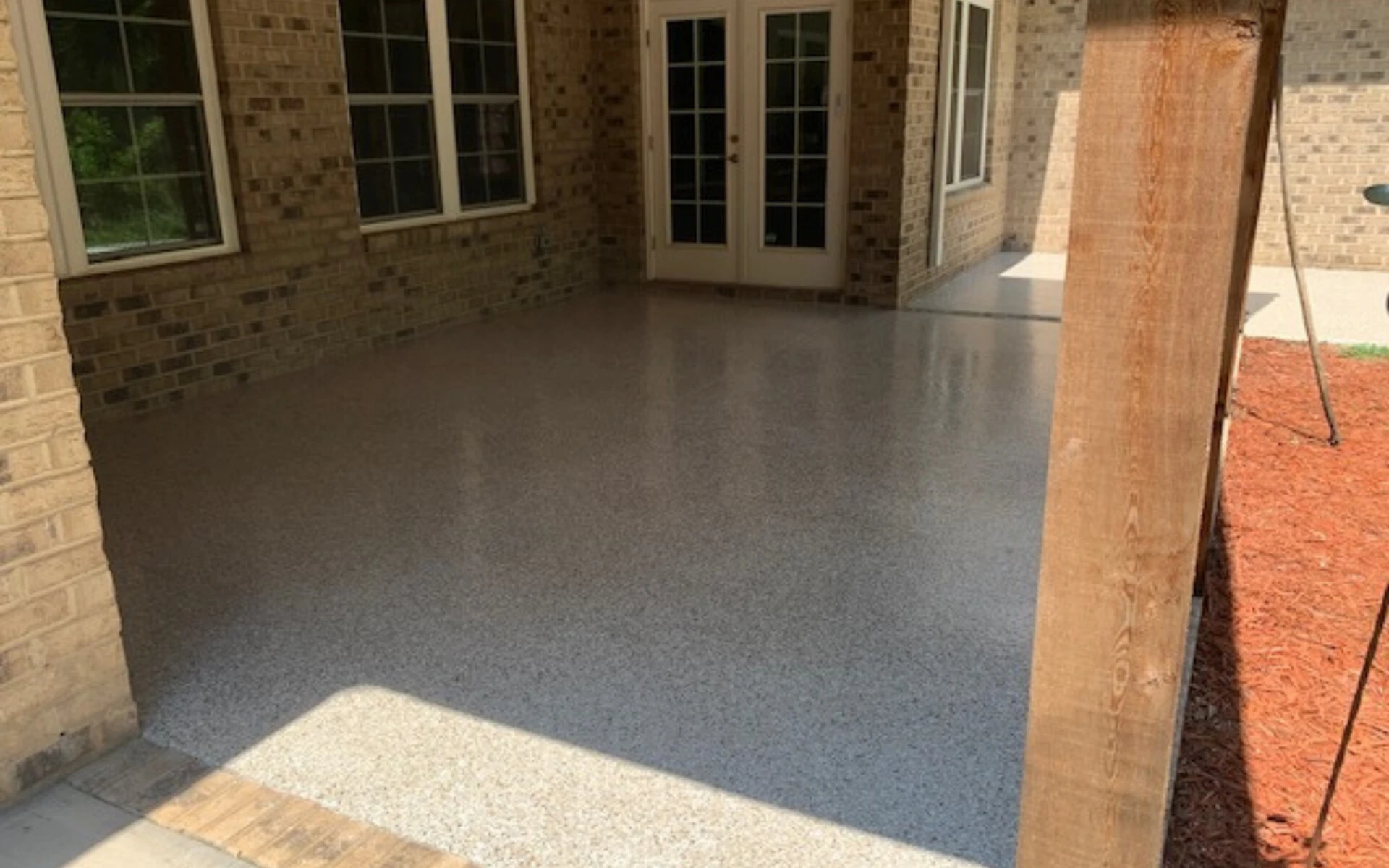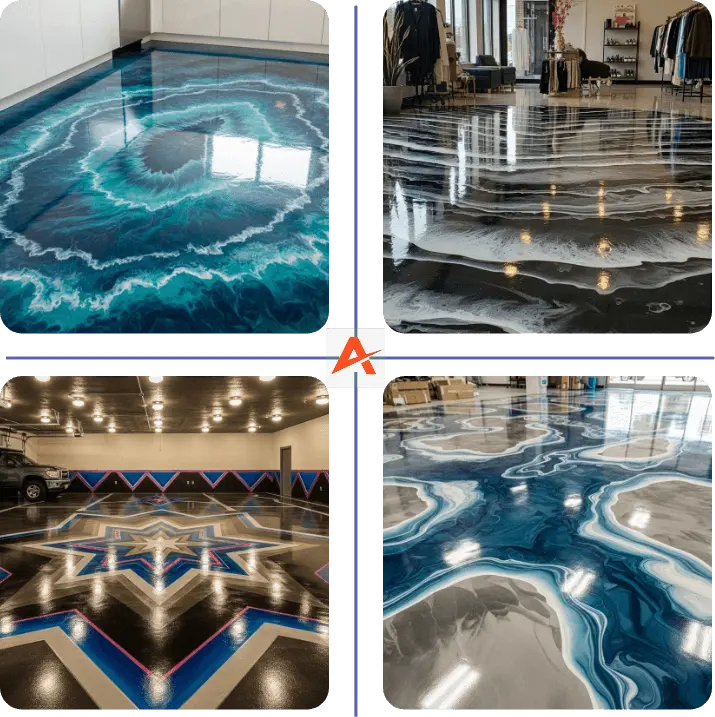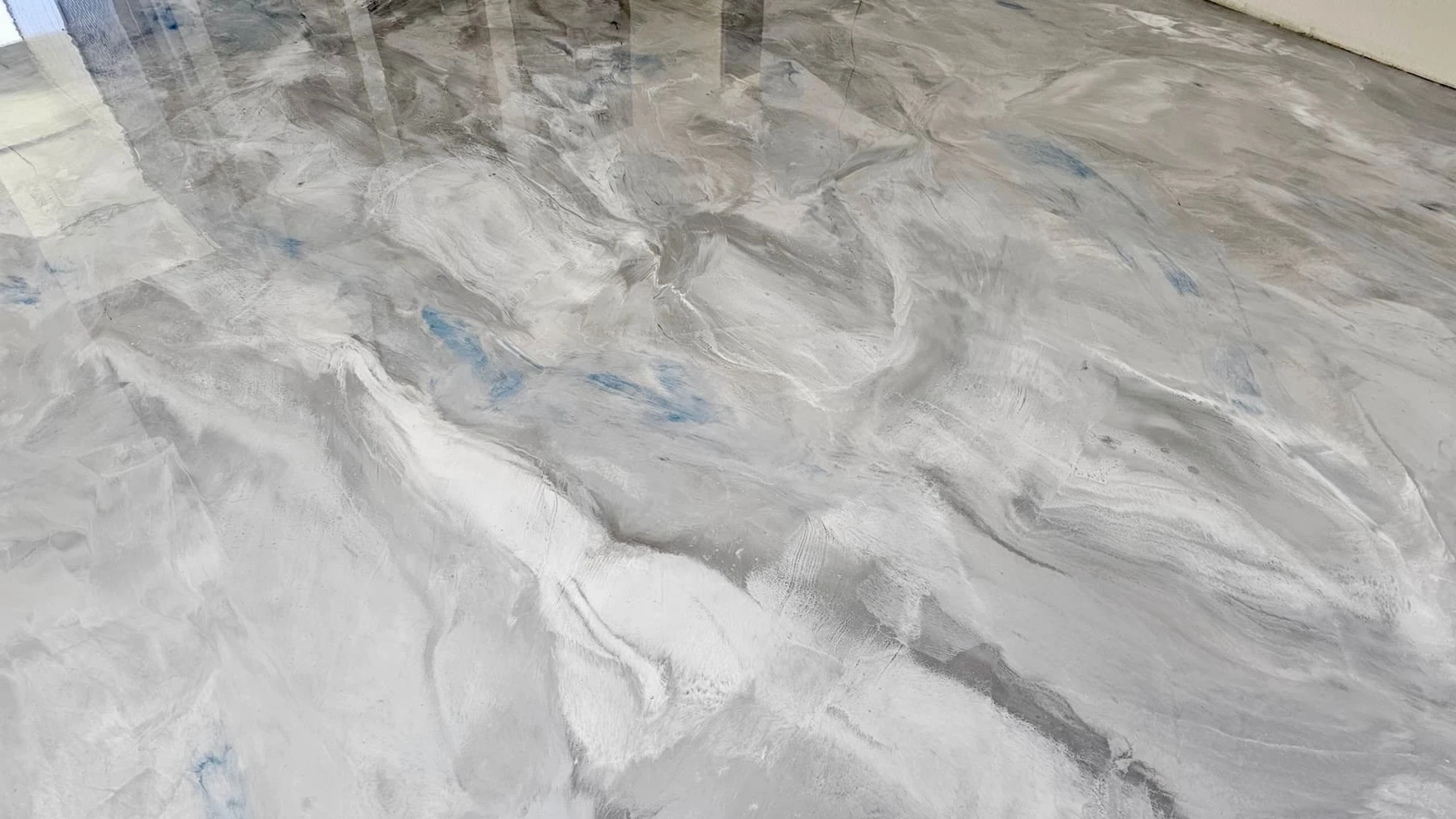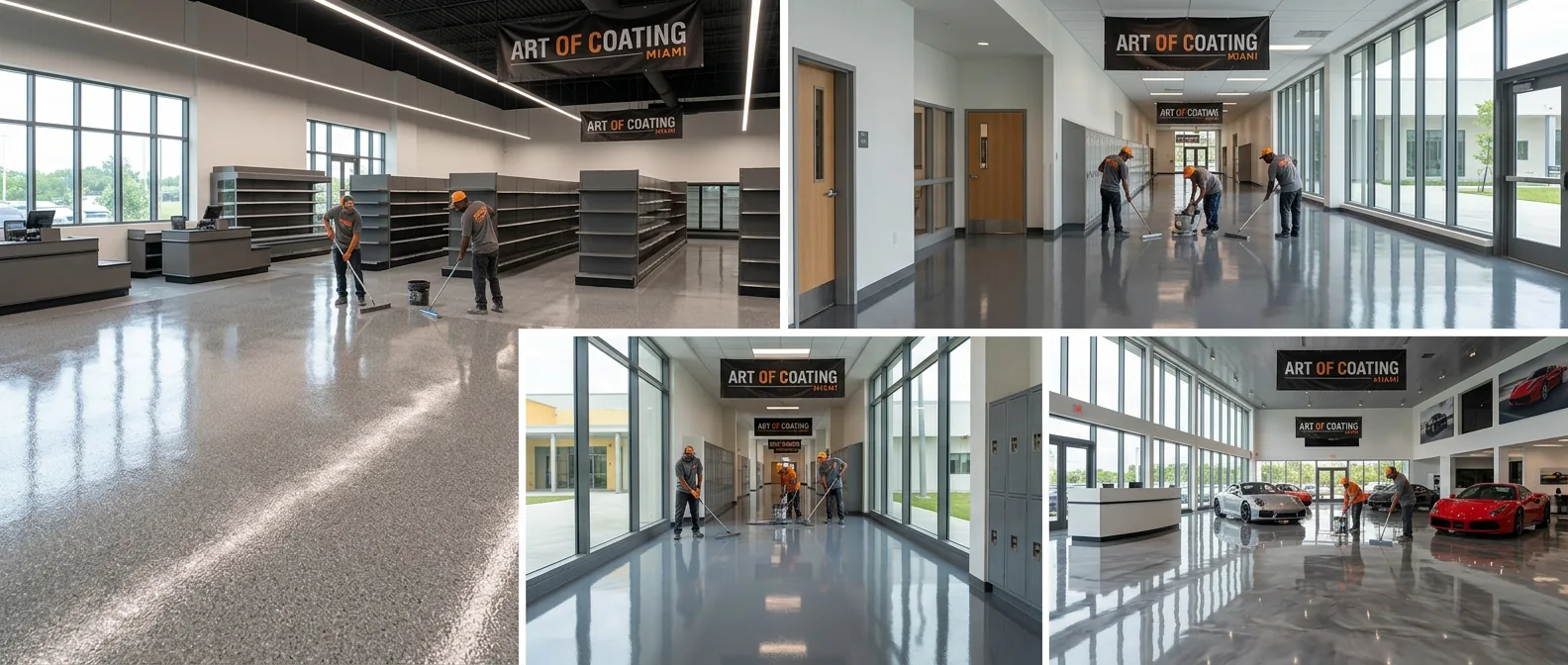
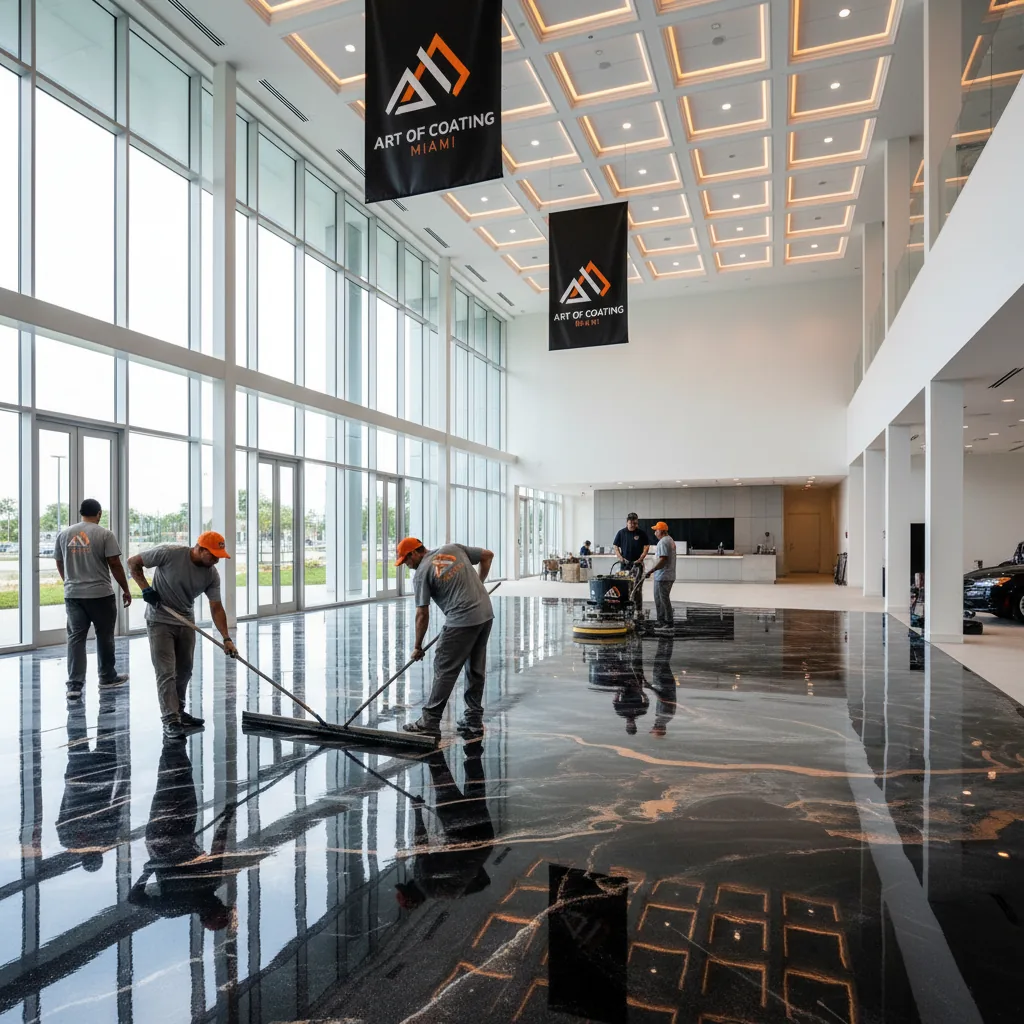
The short answer: Most Miami businesses pay roughly $4 to $12 per sq ft for installed commercial epoxy flooring, depending on the system and how much prep the slab needs, while urethane cement for kitchens and food areas typically runs higher. High-build epoxy suits shops and light industrial space, epoxy with a polyaspartic topcoat suits busy retail and showrooms, and polished concrete suits offices that want low maintenance.
Request a Free QuoteIf you run a restaurant in Brickell, a showroom in Doral, a clinic in Coral Gables or a warehouse near the airport, your floor works as hard as your staff. It carries carts, foot traffic, spills and cleaning chemicals, and in South Florida it also has to cope with humidity and slab moisture. Choosing a commercial floor coating is less about picking a color and more about matching chemistry to how your space operates. This guide covers the main systems, realistic cost ranges, what drives price and how to schedule work so your business keeps running.
Art of Coating Miami is a licensed, insured floor coating contractor based in Fort Lauderdale with a BBB A+ rating, serving Miami-Dade, Broward and Palm Beach since 2022. We install commercial flooring systems including epoxy, polyaspartic, urethane cement and polished concrete, so the advice below compares these options honestly rather than pushing one product for every space or every budget.
Which Commercial Floor Coating System Fits Your Business
There is no single best epoxy floor for every business. The right system depends on traffic type, chemical exposure, temperature swings, cleaning methods and how much downtime you can tolerate. Below is how the four main commercial systems typically line up against common South Florida business types. Treat it as a starting point; a site visit and moisture test should confirm the final specification.
Auto Shops, Warehouses and Light Industrial: High-Build Epoxy
High-build epoxy is the workhorse for spaces with rolling loads, dropped tools, oils and fluids. Applied in thicker layers over a mechanically prepared slab, it fills minor imperfections and creates a dense, chemical-resistant surface. Broadcast quartz or flake can add traction, and safety striping can be built into the system for aisles and work zones. Because standard epoxy can amber under UV, it suits interior bays better than sunlit areas unless it gets a UV-stable topcoat.
Retail Stores and Showrooms: Epoxy With a Polyaspartic Topcoat
Customer-facing spaces need a floor that looks sharp and resists scuffing from heels, carts and display moves. A popular approach pairs an epoxy base coat, which bonds well and builds thickness, with a polyaspartic topcoat that is UV-stable, abrasion-resistant and fast-curing. The combination works well near storefront glass where sun would yellow plain epoxy, and the quick-curing topcoat helps shorten closures. Finishes range from solid colors to decorative flake and metallic looks.
Restaurants and Commercial Kitchens: Urethane Cement
Kitchens are a different environment. Hot water washdowns, steam, grease, sugars and food acids can break down standard epoxy over time, and thermal shock can cause conventional coatings to crack or delaminate. Urethane cement flooring is formulated for these conditions. It tolerates high temperatures, is generally more forgiving of slab moisture and can be installed with integral cove base so walls and floor form one continuous, cleanable surface. It costs more, but it is usually the right call for food areas.
Offices and Clinics: Polished Concrete
When the existing slab is in reasonable shape, polished concrete is a strong alternative to a coating. The slab is ground with progressively finer abrasives, densified and polished to the sheen you choose, so there is no film to peel or wear through. It suits offices, clinics, galleries and larger retail floors that want a clean, modern look with simple upkeep. It is less suited to areas with heavy oil or acid exposure, where a coating protects better against staining.
What Commercial Epoxy Flooring Costs in Miami
As a broad guide, installed commercial epoxy and polyaspartic systems in South Florida generally fall somewhere around $4 to $12 per square foot. The low end tends to reflect large, open, sound slabs receiving a straightforward coating, while the high end reflects smaller areas, heavier prep, decorative finishes or multi-coat high-build systems. Urethane cement typically sits above that range because the material is thicker and more specialized. Polished concrete varies with slab condition and the gloss level requested.
These are general ranges, not quotes. Two buildings with the same square footage can price very differently once someone looks at the slab, the existing flooring and the schedule. The only reliable number comes from an on-site assessment that includes moisture testing and a review of how the space is used. Be cautious of a per-foot price given over the phone without anyone seeing the floor, because prep is where the real cost and risk usually sit.
What Moves the Price on a Commercial Project
Most of the difference between a low and a high commercial bid comes down to a handful of variables. Understanding them helps you read quotes accurately and decide where to spend and where you can save. Material choice matters, but it is rarely the biggest swing factor; surface preparation, site conditions and scheduling constraints tend to drive the total more than the coating itself.
- Square footage and layout: large open floors usually cost less per foot than small rooms, corridors and restrooms with many edges.
- Removal of existing flooring: tearing out VCT, tile, carpet glue or failed coatings adds labor, disposal and grinding time.
- Surface preparation: diamond grinding or shot blasting, crack and spall repair and leveling all add cost but determine how well the coating bonds.
- Moisture mitigation: slabs with elevated vapor emissions, common in South Florida, may need a moisture-mitigating primer first.
- Cove base: integral cove at the wall line, standard in many kitchens and clinics, is priced by the linear foot.
- Line striping and markings: aisles, safety zones and parking stalls add layout and material time.
- After-hours and phased labor: night, weekend and multi-phase scheduling to keep you open can carry a labor premium.
How to Plan Around Downtime
For most businesses, the cost of being closed is bigger than the cost of the floor. Good planning starts with mapping how the space is used hour by hour and identifying which areas can be taken out of service and when. From there, the coating system and schedule can be built around your operation rather than the other way around. These are the tools we use most often to keep commercial clients open.
- Phasing: split the floor into zones so one section is coated while the rest stays open, then rotate.
- Nights and weekends: many retail, restaurant and office projects can run after closing so staff return to a finished section.
- Fast-cure chemistry: polyaspartic topcoats can often accept light foot traffic within hours, compared with a day or more for many standard epoxies.
- Return-to-service planning: confirm separate times for foot traffic, carts, vehicles and heavy fixtures, since full chemical cure takes longer than walk-on cure.
- Inventory and equipment: agree who moves shelving and stock, and where it will sit during the work.
Write the agreed schedule, phase boundaries and return-to-service times into the proposal. That way your staff, tenants or landlord know exactly when each area is unavailable, and there are no surprises on reopening day. If temperature or humidity on install day affects cure, your contractor should explain how the timing shifts before the next phase begins, so you can adjust staffing and deliveries.
Compliance Considerations for Commercial Floors
Flooring choices intersect with several safety and regulatory expectations, especially for food service, healthcare and workplaces with employees on their feet all day. Requirements vary by business type and jurisdiction, and your architect, landlord, inspector or health department may have specifics to confirm, but these are the high-level areas worth raising during planning so the finished floor supports your obligations rather than complicating them or forcing rework after an inspection.
- Slip resistance: glossy coatings can become slick when wet or greasy, so anti-slip aggregate can be added in kitchens, entries, wash bays and ramps.
- Sanitary, cleanable surfaces: food service and healthcare areas generally need smooth, non-absorbent, easily cleaned floors, often with coved wall transitions.
- ADA-friendly transitions: level changes between new flooring and adjacent surfaces should be minimal and properly beveled for wheelchairs, walkers and carts.
- Workplace walking-working surfaces: employers must keep floors clean, dry where practical and free of hazards, as outlined in OSHA's walking-working surfaces guidance.
Maintenance Programs for Commercial Floors
A commercial floor coating performs best when it is cleaned and inspected on a routine schedule. Upkeep is simpler than tile or VCT because there is no waxing or stripping, but it still needs a plan, especially in high-traffic and food areas. A short written routine for staff keeps it consistent. For a deeper checklist, see our commercial floor coating maintenance tips.
- Daily: dust mop or auto-scrub high-traffic zones to remove grit that acts like sandpaper underfoot.
- Kitchens: clean grease and spills promptly and use cleaners compatible with the floor system.
- Weekly: deep clean with a neutral pH cleaner and a soft or medium scrub pad.
- Entry control: use walk-off mats to stop sand and water from parking lots reaching the coated floor.
- Point loads: place pads under heavy fixtures and racking legs, and never drag equipment.
- Annual inspection: catch worn traffic lanes, chips or joint damage early, while a localized repair or topcoat refresh is still simple.
How to Compare Commercial Floor Coating Bids
Commercial bids can look similar on the cover page and very different underneath. Lining up the details side by side is the best way to see whether you are comparing like for like, or whether one contractor has left out steps another included. Ask each bidder to address the following points in writing before you make a decision, and question any gaps.
- System specification: product types, number of coats and total thickness for each area.
- Prep method: diamond grinding or shot blasting, and how cracks, joints and spalls will be handled.
- Moisture testing: whether it is included and what happens if readings come back high.
- Removal scope: what existing flooring and adhesive removal is included, and who handles disposal.
- Schedule: working hours, phase plan and return-to-service times for each area.
- Itemized extras: cove base, striping, anti-slip texture and after-hours labor priced clearly.
- Credentials and warranty: proof of license and insurance, plus warranty terms stated in writing.
Frequently Asked Questions
How much does commercial epoxy flooring cost in Miami?
As a broad range, many installed commercial epoxy and polyaspartic systems fall roughly between $4 and $12 per square foot, with urethane cement typically higher. Where your project lands depends on square footage, slab condition, removal of old flooring, moisture mitigation and scheduling requirements. An on-site assessment is the only way to get a firm number for your specific space.
Can my business stay open during installation?
Often, yes. Many commercial projects are phased so one area is coated while others remain in use, or scheduled during nights and weekends. Fast-curing polyaspartic topcoats can shorten how long each zone is out of service, sometimes to a single overnight window. Feasibility depends on your layout, ventilation and the space needed to stage equipment, which is why we plan the schedule during the site visit.
Is epoxy a good choice for a restaurant kitchen?
Standard epoxy can work in light-duty front-of-house areas, but commercial kitchens are usually better served by urethane cement. Kitchens see hot water washdowns, steam cleaning, grease and food acids, and thermal shock from those conditions can crack or delaminate conventional coatings over time. Urethane cement is designed for that environment and can include integral cove base for easier sanitation and inspections.
How does Miami humidity affect commercial floor coatings?
South Florida slabs often carry elevated moisture, and vapor rising through concrete is a common cause of bubbling and peeling in coatings installed without testing. A professional installer should test the slab, then use a moisture-mitigating primer or a more moisture-tolerant system where needed. Humidity and temperature on installation day also affect cure times and should be monitored throughout the job.
How long does a commercial epoxy floor last?
Lifespan depends on the system, the thickness installed, the quality of surface preparation, traffic and maintenance. A properly prepared, correctly specified floor with routine cleaning will last far longer than a thin coating rolled over a dirty slab. In high-traffic areas, planning a periodic topcoat refresh extends the life of the underlying system and keeps the floor presentable for customers and staff.
Schedule a Commercial Site Visit
The fastest way to get an accurate price and a realistic schedule is a site visit. We will inspect the slab, check moisture, review how the space operates and recommend the system that fits your business, whether that is high-build epoxy, an epoxy and polyaspartic system, urethane cement or polished concrete. Call Art of Coating Miami at (786) 618-4877 or request your commercial site visit to plan a floor that works around your business, not against it.
Last updated: October 2026