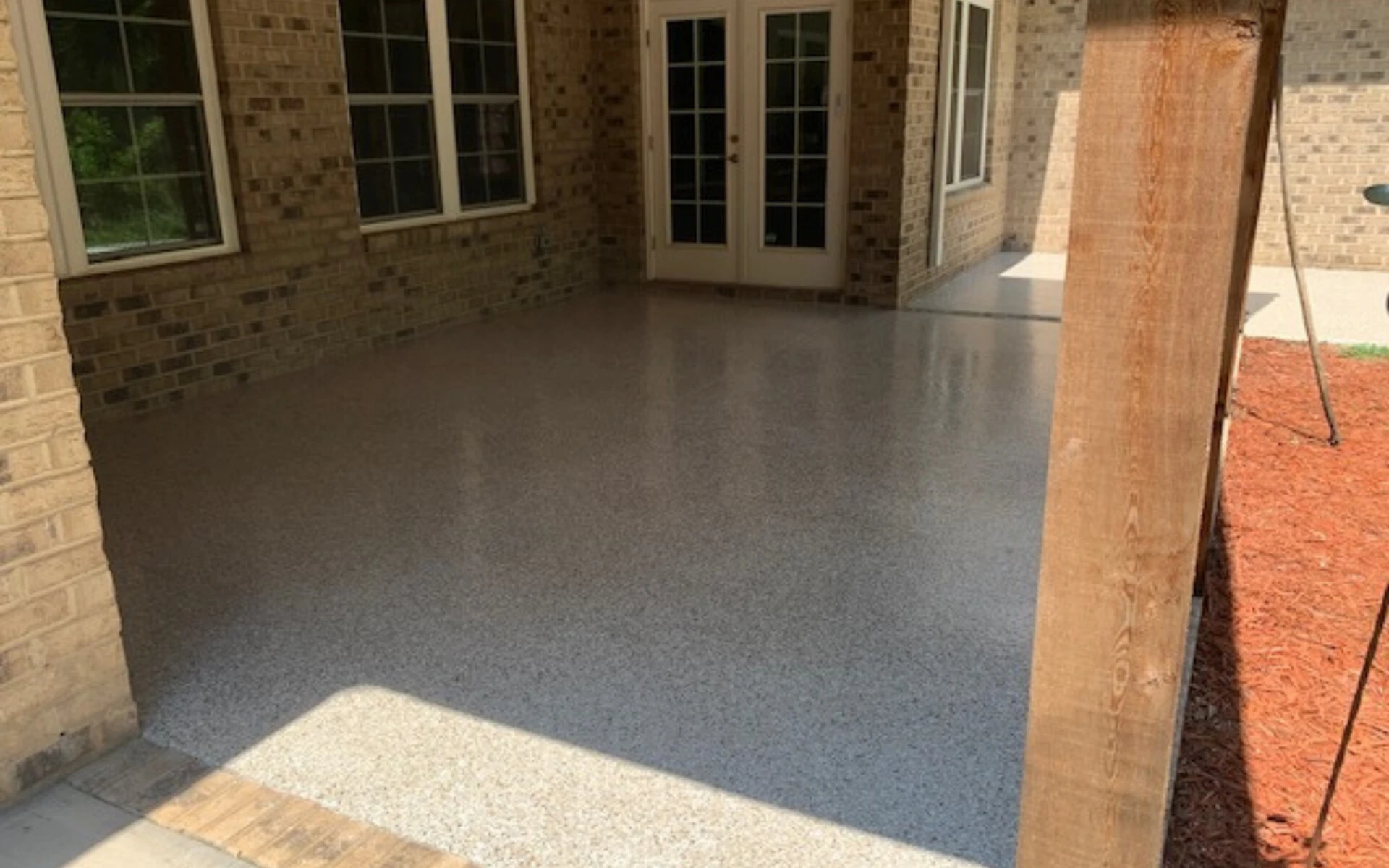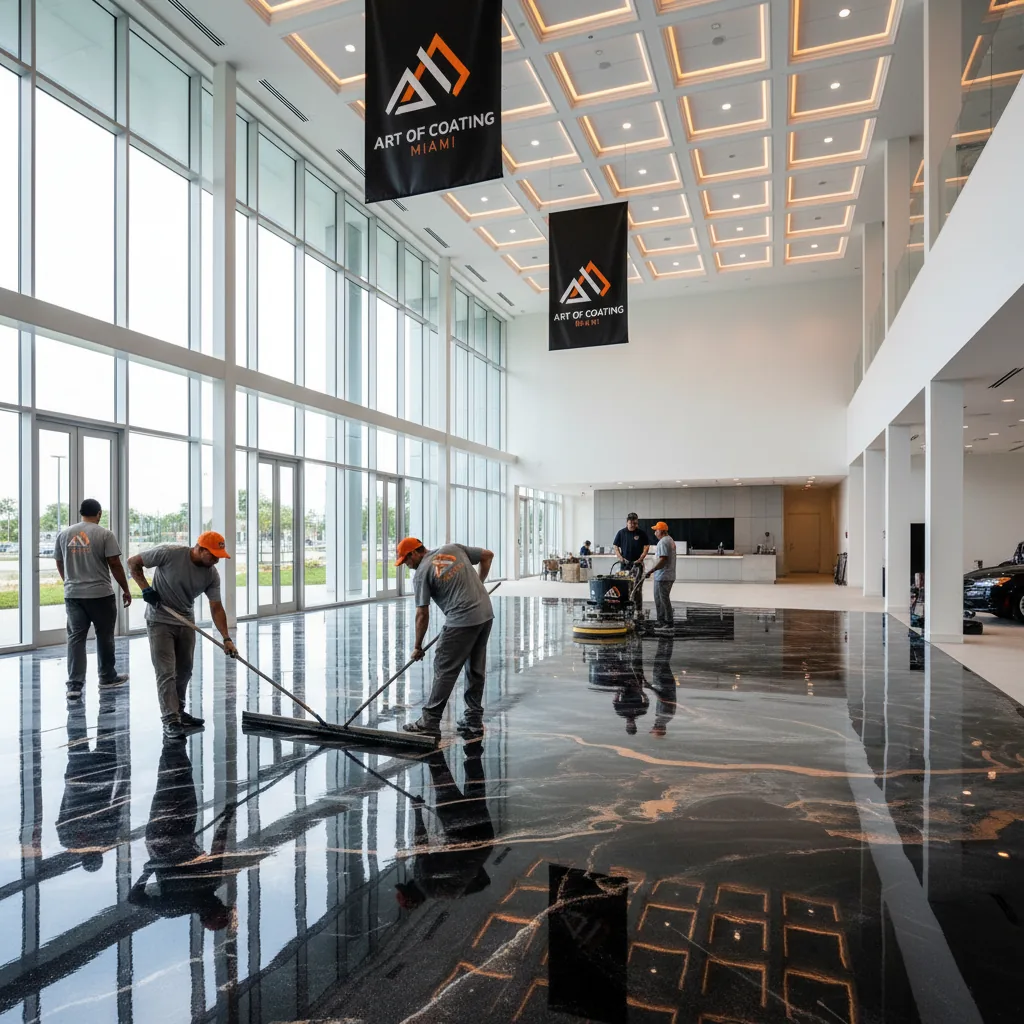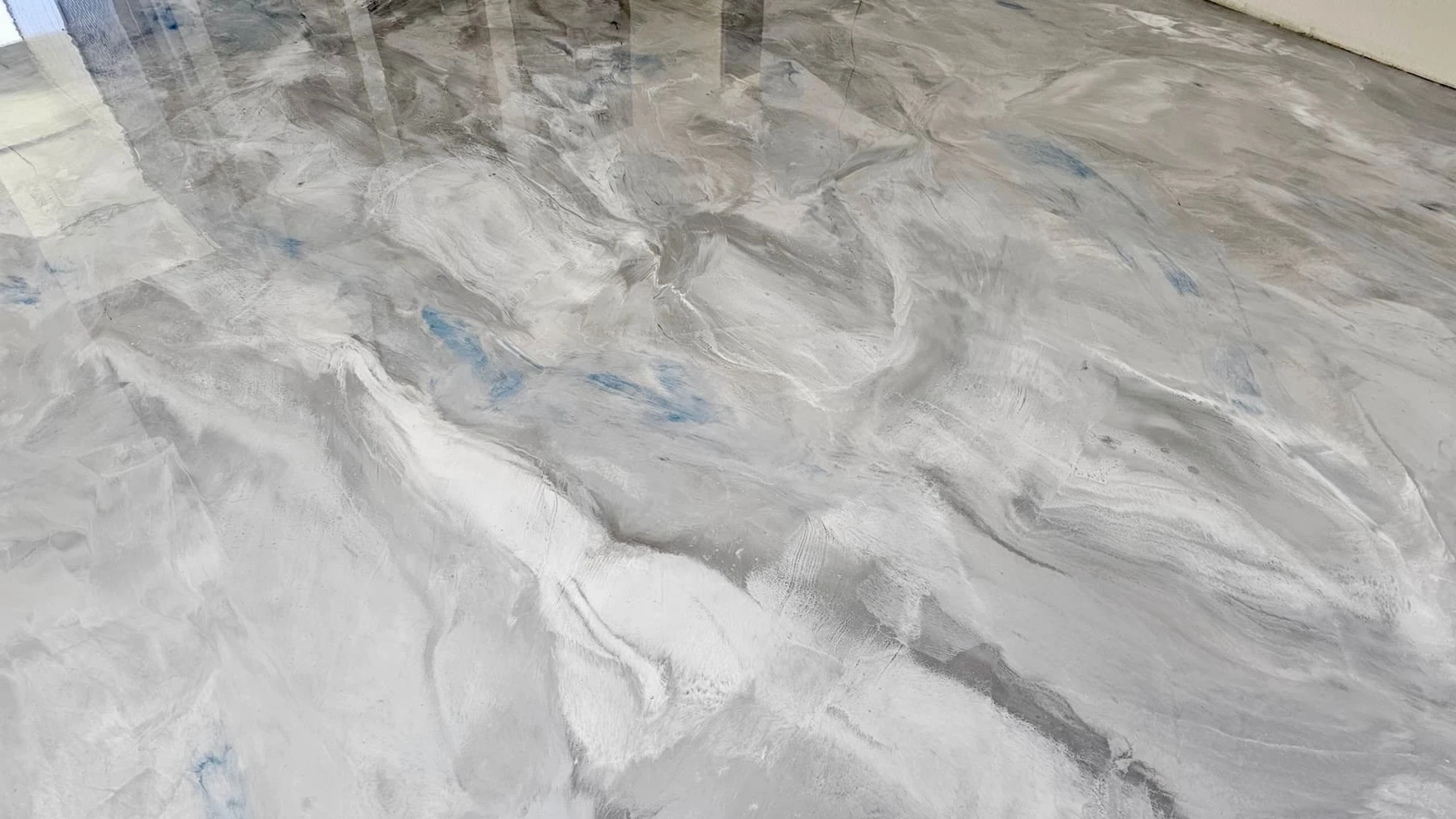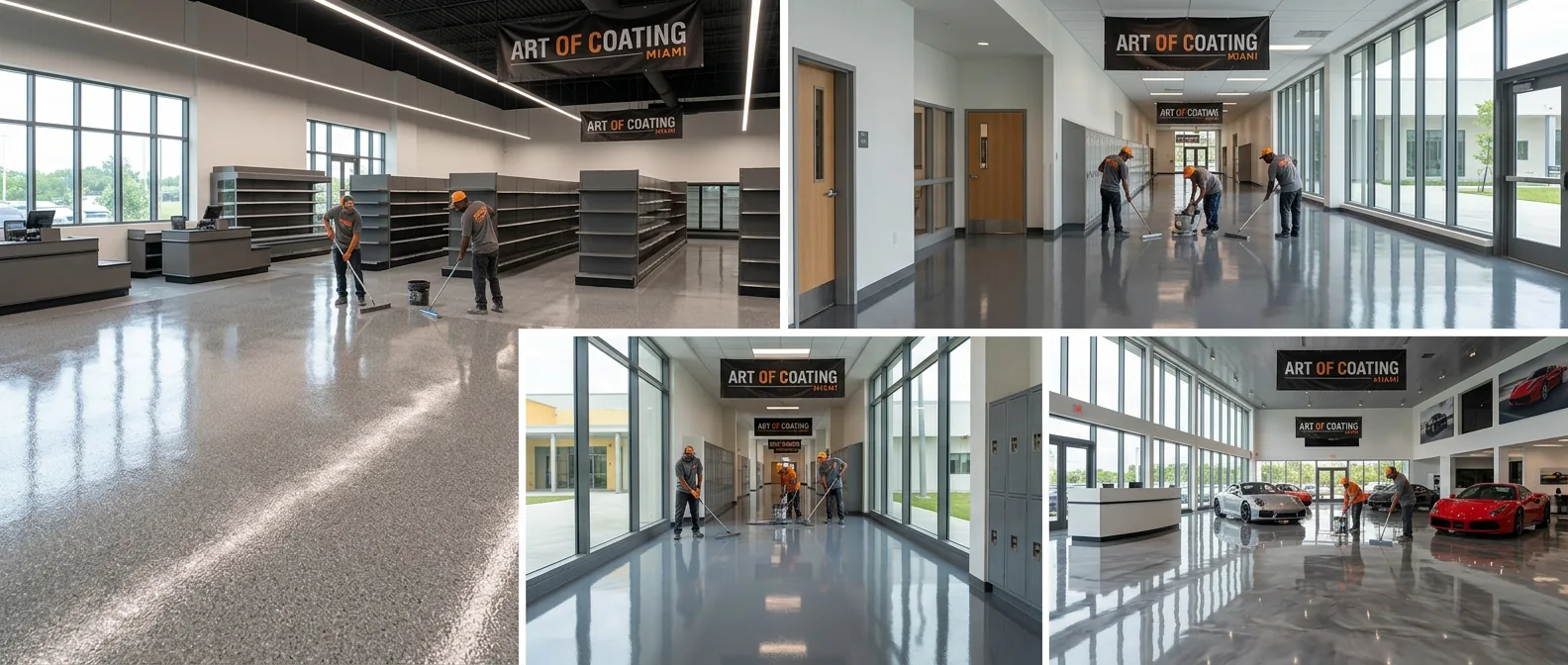
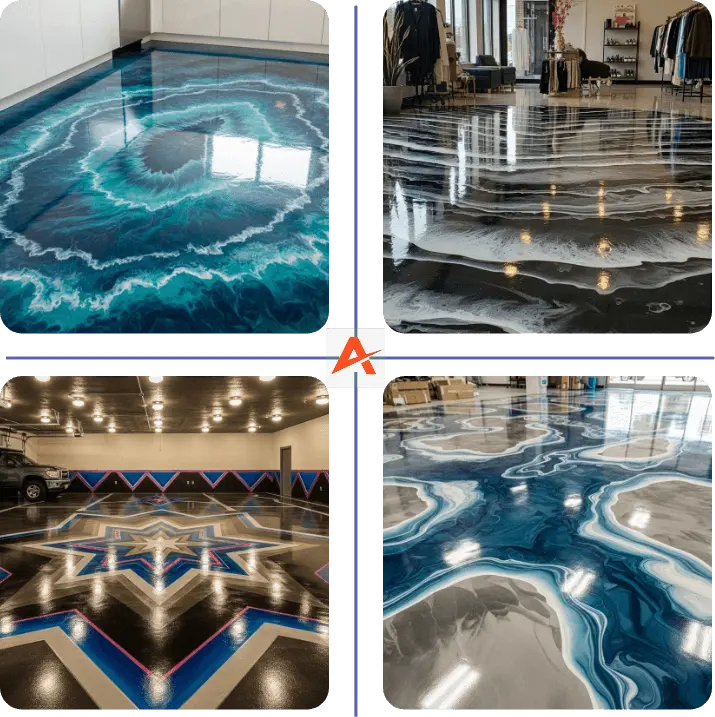
The short answer: in Florida, a professionally installed epoxy garage floor commonly lasts 10 to 15 years, and a polyaspartic-topcoated system often reaches 15 to 20 years or more. DIY kits from the hardware store frequently start failing within 1 to 3 years. Heavy commercial traffic shortens every range, while proper surface prep, moisture testing, a UV-stable topcoat and simple routine cleaning push a floor toward the top of its range.
Request a Free QuoteHomeowners across Miami-Dade, Broward and Palm Beach ask the same question before investing in a coated floor: how long will it actually last here? South Florida is hard on coatings. We have intense sun, year-round humidity, a high water table pushing moisture up through slabs, salt air near the coast and hot tires rolling into garages every afternoon. This guide covers realistic lifespans by system, why epoxy fails in Florida, and how professional installation and simple maintenance stretch the life of your floor.
Epoxy Floor Lifespan by System: Typical Ranges
Not every product sold as epoxy is the same, and the range you can expect depends far more on the system and the installation than on the label. The numbers below are typical ranges in our climate, assuming normal use and basic care. They are not guarantees, and any specific warranty depends on the product and the contractor's written terms. Use them as a realistic planning guide when comparing quotes.
- DIY one-part or water-based epoxy kits: often 1 to 3 years before peeling, hot-tire marks or wear patterns appear.
- Professional 100% solids epoxy garage floor: commonly 10 to 15 years with proper prep and care.
- Epoxy base with a polyaspartic or polyurethane topcoat: often 15 to 20 years or more, because the topcoat takes the abrasion and UV exposure.
- Full polyaspartic flake systems: typically in the 15 to 20+ year range for residential garages.
- Commercial and industrial floors: shorter, frequently 5 to 10 years before a recoat, depending on forklift, cart and foot traffic.
If you are still deciding between chemistries, our comparison of epoxy vs polyaspartic garage floors in South Florida walks through cost, cure time and durability side by side. The short version is that both can last a long time here when they are installed correctly, and both fail early when the slab is not prepared or the moisture is ignored.
What Makes Epoxy Fail in Florida (and the Fix for Each)
When a coated floor fails early in South Florida, the cause is almost always one of a handful of predictable problems. Very few failures come from the resin itself. They come from what happened, or did not happen, during installation, and from conditions specific to our region. Here are the most common culprits behind peeling, bubbling or discolored floors, and how each is prevented.
Moisture Vapor and the High Water Table
Much of South Florida sits on porous limestone with groundwater close to the surface, and many garage slabs were poured without an effective vapor barrier. Moisture vapor constantly moves up through the concrete. When a non-breathable coating traps it, pressure builds underneath and the floor blisters or delaminates in patches. The fix is to test before coating and, when readings are high, use a moisture-mitigating primer designed for that vapor load instead of a standard primer.
Poor Prep and No Grinding
Acid etching and a quick rinse, the method most DIY kits recommend, rarely open the concrete enough for a durable bond. Sealers, oil, curing compounds and weak surface cement all block adhesion, and the coating peels in sheets once hot tires and traffic start working on it. The fix is mechanical diamond grinding to a measurable surface profile, then vacuuming every bit of dust before the primer goes down.
Hot-Tire Pickup
After a drive on a summer afternoon, tires can be very hot. When they sit on a thin or poorly bonded coating, the softened rubber grips the surface and pulls it up as it cools, leaving bare spots right where you park. The fix is a full bond to a ground slab, adequate film thickness, and a hard, heat-resistant topcoat such as polyaspartic over the wear areas.
UV Yellowing of Aromatic Epoxy
Standard epoxies are aromatic resins, and aromatic epoxy yellows and chalks under ultraviolet light. In a garage with the door open most of the day, or anywhere near a west-facing opening, that sun exposure shows up as amber discoloration and a dull surface. The fix is to finish the system with a UV-stable aliphatic topcoat, typically polyaspartic or polyurethane, which holds its color and gloss far better in direct Florida sun.
Thin Film Builds
Many low-cost kits and budget installs go down far thinner than a durable floor needs. A thin coat wears through quickly at tire paths and doorways, telegraphs every crack and pit in the slab, and offers little protection against impacts from dropped tools. The fix is a multi-coat system with a primer, a proper build coat, broadcast flake or quartz where specified, and a topcoat applied at the manufacturer's recommended thickness.
Salt, Chemicals and Pool Products
Coastal salt air, road grime, gasoline, brake fluid and pool chemicals like chlorine and muriatic acid all attack coatings over time, especially when spills sit for days. Salt residue tracked in on tires also acts like fine grit underfoot. The fix is a chemical-resistant topcoat, prompt cleanup of spills, and regular rinsing so salt and chemicals never get a chance to soak in and etch the surface.
How a Professional Floor System Is Built to Last
The difference between a floor that lasts three years and one that lasts fifteen is mostly invisible once the job is done. It lives in the steps underneath the color you see. A professional epoxy floor coating installation follows a sequence that addresses each failure point above before any coating is mixed. Here is what that looks like on a typical South Florida slab.
- Inspection and repair: cracks, spalls and pitting are filled and ground flush.
- Diamond grinding to an ICRI CSP profile: commonly CSP 2 to 3 for thin-film systems, per the manufacturer.
- Moisture testing: vapor emission or relative humidity is measured using recognized ASTM methods before choosing the primer.
- Primer: penetrating for dry slabs, moisture-mitigating when readings call for it.
- Build coats: applied at proper thickness, often with flake or metallic pigments.
- UV-stable topcoat: polyaspartic or polyurethane to resist hot tires, sun and chemicals.
Moisture testing is the step most often skipped, and in our region it matters more than almost anywhere else in the country. Common methods include the calcium chloride test (ASTM F1869) and in-situ relative humidity probes (ASTM F2170), both published by ASTM International. The readings tell the installer whether a standard primer is safe or whether the slab needs a vapor-tolerant system. Skipping this step is one of the main reasons floors blister in the first summer.
Signs Your Epoxy Floor Is Wearing Out
Coated floors rarely fail overnight. They usually send warning signs months or years ahead, and catching them early is the difference between a quick maintenance recoat and a full grind-off and reinstall. A quick walk-through every few months with good light is usually enough. Walk your floor and look for these signals, especially in tire lanes, doorways and around the water heater.
- Dull tire paths where the gloss has worn away.
- Yellowing or amber tint, especially near the garage door opening.
- Blisters that sound hollow.
- Peeling edges or lifting at control joints and around drains.
- Bare concrete showing through under where tires park.
- Stains that no longer wipe up and have soaked into the surface.
A Maintenance Routine That Extends Floor Life
Coated floors are low maintenance compared to bare concrete, tile or carpet, and you do not need special machines or expensive products. A few minutes on a regular schedule removes the grit, salt and chemicals that slowly wear the topcoat down, which is what keeps a floor glossy and intact for years longer. Here is the simple routine we recommend.
- Daily: wipe up oil, fuel and pool chemical spills right away.
- Weekly: dust-mop with soft microfiber to remove sand and grit.
- Every two to four weeks: damp-mop with warm water and a pH-neutral cleaner; skip citrus, vinegar and harsh solvents.
- After beach drives or storms: rinse off salt and squeegee dry.
- Yearly: inspect for wear in tire paths and doorways and plan a maintenance topcoat before the color coat is exposed.
Recoat vs Full Redo: When a Maintenance Topcoat Is Enough
A worn-looking floor does not always need to be torn out. If the coating is still firmly bonded to the slab, with no blistering, lifting or hollow spots, a maintenance recoat is usually enough. The installer lightly abrades the existing topcoat, cleans it thoroughly and applies a fresh clear coat, which restores gloss, fills fine scratches and adds a new wear layer. Many owners plan this every several years on busy floors to keep the base layers untouched.
A full redo becomes necessary when the problem is underneath the surface. Widespread peeling, moisture blisters, hot-tire lift that keeps spreading, or coating that has worn down to bare concrete across large areas all point to a bond or moisture issue that a topcoat cannot fix. In those cases the old material is ground off, the slab is tested, and a new system is installed. A professional assessment tells you which path you are on before you spend money.
Garage vs Commercial vs Outdoor Lifespans
Where the floor lives matters as much as the system itself. A residential garage sees a couple of vehicles and occasional foot traffic, so a well-built floor often sits at the upper end of its range. Warehouses, showrooms, restaurant kitchens and auto shops take constant wheeled traffic, dropped tools and cleaning chemicals, so they typically need maintenance recoats more often even when the base system remains sound.
Outdoor surfaces such as patios, pool decks, lanais and driveways face the toughest conditions of all: direct sun, rain, standing water and thermal swings. Standard aromatic epoxy is generally not a good choice for full sun exposure, which is why exterior work in South Florida usually calls for a UV-stable system. Our polyaspartic floor coating is built for exactly these conditions, holding color and gloss where ordinary epoxy would chalk and yellow.
Frequently Asked Questions
Does epoxy flooring last in Florida's heat and humidity?
Yes, when it is installed correctly. Professional epoxy garage floors in Florida commonly last 10 to 15 years, and systems with a polyaspartic topcoat often go longer. The key is grinding the slab, testing for moisture, choosing the right primer and finishing with a UV-stable topcoat. Floors installed without these steps are the ones that peel or blister early, not because the climate makes coatings impossible.
Why is my epoxy garage floor peeling?
Peeling is usually caused by poor adhesion. The most common reasons are a slab that was acid etched instead of ground, moisture vapor pushing up from below, a coating applied too thin, or hot tires lifting a weak bond. Patching peeled areas rarely holds for long because the underlying cause remains. A proper fix generally means removing the failed coating, testing the slab and installing a system designed for those conditions.
How long does a DIY epoxy kit last compared to a professional floor?
DIY kits often begin failing within 1 to 3 years, mostly because they rely on acid etching, go down thin and are typically water-based or low-solids products. A professional system uses diamond grinding, higher-solids materials, multiple coats and a durable topcoat, which is why it commonly lasts several times longer. That gap is the main thing you pay for with professional installation.
Can I recoat my existing epoxy floor instead of replacing it?
Often, yes. If the coating is still well bonded and the wear is limited to dullness, light scratches or a thinning topcoat, a maintenance recoat can restore the finish and add years of life. If there are blisters, widespread peeling or areas worn to bare concrete, a recoat will not solve the problem. An on-site inspection is the best way to tell which situation you have before committing to either option.
Will my epoxy floor turn yellow?
Standard aromatic epoxy can yellow when exposed to sunlight, which is a real concern in Florida garages that stay open during the day. Yellowing is cosmetic rather than structural, but it is hard to reverse. The way to avoid it is to finish the system with a UV-stable aliphatic topcoat such as polyaspartic or polyurethane, which protects the color layers underneath and holds its clarity much longer in sun-exposed areas.
Get a Floor Built to Last in South Florida
Art of Coating Miami is a licensed and insured floor coating contractor with a BBB A+ rating, serving homeowners and businesses across Miami-Dade, Broward and Palm Beach from our Fort Lauderdale office. Every installation starts with proper grinding, moisture testing and a system matched to your slab and how you use the space. Whether you need a new floor, a maintenance recoat or an honest assessment of a peeling one, call (786) 618-4877 or request your free estimate today.
Last updated: October 2026