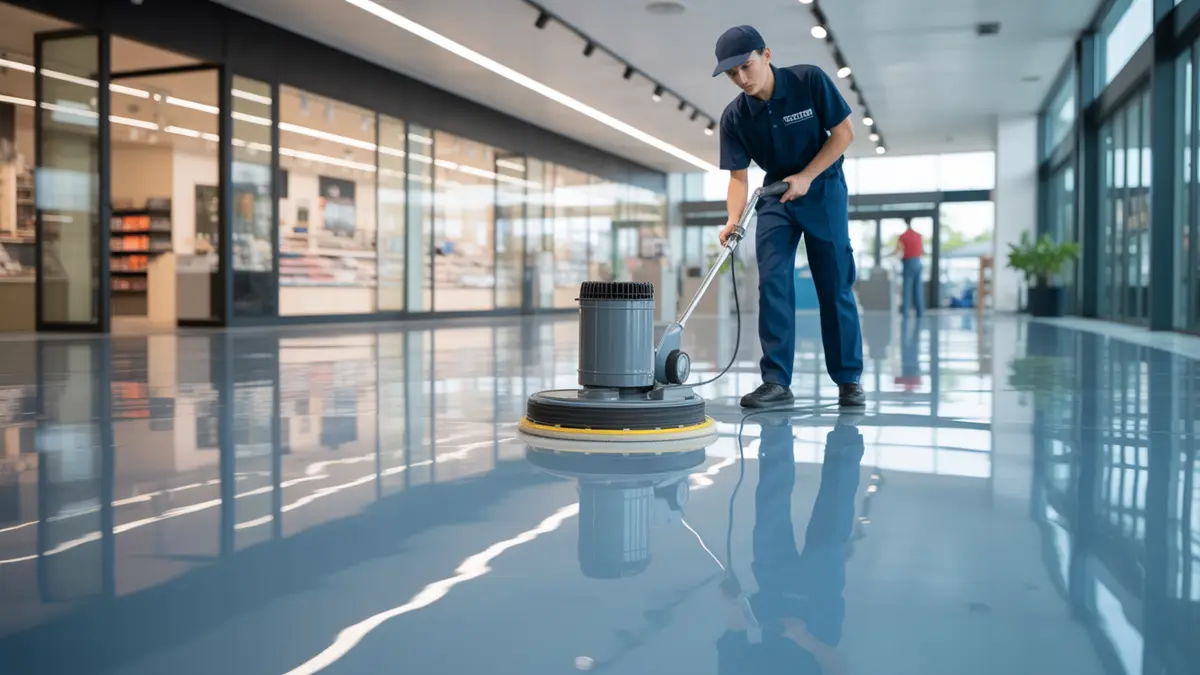
A professional floor coating system is designed to last 10–20 years, but its actual lifespan depends heavily on how well it is maintained. The good news is that coated floors require significantly less maintenance than bare concrete, tile, or VCT. Following these seven practices will maximize your coating's appearance and performance throughout its service life.
1. Establish a Daily Dust Mopping Routine
Abrasive grit is the number one enemy of floor coatings. Sand, dirt, and debris tracked in from outside act like sandpaper under foot traffic and forklift wheels, gradually wearing down the topcoat. A daily dust mopping or auto-scrubbing routine removes this grit before it causes damage. Use a microfiber dust mop — never a stiff-bristle broom, which can scratch the surface.
2. Clean Spills Immediately
While epoxy and polyaspartic coatings are chemical-resistant, prolonged exposure to harsh chemicals can still cause damage. Clean spills within 30 minutes using a neutral pH cleaner (pH 7–9) and warm water. Avoid acidic cleaners, citrus-based degreasers, or products containing vinegar, as these can etch the coating surface over time.
3. Use the Right Cleaning Products
Use only pH-neutral, non-abrasive cleaning solutions specifically formulated for coated floors. Avoid bleach, ammonia, and soap-based cleaners. Soap leaves a film that dulls the gloss and attracts dirt. We recommend Simple Green or a diluted commercial floor cleaner at the manufacturer's recommended ratio.
4. Protect High-Traffic Areas
Place walk-off mats at all entrances to capture grit before it reaches the coated surface. In warehouse environments, ensure forklift wheels are clean and free of debris. Consider adding rubber bumper guards in loading areas where pallets are frequently dropped.
5. Address Damage Promptly
If you notice chips, gouges, or areas where the coating is peeling, address them immediately. Small repairs are quick and inexpensive, but ignored damage allows moisture to infiltrate beneath the coating, leading to much larger delamination issues. Contact your coating contractor for a spot repair rather than attempting a DIY fix.
6. Schedule Periodic Deep Cleaning
Beyond daily maintenance, schedule a professional deep cleaning every 6–12 months depending on traffic volume. This involves machine scrubbing with an appropriate cleaner to remove embedded dirt and restore the coating's original gloss. For high-traffic commercial spaces in South Florida, quarterly deep cleaning is recommended.
7. Plan for Recoating Before Failure
A maintenance recoat (applying a fresh topcoat over the existing system) every 5–8 years costs a fraction of a full system replacement and extends the coating's life by another 5–10 years. Watch for signs that a recoat is needed: dulling gloss, minor wear patterns in traffic lanes, and increased difficulty cleaning. Scheduling a recoat before the coating wears through to the primer saves significant money.
Need maintenance advice or a recoating estimate for your South Florida commercial floor? Art of Coating Miami offers maintenance programs and recoating services throughout the tri-county area. Call (786) 618-4877.
Request a Free QuoteBuild a Simple Maintenance Schedule
The easiest way to protect a floor coating investment is to turn the seven practices above into a written routine your staff actually follows. A documented schedule removes guesswork, keeps cleaning consistent across shifts, and gives you proof of care if a warranty question ever arises. Post it near supply closets and assign an owner to each task so nothing slips during busy weeks. Industry resources on decorative and coated concrete care, such as the Concrete Network, consistently reinforce that gentle, regular cleaning beats occasional aggressive scrubbing every time. For the systems these routines protect, see our commercial flooring page.
- Daily: dust mop or auto-scrub traffic lanes and entrances
- Weekly: damp mop with a pH-neutral cleaner and inspect for spills
- Monthly: check high-traffic zones and seams for early wear
- Every 6 to 12 months: professional deep clean and gloss restoration
South Florida Climate Considerations
Miami's heat and humidity add maintenance wrinkles you will not find in drier markets. Salt and fine sand tracked in from coastal areas are highly abrasive, so walk-off mats and frequent entrance cleaning matter more here than almost anywhere else. High humidity also encourages mildew in shaded exterior or dock areas; a periodic rinse with a neutral cleaner keeps it in check before it stains. For businesses near the water, we often recommend the extra durability of a polyaspartic floor coating topcoat, which resists UV and corrosion far better during the resealing cycle than standard products and stretches the time between recoats.
Choosing the Right Equipment and Products
The tools matter as much as the schedule. Use microfiber flat mops and soft auto-scrubber pads rather than stiff brushes or abrasive green pads that micro-scratch the topcoat and dull the gloss over time. Dilute cleaners exactly to the manufacturer's ratio, since over-concentrated solutions leave a film that attracts dirt and feels tacky underfoot. Keep a dedicated bucket for coated floors so you never cross-contaminate with wax or stripper residue. For larger facilities, a battery auto-scrubber pays for itself quickly by delivering consistent, streak-free results that mop-and-bucket cleaning cannot match across thousands of square feet.
A quick test: if your floor feels tacky or looks hazy after mopping, your cleaner is too strong or soap-based. Rinse with clean water and switch to a properly diluted, pH-neutral product.
Request a Free QuoteWhen to Call a Professional
Routine cleaning is in-house work, but some situations call for a specialist. Deep gouges, hot-tire delamination, blistering from moisture, or widespread dulling signal issues that DIY cleaning will not fix and may worsen. Catching these early almost always means an inexpensive spot repair or maintenance recoat instead of a full replacement, which is why monthly inspections pay off. A maintenance recoat applied before the coating wears through to the primer can add years of life for a fraction of a redo.
Training the people who use the floor is just as important as buying the right mop. A single staff member grabbing a bottle of bleach, an acidic bathroom cleaner, or a citrus degreaser can undo months of careful upkeep in one shift by etching or dulling the topcoat. Keep approved, pre-diluted cleaners in labeled bottles, store them away from the harsh chemicals, and give new hires a two-minute rundown on what not to use. For restaurants and retail with frequent turnover, a laminated one-page guide posted in the supply closet is the simplest way to keep care consistent no matter who is on shift that day.
Think of maintenance as the cheapest insurance on a floor that cost thousands to install. A few minutes of daily care and a twice-yearly professional clean keep the surface warranty-compliant, slip-safe, and looking new far longer than neglect ever allows. If you are unsure whether your floor needs attention, our team can assess wear patterns and gloss levels during a quick visit. Request a maintenance evaluation or recoating estimate through our contact page, or see the long-wearing finishes we install in our project gallery.
Last updated: October 2026