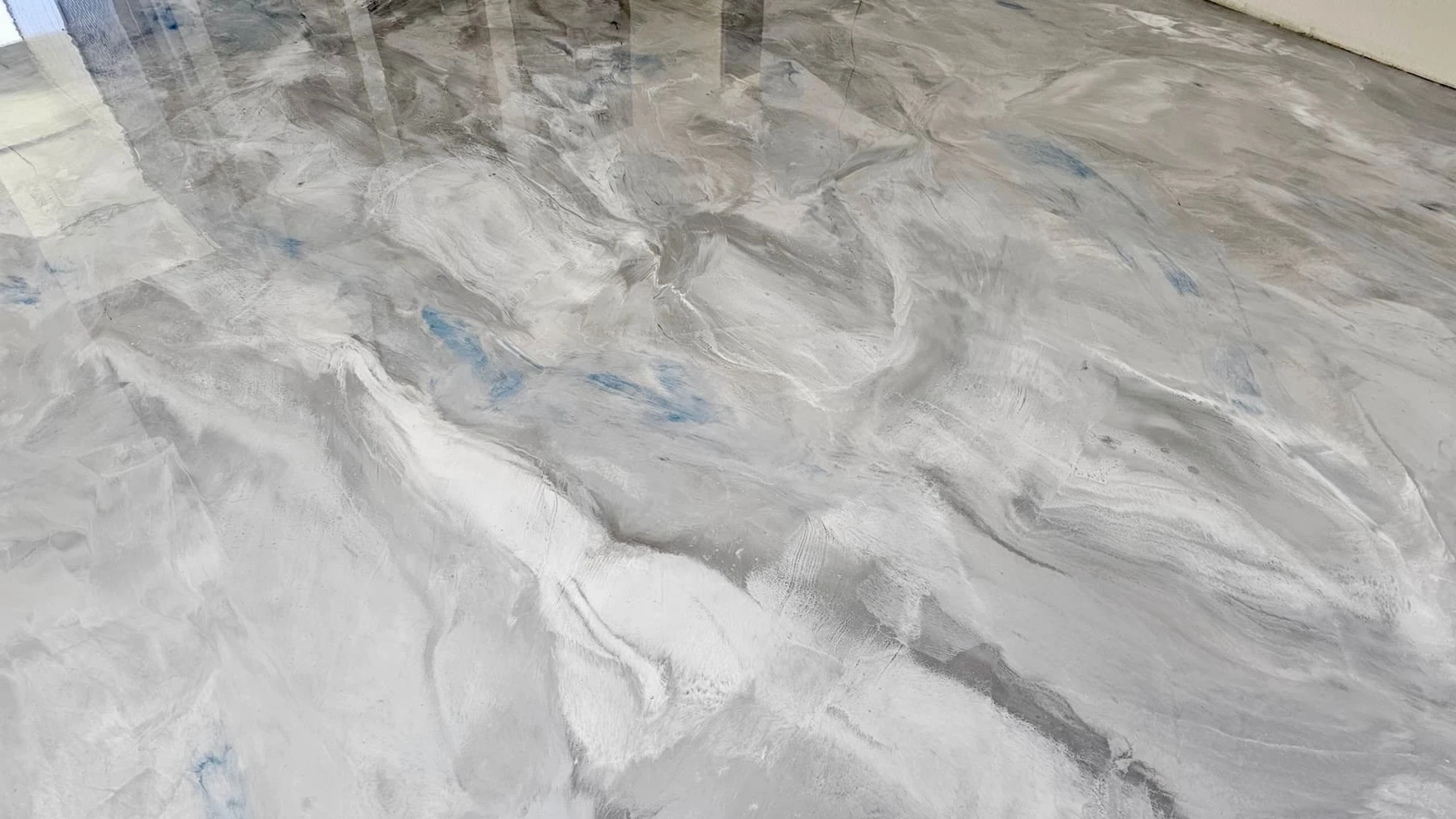
The short answer: A metallic epoxy floor is a clear epoxy loaded with reflective metallic pigments that an installer hand-manipulates on site to create depth, veining and movement, so no two floors look the same. In Miami, installed metallic systems typically run about $8 to $15 per square foot, depending on design complexity, the condition of the concrete, and the topcoat you choose.
Request a Free QuoteMetallic epoxy has become one of the most requested finishes in South Florida. It gives concrete the look of polished stone, liquid metal or moving water at a fraction of the cost of natural stone, in a seamless surface that is easy to clean. But metallics are also the least forgiving coating we install; poor prep, the wrong topcoat or a rushed pour shows up quickly under bright Florida light. This guide covers what metallic epoxy is, the design styles clients in Miami-Dade, Broward and Palm Beach ask for most, what drives cost, and how to care for the floor.
What Is a Metallic Epoxy Floor?
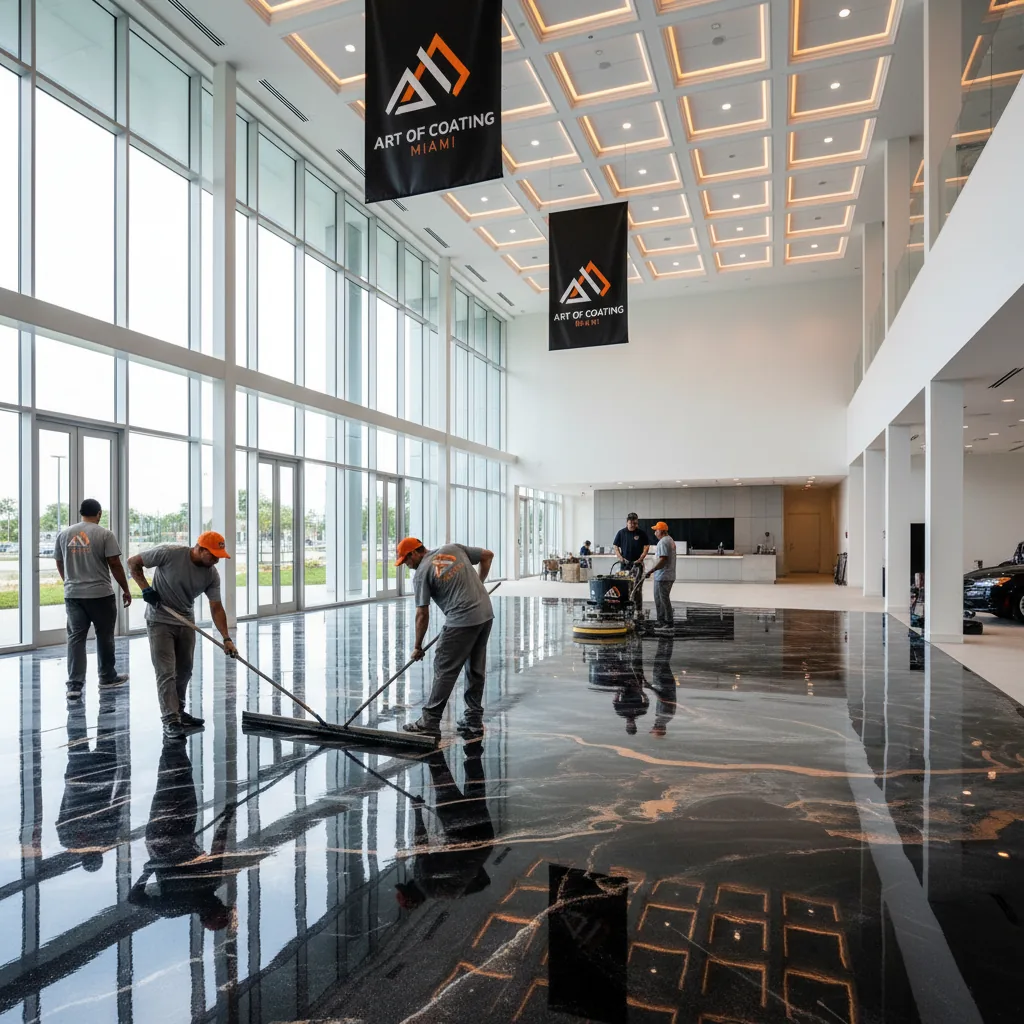
A metallic epoxy floor starts like any professional coating: ground concrete, a primer, and often a tinted base coat. The difference is the design layer. The installer pours a clear epoxy mixed with fine metallic pigments, tiny reflective particles that catch and bend light, then works it while wet with rollers, trowels, brushes, solvent sprays and sometimes air blowers. The pigments drift and settle as the material cures, producing veins, cells and ripples that look three-dimensional.
Because the effect depends on how the material is worked by hand and how it flows across your specific slab, every metallic floor is genuinely unique. You can choose the colors and the general style, and a skilled installer can steer the result, but you cannot order an exact copy of a photo. That is part of the appeal. If you want to see the range of finishes we offer, our metallic epoxy flooring service page shows the system in more detail.
Metallic Epoxy Design Styles and Ideas
Marble and Vein Effects
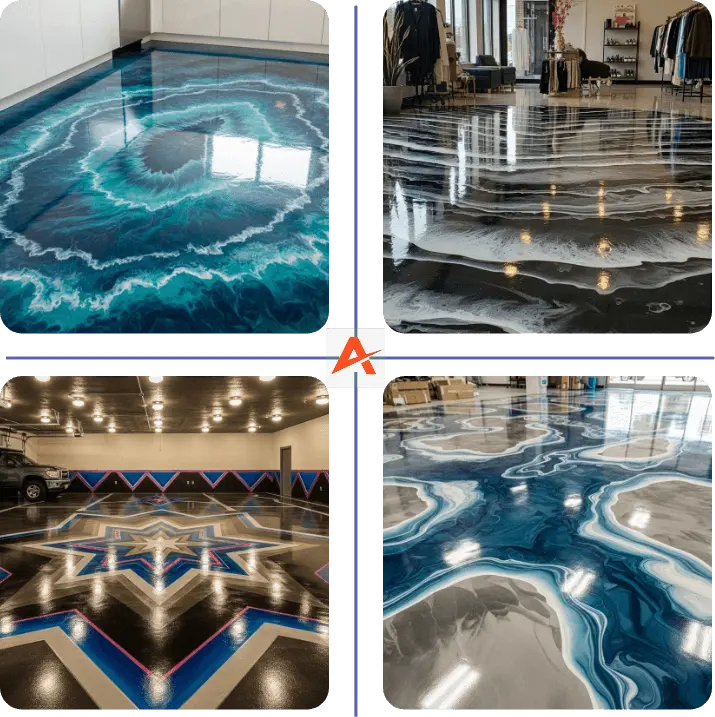
A marble epoxy floor is the most popular metallic look in Miami homes. A light base such as white, pearl or soft gray is layered with darker or contrasting veins that are drawn, dripped or pulled through the wet epoxy. The result reads like Carrara or Calacatta stone without grout lines. Marble effects work beautifully in living rooms, kitchens, entryways and upscale showrooms, and they pair naturally with the white walls and light cabinetry common in South Florida interiors.
Lava and Flow Patterns
Lava or flow designs use bold, contrasting colors, often copper, bronze, red or gold against black or charcoal, and let them swirl and cell together. The movement is dramatic and energetic. This style is a favorite for man caves, home bars, garages that double as entertainment spaces, and retail interiors that want a strong first impression. It also hides dust and minor wear better than very light floors.
Ocean and Wave Looks
Ocean effects blend blues, teals, aqua and white into rolling patterns that resemble water over sand or waves breaking on a reef. It is a natural fit for coastal homes, pool cabanas, waterfront condos and hospitality spaces that want a Florida identity. Installers often add pearl or silver pigment to mimic sunlight on water. The key is balance; too many colors can look busy, so most ocean floors are built from two or three related tones.
Solid Sheen Metallics
Not every metallic floor needs heavy veining. A solid sheen metallic uses a single pigment, such as champagne, pewter or graphite, worked to create subtle tonal shifts and a soft, satin shimmer. It looks refined and modern rather than busy, which makes it a good choice for offices, galleries, medical or professional suites, and minimalist homes. It is also one of the more budget-friendly metallic options because it takes less design time.
Two-Tone and Custom Combinations
Two-tone metallics pair a dominant color with an accent, such as silver with charcoal or gold with white. Designs can also be zoned, with a different look in walkways, display areas or borders, which helps businesses guide foot traffic or highlight merchandise. Our retail store flooring page covers how coatings are scheduled around store operations. Sparkling white and pearl glitter finishes are another option for bright, airy interiors.
Choosing Colors for South Florida Homes and Showrooms
Color choice matters more in Miami than in many markets because of the intense natural light. Large windows and sliding doors flood rooms with sun, which brightens metallic pigments and makes highlights pop, but it also shows dust, footprints and scratches on very dark floors. Light pearl, white, silver and soft gray tones tend to feel cool and open, and they complement the bright, airy interiors common across Miami-Dade and Broward.
Mid-tones such as champagne, pewter, bronze and blue-gray are a smart middle ground; they hide dust better than white and show less wear than black. Deep blacks, charcoals and rich reds look stunning in showrooms and garages where lighting is controlled and the floor is the centerpiece. For businesses, we suggest working with brand colors rather than chasing a trend, since a coating is meant to last for years. Always view physical samples under your own lighting before committing.
How Much Do Metallic Epoxy Floors Cost in Miami?
Installed metallic epoxy systems in the Miami area typically fall in the range of roughly $8 to $15 per square foot. Simpler solid sheen floors on sound concrete sit toward the lower end, while multi-color marble or lava designs on slabs that need repair sit toward the higher end. Metallics generally cost more than solid-color or flake systems because they use more material, require more skill, and take more time on the design layer. Every project is quoted after we see the space.
- Design complexity: one-color sheens take less time than layered marble veining or multi-color flows.
- Surface prep: cracks, spalling, old coatings and adhesive must be ground off or repaired first.
- Moisture: damp slabs may need a moisture-mitigating primer.
- Topcoat: a UV-stable polyaspartic or urethane topcoat adds cost but protects the design.
- Layout: small rooms, corners, stairs and cove bases take more labor per square foot.
- Access: occupied homes, after-hours commercial work and furniture moves can affect pricing.
Why Prep and the Topcoat Matter More for Metallics
Metallic floors are glossy and reflective, which means they act like a mirror for every flaw underneath and every scratch on top. A crack that would disappear under a flake system can telegraph right through a marble design. That is why proper diamond grinding, crack repair and a well-bonded primer are non-negotiable. The concrete must be clean, open and profiled so the coating bonds mechanically, not just sits on the surface.
The topcoat is just as important. Standard epoxy is not UV-stable and can amber, or yellow, in sunlight, which is very visible over light metallic colors. A UV-stable polyaspartic or aliphatic urethane topcoat helps resist yellowing, adds scratch and chemical resistance, and handles hot tire pickup in garages better. For independent background on how decorative concrete coatings are built in layers, Concrete Network is a useful resource.
Where Metallic Epoxy Works and Where It Does Not
Metallic epoxy shines indoors: living areas, kitchens, home offices, showrooms, boutiques, salons, offices, and climate-protected garages. A metallic epoxy garage floor is a popular upgrade in Miami because it turns the garage into an extension of the home, as long as it is sealed with a tough, UV-stable topcoat. Our garage flooring page covers the options in more detail, including flake systems that may suit heavy daily use better.
Metallic is not the right choice everywhere. We generally do not recommend it for fully exposed outdoor areas such as pool decks, patios and driveways, where direct sun, heat and rain are constant; there are better systems for those surfaces. It is also a poor match for heavy industrial floors with forklifts, dragged pallets or harsh chemical exposure, where a high-build industrial coating performs better. Very high-traffic commercial entries can work, but you should expect visible wear patterns over time and plan for periodic recoating.
The Install Process and Timeline
A typical residential metallic project takes about two to four days on site, depending on size, prep needs and the number of coats. Commercial projects are scheduled around business hours whenever possible, and we confirm cure times before anyone moves furniture back or parks a car. Here is what a standard install looks like from the first visit to the final clear coat.
- Consultation and samples: we review the space, test the concrete and discuss colors and styles.
- Protection: walls, cabinets and doorways are masked against dust and drips.
- Diamond grinding: the slab is ground to open the surface and remove old coatings.
- Repairs: cracks and spalls are filled and ground flush so they do not show through.
- Primer and base coat: a bonding primer, then a tinted base that sets the background color.
- Metallic design coat: the metallic epoxy is poured and hand-manipulated into the chosen pattern.
- Topcoat: a UV-stable polyaspartic or urethane clear coat adds protection and sets the gloss level.
- Cure: light foot traffic usually after about 24 hours; furniture and vehicles after a longer cure your installer will specify.
Slip Resistance Options and Trade-Offs
A high-gloss metallic floor can be slippery when wet, a real concern in Florida where rain, pool water and humidity get tracked indoors. The usual solution is a fine anti-slip additive broadcast into the topcoat, which adds grip while keeping the design visible. The trade-off is a surface that is slightly harder to mop and a little less glassy up close. Matte or satin topcoats reduce glare and feel less slick but soften the metallic depth. For kitchens, bathrooms, garages and commercial entries we usually recommend a light anti-slip texture; for formal living areas and showrooms, many clients prefer full gloss with rugs and entry mats.
Caring for a Metallic Epoxy Floor
- Dust mop often with soft microfiber; grit causes most fine scratches.
- Damp mop with warm water and a pH-neutral cleaner; avoid vinegar, citrus, ammonia and bleach.
- Skip wax, polish and oil soaps, which leave a hazy film.
- Use felt pads under furniture and never drag heavy items.
- Place walk-off mats at exterior doors to catch sand and water.
- In garages, wipe up oil, brake fluid and chemicals promptly.
- Ask about a topcoat refresh if high-traffic lanes dull over time.
Metallic Epoxy Floor FAQs
Can I get the exact floor I saw in a photo?
You can get the same colors and the same general style, but not an identical copy. Metallic pigments move and settle differently on every slab and with every pour, so each floor has its own pattern. A good installer will show you samples, explain how much control they have over veining or flow, and work with you to steer the design toward the look you want.
Is metallic epoxy a good choice for a Miami garage?
Yes, as long as it is installed on properly prepared concrete and sealed with a UV-stable, abrasion-resistant topcoat. Hot tires, dropped tools and sand are tough on any coating, and scratches tend to be more visible on glossy metallic floors than on flake. If your garage sees heavy workshop use, we may suggest a flake system or a metallic design with a mid-tone color that hides wear better.
Can metallic epoxy go over tile or an existing coating?
In most cases, the best results come from coating bare, ground concrete. Existing coatings usually need to be removed so the new system bonds properly. Coating over tile is sometimes possible, but grout lines and loose tiles can telegraph through or cause failures, so it depends on the specific floor. We assess this during the site visit before recommending an approach.
Will a metallic floor turn yellow in the Florida sun?
Standard epoxy can yellow with UV exposure, which is why the topcoat matters so much. A UV-stable polyaspartic or aliphatic urethane topcoat helps protect the color, especially on light whites, pearls and silvers where any ambering is easy to spot. Rooms with strong direct sun through sliding doors or large windows benefit most from this protection, and window film or shades can help further reduce long-term fading.
Do you install metallic floors outside Miami?
Yes. Art of Coating Miami is based in Fort Lauderdale and serves homeowners and businesses throughout Miami-Dade, Broward and Palm Beach counties, from Coral Gables and neighborhoods like Cocoplum to Boca Raton and West Palm Beach. The same prep standards and topcoat options apply across every county. We visit every site before quoting, so the estimate reflects your actual slab.
Plan Your Metallic Epoxy Floor with Art of Coating Miami
A metallic epoxy floor is a design statement and an investment, so it is worth working with a team that takes prep, product selection and craftsmanship seriously. Art of Coating Miami is a licensed and insured South Florida contractor with a BBB A+ rating, hand-pouring metallic epoxy floors for garages, homes, showrooms, retail stores and offices since 2022. Call (786) 618-4877 or request a free estimate to talk through colors, styles and a quote for your space.
Last updated: October 2026