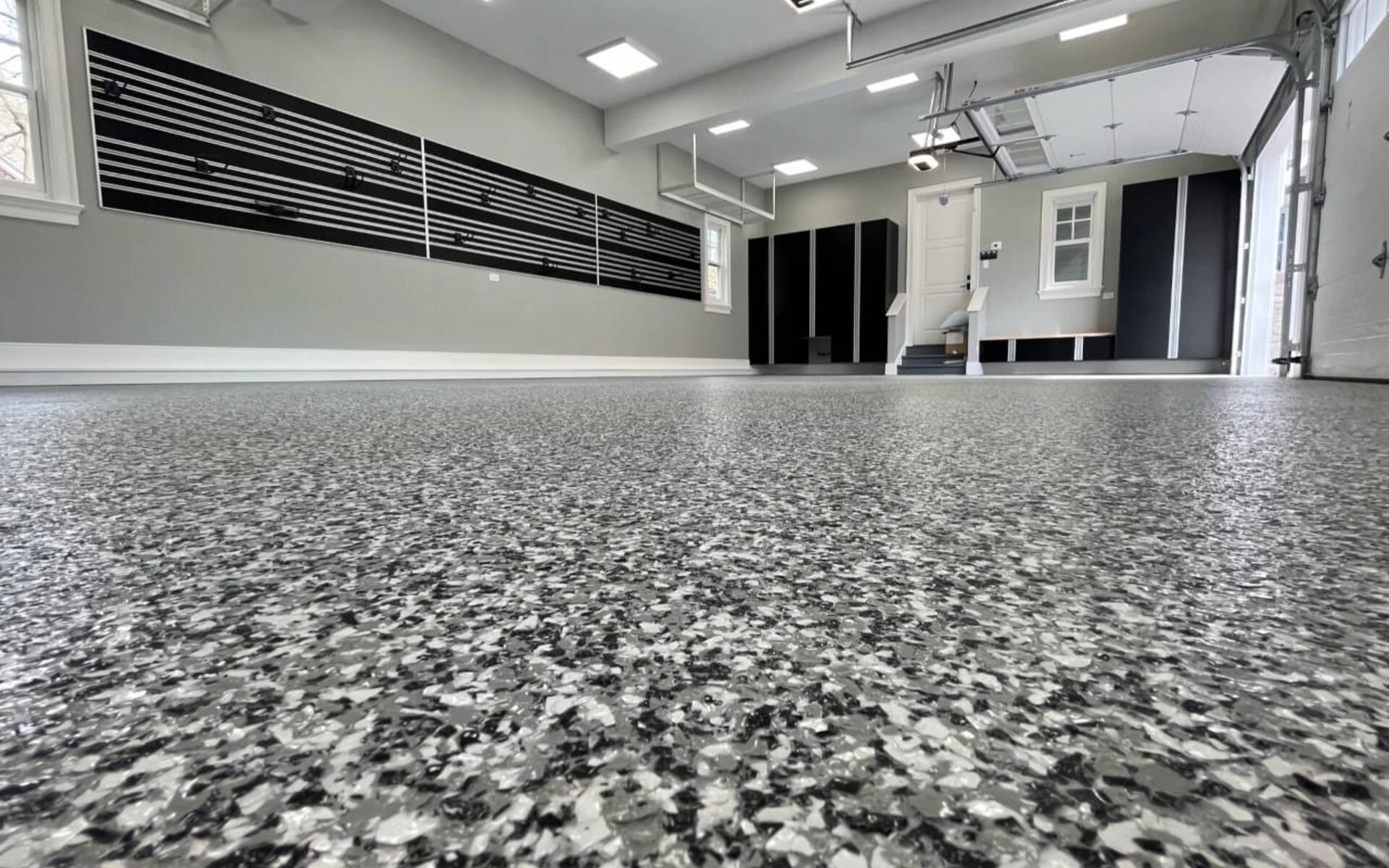
The short answer: a properly installed epoxy or polyaspartic floor usually survives a short flood well, because the seamless, non-porous film sheds water and cleans up far faster than bare concrete. But a coating is not a waterproofing membrane and will not keep water out of a garage. The bigger long-term risk in South Florida is moisture pushing up from saturated ground, which is why moisture testing and the right primer matter.
Request a Free QuoteEvery hurricane season, homeowners across Miami-Dade, Broward and Palm Beach ask us the same thing after the water goes down: is my garage floor ruined? Most of the time the answer is no, provided the coating was bonded to clean, properly profiled concrete in the first place. This guide explains what floodwater and storm surge actually do to bare and coated concrete, where failures really come from, which systems tolerate water best, and what to do before and after a storm. We keep it practical and cautious, because no floor coating on the market should be sold as flood-proof.
What Floodwater Does to Bare Concrete vs. a Coated Floor
Bare concrete is porous. When rainwater, canal overflow or storm surge sits on it, the slab soaks up water along with whatever the water is carrying: silt, fertilizer runoff, motor oil from the street, sewage and, near the coast, salt. After the water drains, those contaminants stay in the pores. You get staining, efflorescence (the white powdery bloom as salts migrate to the surface), lingering odor and, in a humid garage, mold along the base of walls and stored boxes.
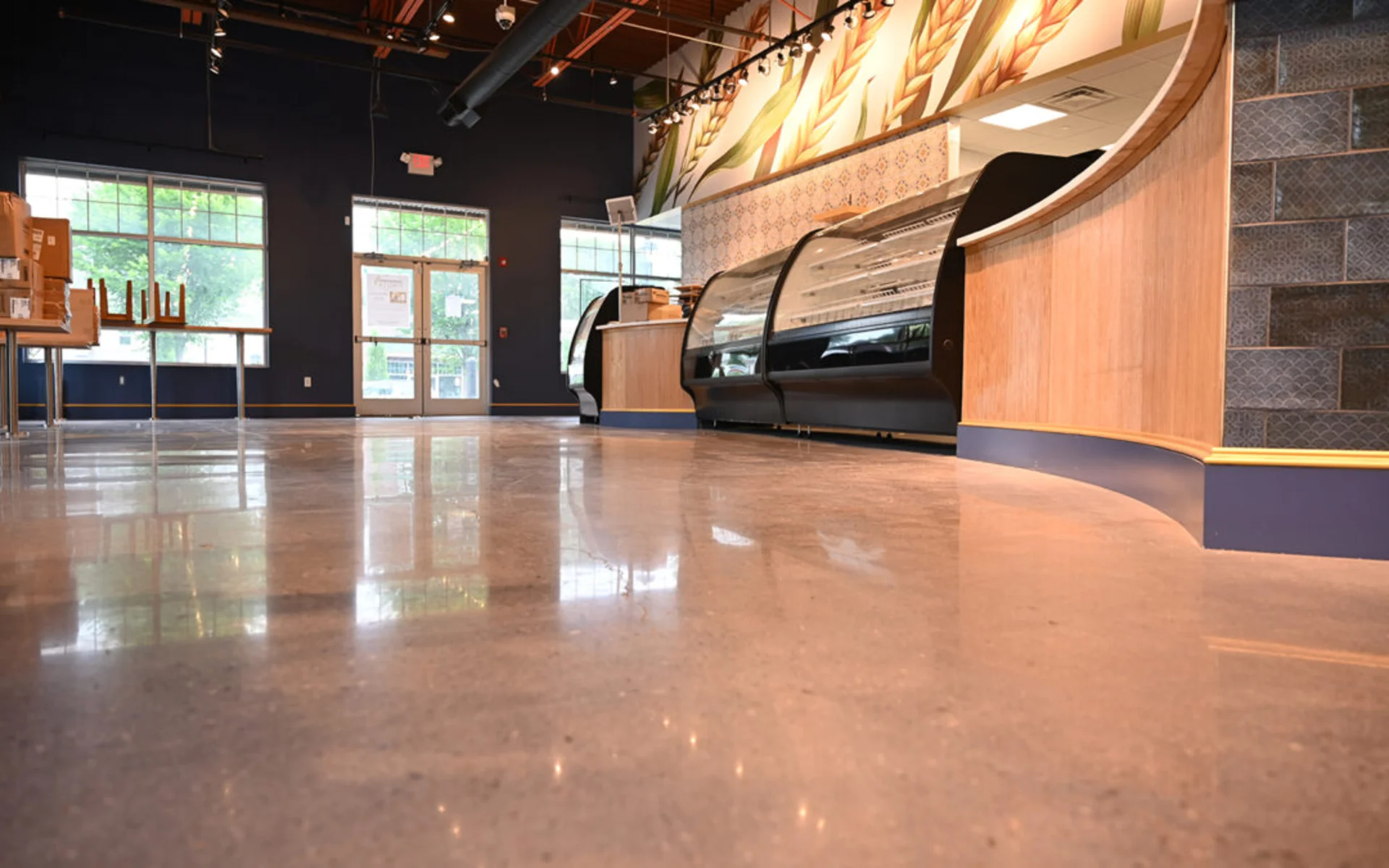
A seamless epoxy or polyaspartic floor behaves differently. The cured film is non-porous, so water and silt sit on top instead of soaking in. Once the water recedes, you are cleaning a hard, smooth surface rather than trying to pull contaminants out of raw concrete. It is also why a coated garage floor is easier to disinfect and dries faster, which helps keep mold and odor from settling in.
A Coating Is Not a Waterproofing Membrane
This is the point most marketing skips. A floor coating protects the top surface of the slab. It does not seal the gap under your garage door, waterproof the walls, or stop surge from coming in through the door track and weep holes. If water reaches your garage, it will reach the floor. What a good coating does is make the floor much easier to recover once the water is gone.
The Real Risk: Moisture Vapor and Hydrostatic Pressure
When coated floors fail after a wet season, the cause is rarely the standing water on top. It is usually water coming up from below. Much of South Florida sits on porous limestone with a high water table, and after days of tropical rain or a storm surge, the ground under a slab-on-grade garage can be fully saturated. That moisture moves upward through the concrete as vapor, and in severe cases as liquid water under hydrostatic pressure. If the coating was installed over a slab that was already carrying high moisture, or without a primer designed for it, that pressure can push the film off from underneath.
The symptoms are blisters (raised bubbles, sometimes filled with liquid), hollow-sounding spots when tapped, and peeling or lifting at edges and control joints. Storm water rarely creates a new problem on a well-prepared floor, but it can expose an old one. That is one reason lifespan varies so much between installations, which we cover in more detail in our guide on how long epoxy flooring lasts in Florida.
How Proper Prep Prevents Blistering and Delamination
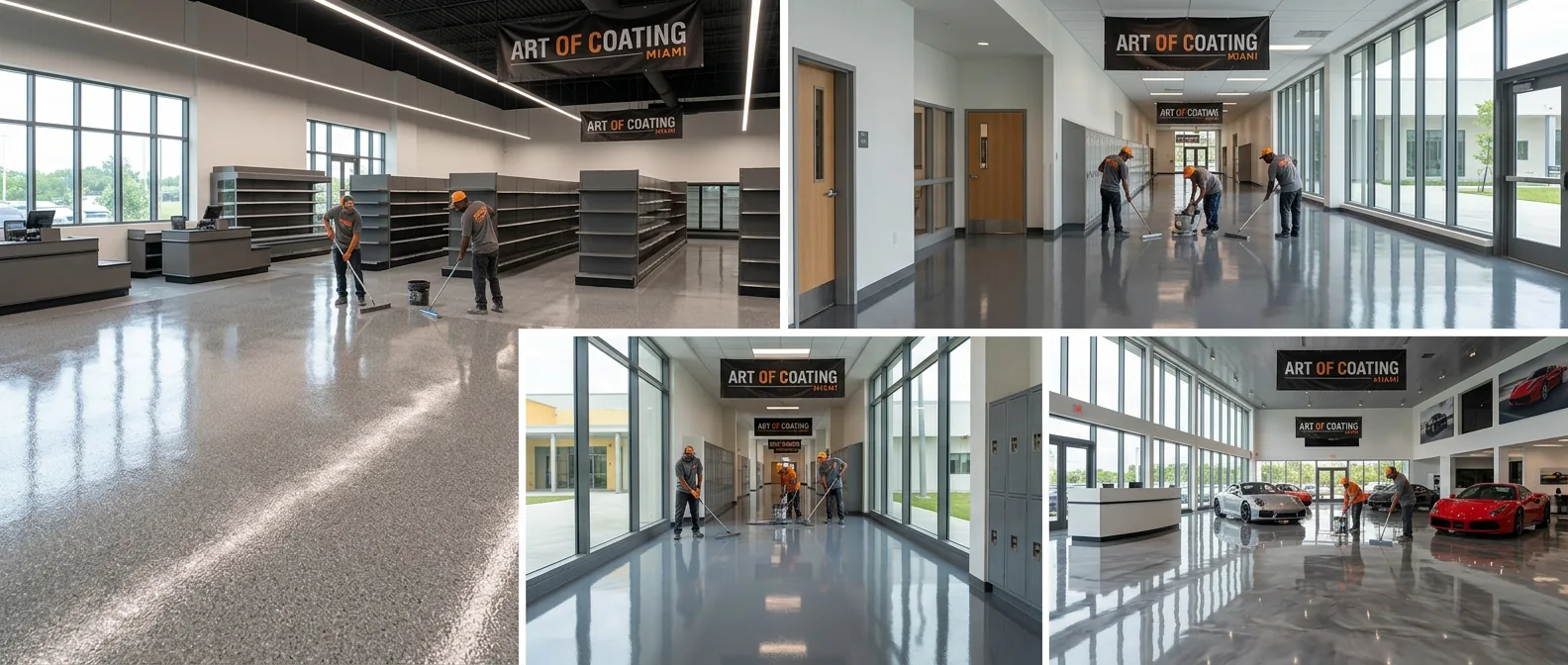
Flood tolerance is mostly decided on installation day, before any coating goes down. The goal is a slab that is clean, open and dry enough to bond, with a primer matched to its moisture conditions. Skipping any of these steps is where most early failures we see after storm season begin. A professional installer should be able to explain each step, show you the actual moisture readings, and tell you which primer they chose and why.
- Diamond grinding to an ICRI concrete surface profile, which opens the pores and removes old sealers, laitance and contaminants so the primer can bond mechanically.
- Moisture testing before coating, using ASTM F1869 (calcium chloride vapor emission) and/or ASTM F2170 (in-slab relative humidity probes), rather than guessing from how the surface looks.
- A vapor-mitigating primer when readings require it, designed to tolerate moisture moving up through the slab.
- Repair of cracks, joints and spalls so water has fewer paths to get under the edge of the coating.
- Following the manufacturer's technical data sheets for moisture limits, cure times and recoat windows.
Which Coating Systems Are Most Flood-Tolerant
No system is immune to water, but some handle wet conditions noticeably better than others. Cheap single-coat water-based kits from big-box stores are the weakest option: they are thin, often applied over unground concrete, and tend to peel when the slab gets wet. Professional systems built in several layers over a properly ground slab are a different category, and the right choice depends on how often the space actually gets wet.
- 100%-solids epoxy: thick, dense and non-porous, with strong adhesion to properly ground concrete. It makes a solid base coat in a garage that may see standing water.
- Polyaspartic topcoats: fast-curing, UV-stable aliphatic finishes that resist chemicals, hot tires and yellowing. Over an epoxy or flake base, they add a tough, easy-to-clean wear layer.
- Urethane cement: tolerant of moisture and thermal shock, and commonly used in commercial kitchens and wet industrial areas. For a ground-floor space that floods more often, urethane cement flooring is worth discussing.
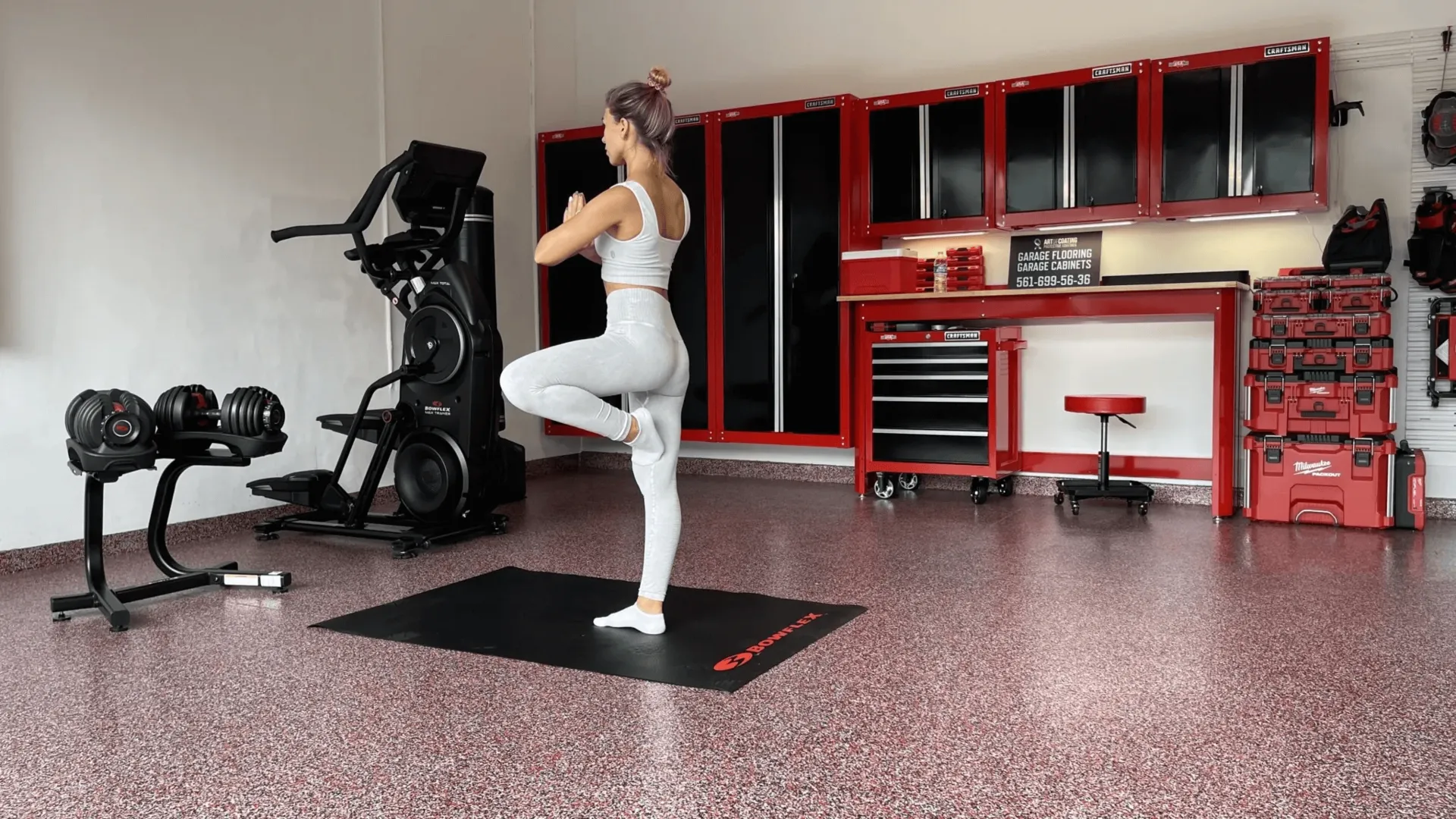
- Flake broadcast systems: the texture adds slip resistance on a wet floor, which matters when you are walking in after a storm.
Post-Storm Cleanup and Inspection Checklist
Only go back into a flooded garage when local officials say it is safe and the power to that area has been shut off or checked. Floodwater can hide electrical hazards, sharp debris and sewage, so wear rubber boots and gloves. Once it is safe, work through the floor in this order, and try to start within the first day or two, since that makes the biggest difference to odor, staining and mold.
- Remove silt and debris: shovel or squeegee out mud while it is still wet, then rinse with a hose. Dried silt is abrasive and can scratch the topcoat if you drag it around.
- Disinfect: wash with a pH-neutral cleaner, then apply a disinfectant suitable for coated floors.
- Dry thoroughly: open the door, run fans and a dehumidifier, and pull out wet cardboard, rugs and drywall debris that hold moisture against the floor.
- Inspect for blisters and lifting: look and tap along walls, the door threshold and control joints. Note any bubbles, soft spots or edges that have started to peel.
- Photograph everything before and after cleanup, including close-ups of any damage.
- Call a pro if you see blistering, lifting, cracks that have opened up, or a floor that stays damp days after the rest of the garage is dry.
Preparing Your Garage Floor Before a Storm
A little preparation in the days before a named storm reaches South Florida can reduce cleanup and protect the record you may need later. Follow the official hurricane preparedness guidance at Ready.gov and local evacuation orders first; the garage floor comes after your family's safety. When you have time to prepare the garage itself, these steps are quick and cost little.
- Move stored items off the floor: put boxes, tools, paint and chemicals on shelves or in sealed plastic bins, and relocate anything that could leak.
- Use sandbags or water barriers at the garage door and consider a threshold seal. These slow water down; they do not guarantee it stays out.
- Photograph and video the floor, walls and contents for your insurance records, with the date visible if possible.
- Keep a copy of your installation paperwork, estimate and written warranty somewhere safe and off-site, such as cloud storage.
Insurance and Documentation, at a High Level
We are floor coating contractors, not insurance professionals, so we will not give claims advice. In general terms, homeowners policies and flood policies treat water damage differently, and whether floor damage is covered depends on your specific policy and the cause of the water. What we can say is that clear documentation helps any conversation with your insurer: before-and-after photos, the date of installation, your itemized estimate, and any moisture readings recorded during prep. Talk to your agent or carrier about what your policy actually covers.
Flood-Zone Homes and Elevated Garages
Many South Florida homes sit in designated flood zones, and newer construction in places like Miami Beach, Coconut Grove and coastal Broward is often built with the living space raised above flood elevation. In those homes the ground-level garage or storage area is expected to get wet from time to time. That changes how we spec the floor: moisture testing is mandatory, a vapor-mitigating primer is more likely, and we steer away from decorative finishes that are harder to restore after repeated flooding. A durable flake system with a polyaspartic topcoat, or urethane cement in heavy-use utility spaces, is usually a more practical choice than a high-gloss metallic showpiece.
Elevated garages and parking decks above grade do not deal with water table pressure the same way, but they still see wind-driven rain, standing water and salt air. For those, UV stability, slip resistance and proper slope to drains matter more. If you live in a flood zone, let your installer know up front so the system is designed around how the space will really be used.
Frequently Asked Questions
Does an epoxy floor survive flooding?
In most cases, yes. A professionally installed epoxy floor on properly ground and tested concrete usually comes through a short flood with little more than cleanup needed. Problems tend to show up where the slab had high moisture at installation, where prep was skipped, or where water sat for a long time and pushed up from below. Inspect for blisters and lifting once the floor is dry.
Is any garage floor coating truly waterproof?
The cured film itself is water-resistant and non-porous, but no floor coating waterproofs a garage. It does not seal doors, walls or the joint where the slab meets the foundation, and it cannot stop water from entering. Think of it as a surface that sheds water and cleans up easily, not as a barrier. Keeping water out of the building is a job for door seals, barriers, grading and drainage.
What causes epoxy floor water damage like blisters and peeling?
The most common cause is moisture vapor or hydrostatic pressure coming up through the slab from saturated ground, especially where the water table is high. If the coating was applied without moisture testing or without a vapor-mitigating primer when one was needed, that pressure can lift the film. Poor surface prep, such as coating unground or contaminated concrete, makes it far more likely. Surface water alone rarely damages a well-bonded professional system.
How should I clean my garage floor after a hurricane?
Wait until it is safe to enter and the power is off or checked. Squeegee out wet silt, rinse, wash with a pH-neutral cleaner and disinfect. Dry the space with fans and a dehumidifier, and remove wet cardboard and debris. Then inspect along walls, joints and the door threshold for blisters, soft spots or peeling, and photograph what you find.
Can a flood-damaged coated floor be repaired?
Often, yes. Small blistered or lifted areas can usually be cut out, ground back to sound concrete, tested for moisture and patched, then blended with a fresh topcoat. If delamination is widespread, the better long-term fix is to grind off the coating, test the slab once it has dried out, and reinstall with a vapor-mitigating primer. A free on-site assessment will tell you which approach makes sense.
Get Your Garage Floor Assessed Before the Next Storm
Whether your floor just came through a storm or you want a system that stands up better to South Florida's water table, start with an honest look at the slab. Art of Coating Miami is a licensed and insured floor coating contractor serving Miami-Dade, Broward and Palm Beach counties since 2022, with a BBB A+ rating. We moisture-test before we coat, explain the readings, and give you a written, itemized estimate. Call (786) 618-4877 or request a free on-site assessment and we will tell you what your floor needs, and what it does not.
Last updated: October 2026