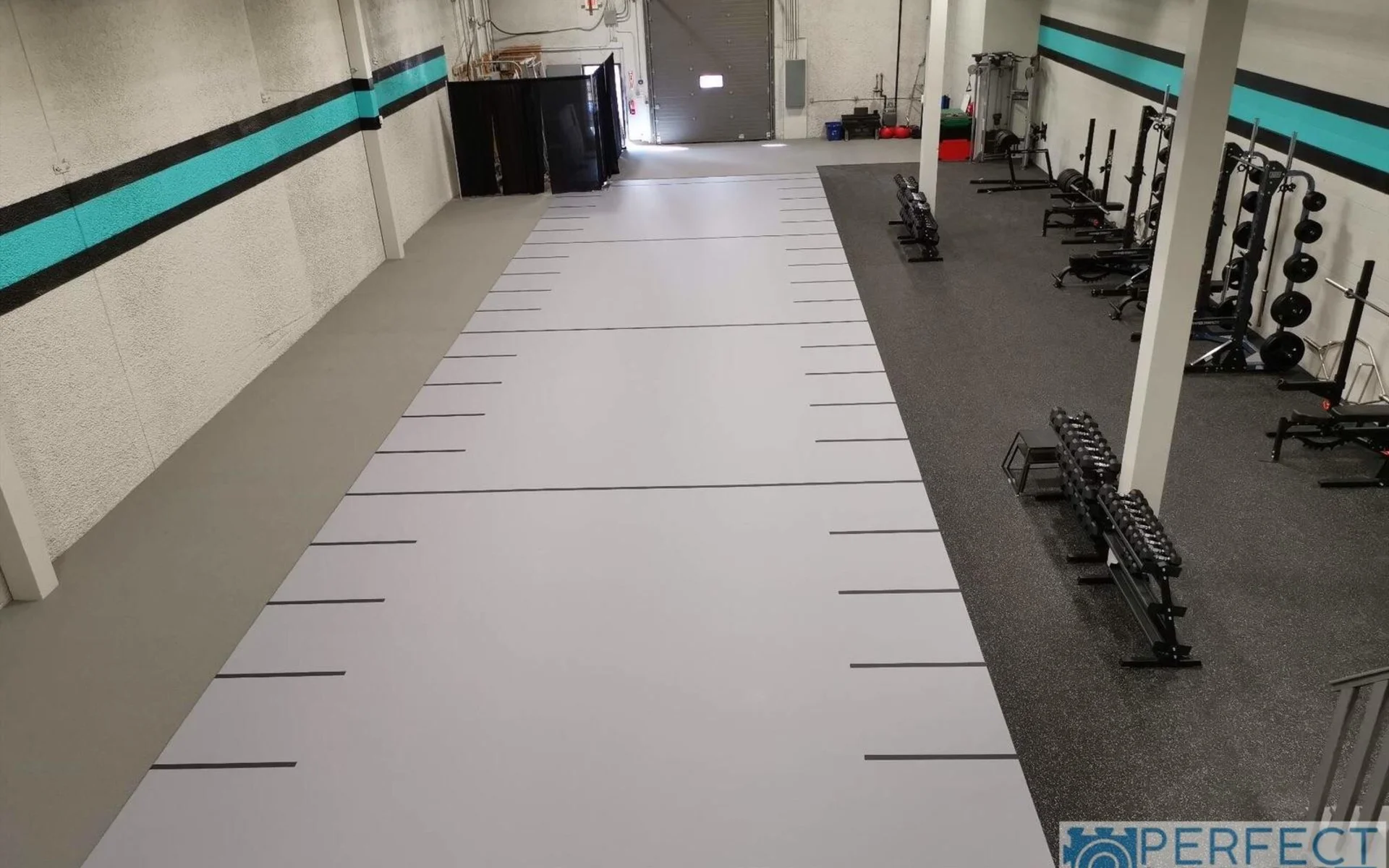
The short answer: for most Miami home gyms and fitness studios, the floor that works is a hybrid. Coat the whole slab with a flake epoxy or polyaspartic system for moisture control, easy cleaning and rolling equipment, then put thick rubber mats or a lifting platform wherever weights get dropped. A coating protects concrete from sweat, stains and humidity; rubber absorbs impact. Polished concrete suits cardio and functional areas but needs the same rubber in drop zones.
Request a Free QuoteMost gym floor questions start the same way: someone has bought a rack, a bar and bumper plates, and the garage slab underneath is dusty, stained and sweating in August. Others are opening a boutique studio and need a floor that matches their brand and survives classes six days a week. This guide covers what a gym floor has to do, how rubber, epoxy and polished concrete compare, what South Florida's climate changes, and what to budget.
What a Gym Floor Has to Handle
A gym floor takes more abuse than almost any other room in a house. It has to survive dropped dumbbells and kettlebells, the point load of a loaded squat rack, and benches and sleds dragged across it. It also deals with sweat, chalk, spilled drinks and disinfectant every day. Cardio machines and carts need a smooth surface to roll on, and floor work needs grip even when the surface is damp. In a Miami garage, add heat, humidity and moisture coming up through the slab, and the floor still has to be quick to clean.
Gym Flooring Options Compared
There are four realistic ways to floor a home gym or studio in South Florida. Each one handles some of the jobs above well and others poorly, which is why the strongest setups usually mix materials rather than running one product wall to wall. Think of the floor in zones: where weights drop, where machines sit, where people move and stretch, and where water or sweat collects.
- Rubber mats and interlocking rubber tiles
- Epoxy or polyaspartic coating with decorative flake
- Polished concrete
- Hybrid: a coated or polished slab with rubber in the lifting zones
Rubber Mats and Tiles
Rubber is the only option here that genuinely absorbs impact. Thick stall mats and interlocking tiles protect the slab and your plates, quiet the room and give a forgiving surface for floor work. The downsides show up over time in our climate. Rubber traps moisture and sweat underneath, and in a humid garage that can mean odor, mildew and a dirty slab you never see. Seams collect chalk and dust, mats shift under sleds, and rolling equipment drags. Rubber also off-gasses a noticeable smell when new, especially in a hot, closed garage.
Epoxy or Polyaspartic with Flake
A flake coating turns the slab into a sealed, seamless surface that wipes clean, resists sweat and chemicals and lets carts and machines roll freely. The flake hides chalk and scuffs, and a broadcast texture or added aggregate gives grip for footwork. A polyaspartic topcoat adds UV stability and holds up better to hot tires and abrasion. What a coating will not do is cushion a dropped weight. Our epoxy gym and sports flooring systems are built to be the base layer, with rubber placed where impact happens.
Polished Concrete
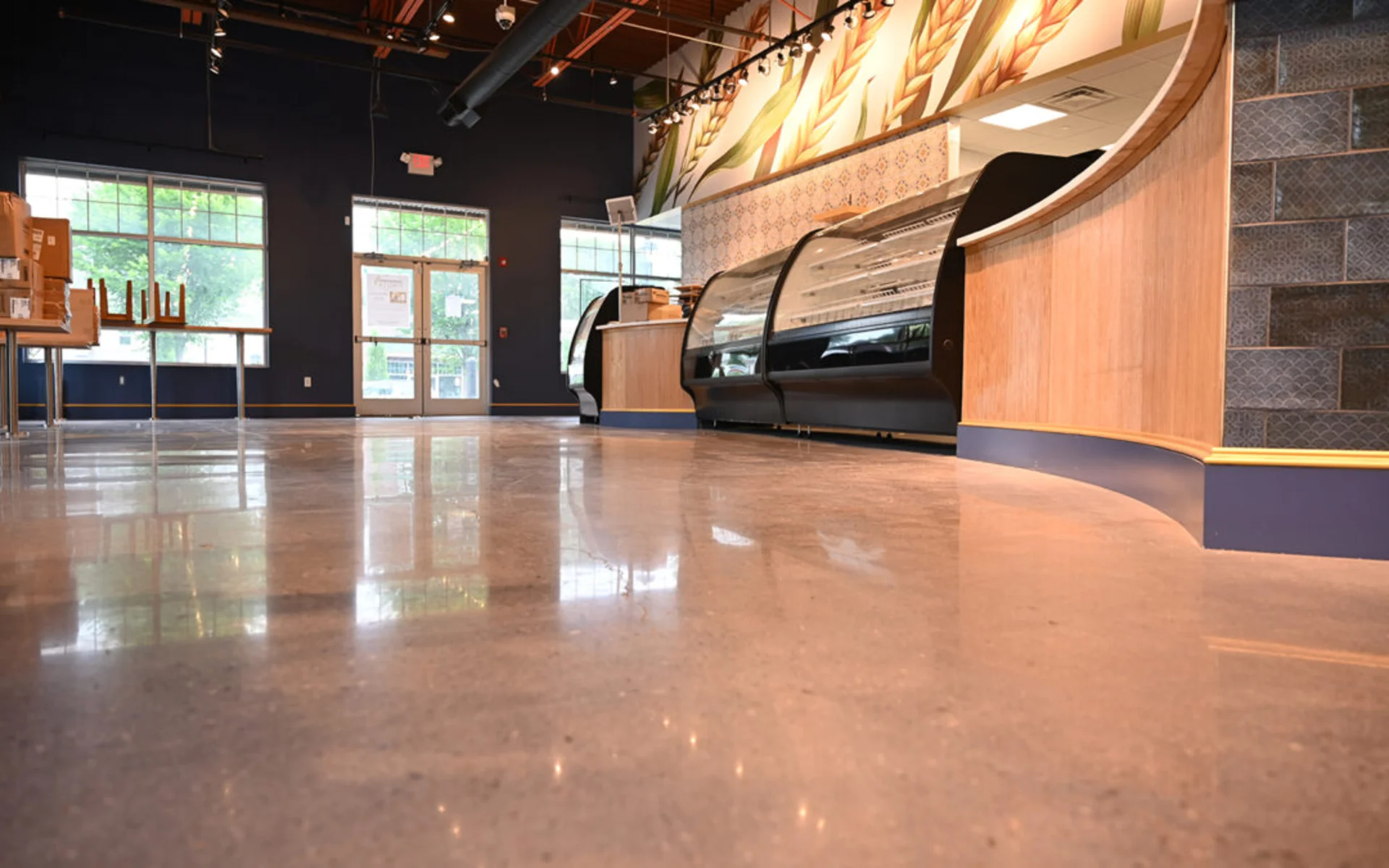
Polished concrete is ground, densified and honed into a hard, reflective surface with no film on top to peel. It suits cardio rooms, functional training areas and studios going for a modern industrial look, and it handles rolling loads well. It is less forgiving of oil and some cleaners than a sealed coating, can feel slick at higher gloss when wet, and depends on the condition of the existing slab. Our concrete floor polishing page explains how we finish slabs for traffic areas.
Hybrid: Coated Slab Plus Rubber in Lifting Zones
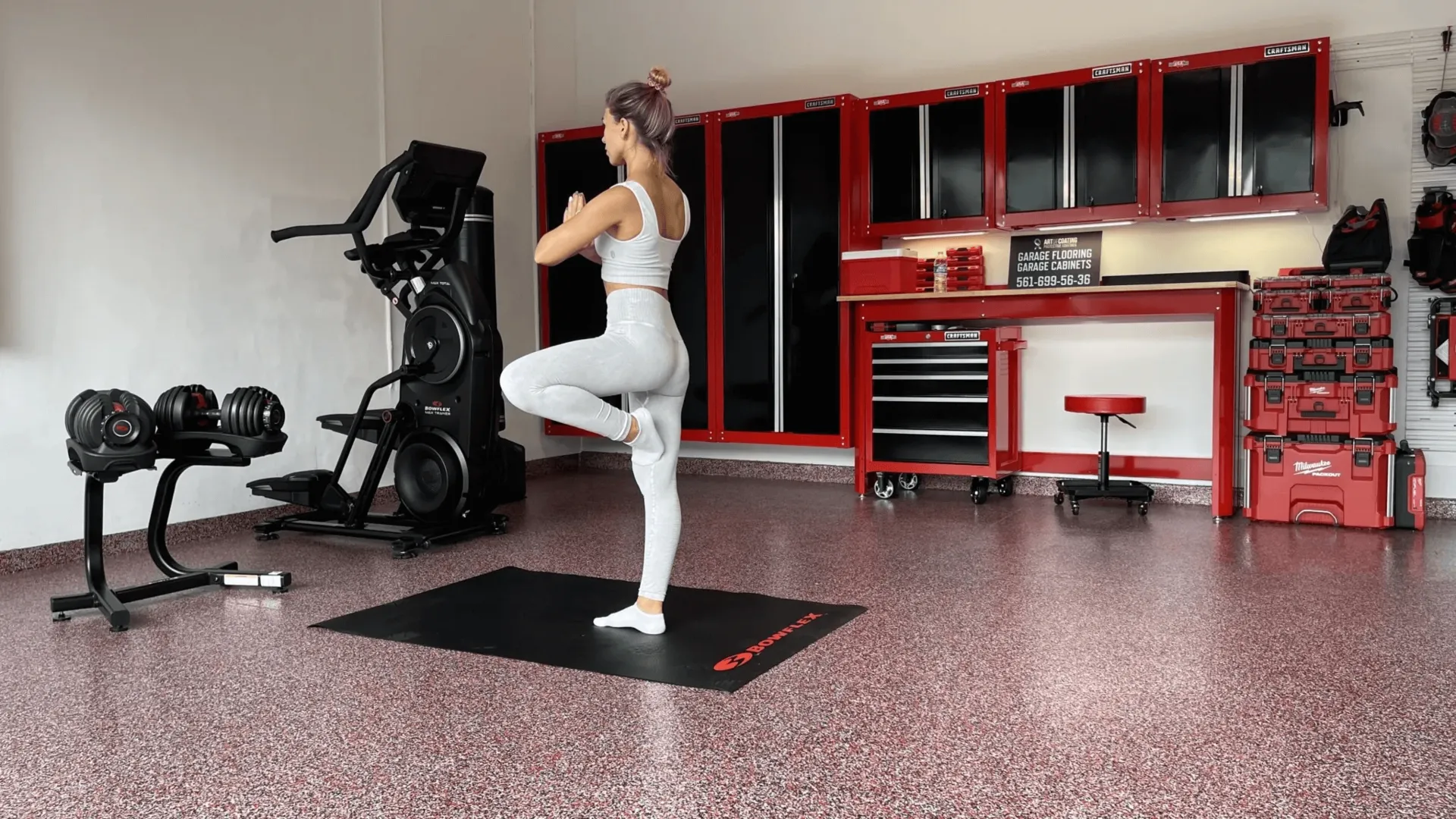
The hybrid is what we recommend most often. The whole slab gets a flake epoxy or polyaspartic coating, so it is sealed against moisture and sweat and easy to mop. Then you place a lifting platform or thick rubber mats only where weights come down: under the rack, at the deadlift spot and in the dumbbell area. Because the mats sit on a sealed, cleanable surface, you can lift them, wipe underneath and put them back, which solves the hidden mildew problem that loose rubber on bare concrete creates.
Garage Gyms in South Florida: Heat, Humidity and Moisture
A garage gym in Miami, Kendall or Pembroke Pines is a hot, humid box for much of the year. Slab temperatures swing between day and night, the door opens to humid air, and many older slabs were poured without an effective vapor barrier. That moisture moving up through the concrete is the most common reason garage coatings blister or lift. Before we coat, we test the slab using ASTM F1869 calcium chloride or ASTM F2170 relative humidity methods, published by ASTM International, and use a vapor-mitigating primer when readings call for it.
If your car still parks in the gym half of the time, the floor also has to handle hot tires. Tires that have been on summer asphalt can soften and lift cheap coatings and paint-style sealers, a problem known as hot-tire pickup. A properly ground slab with an industrial epoxy base and a polyaspartic topcoat is far more resistant. Our garage flooring systems are designed for exactly that mix of parking, storage and training, with UV-stable topcoats that will not yellow when the door is open to afternoon sun.
Commercial Fitness Studios and Boutique Gyms
Studios and boutique gyms need the floor to work as part of the layout. We often zone a space with different colors: one finish for the turf or sled lane, another for the free-weight area, a neutral tone for cardio and a brand color at the entrance or check-in desk. Coatings can carry painted line markings for agility drills, lane boundaries and equipment footprints, sealed under the topcoat so they do not wear off. Polished concrete can be paired with coated borders for the same effect in a more industrial style.
Wet areas need extra attention. Locker rooms, shower entries, around water stations and near yoga or spin rooms where sweat collects should get a slip-resistant aggregate broadcast into the topcoat, rather than relying on a smooth finish. The trade-off is that more texture is slightly harder to mop, so we match the grit level to each zone. Our guide to non-slip floor coatings in Miami covers how aggregate choice changes grip and cleaning.
Impact Protection: What a Coating Can and Cannot Do
This is the part most sales pitches skip. An epoxy, polyaspartic or polished concrete floor is hard, and hard floors do not absorb shock. Drop a loaded barbell from overhead onto a bare coated slab and you risk chipping the coating, cracking the concrete beneath it and damaging your plates. Even repeated dumbbell drops from waist height can leave marks. A coating's job is to seal, protect and clean easily, not to cushion. Anywhere weights leave your hands, you need rubber between the load and the floor.
- Use a lifting platform or stacked thick rubber mats under racks and deadlift areas
- Put rubber mats in the dumbbell and kettlebell zone
- Use bumper plates rather than iron plates for any dropped lifts
- Set heavy machines on rubber pads to spread point loads
- Leave cardio, stretching and storage areas on the coated or polished slab
What Gym Flooring Costs in Miami
For home gyms, residential epoxy coatings typically run $5 to $12 per square foot, and a full two-car garage usually lands between $2,500 and $5,000 depending on slab condition, repairs and the system chosen. Polished concrete runs roughly $3 to $8 per square foot. For commercial fitness studios and gyms, coatings generally run roughly $4 to $12 per square foot, with urethane cement higher where heavy cleaning or wet areas demand it. Rubber mats and platforms are a separate purchase on top of the floor.
The biggest swing factors are surface preparation and moisture. Oil stains, cracks, spalls or an old failing sealer mean more grinding and repair, and high moisture readings mean a vapor-mitigating primer. Flake density, line markings, zone colors and slip-resistant aggregate also add time. Our free on-site assessment comes with a written, itemized estimate so you can see where the money goes before work starts.
Install Timeline and When Equipment Can Go Back
A typical home gym or garage coating takes one to two days on site: diamond grinding to the right concrete surface profile, crack and joint repair, primer or base coat, flake broadcast, and the topcoat. Polyaspartic topcoats cure faster than traditional epoxy, so light foot traffic is often possible within a day. Heavy racks, cardio machines and vehicles need longer, and the exact timing depends on the products used and the temperature, so we follow each manufacturer's technical data sheet. Plan to keep heavy equipment off for several days rather than rolling it back the same evening.
Keeping a Gym Floor Clean
A sealed gym floor is easy to maintain if you stay consistent. Dust mop or vacuum chalk and grit daily, because grit is what dulls a finish over time. Damp mop with a pH-neutral cleaner and avoid harsh solvents or citrus degreasers on coatings. Lift the rubber mats every week or two, wipe underneath and let the area dry, especially in a humid garage. Wipe up sweat and spilled drinks promptly, and in studios, choose a disinfectant that the coating manufacturer approves. A professional epoxy floor typically lasts 10 to 15 years, and polyaspartic-topcoated systems 15 to 20 years or more.
Frequently Asked Questions
Is epoxy good for a home gym floor?
Yes, as the base layer. A flake epoxy or polyaspartic coating seals the slab against moisture and sweat, resists stains, lets equipment roll and cleans in minutes. It is not a shock absorber, though, so pair it with rubber mats or a lifting platform wherever weights are dropped. That combination gives you a clean, bright garage gym without the mildew and dirt that build up under loose mats on bare concrete.
Can I drop weights on an epoxy garage floor?
Not directly. Dropping barbells, dumbbells or kettlebells onto any hard floor, coated or polished, can chip the surface and crack the concrete underneath. Use bumper plates and lift on a platform or thick rubber mats placed on top of the coating. The coating then protects the slab around the platform from sweat, chalk and rolling equipment, while the rubber takes the impact where it actually happens.
Is rubber or epoxy better for a garage gym?
They do different jobs, so the answer is usually both. Rubber is better at absorbing impact and reducing noise. Epoxy or polyaspartic is better at sealing the slab, handling humidity, resisting hot tires if a car still parks there, and staying clean. In a South Florida garage, rubber laid straight on bare concrete tends to trap moisture, so coating the slab first and adding rubber only in lifting zones holds up better.
How long before I can put gym equipment back on a new floor?
It depends on the system and the temperature. With polyaspartic topcoats, light foot traffic is often possible within a day, but heavy racks, cardio machines and vehicles should wait several days. Traditional epoxy systems generally need longer, especially in cooler or more humid conditions. We give you a specific return-to-service schedule based on the manufacturer's technical data sheet for the products used on your floor.
Is polished concrete slippery for a fitness studio?
Polished concrete has good traction when clean and dry, but higher gloss levels can feel slick when sweat or water is on the surface. For studios, we usually recommend a lower-sheen finish in training areas and a coated, slip-resistant surface with aggregate in locker rooms, shower entries and water stations. Regular dust mopping also matters, because chalk and fine dust reduce grip on any hard floor.
Plan Your Gym Floor with Art of Coating Miami
Whether you are converting half a garage into a lifting space or fitting out a boutique studio, the right floor starts with an honest look at the slab. Art of Coating Miami is a licensed, insured floor coating contractor serving Miami-Dade, Broward and Palm Beach counties since 2022. We moisture-test the concrete, show you where coating, polishing and rubber each belong, and provide a free on-site assessment, a written itemized estimate and a written warranty. Call (786) 618-4877 to schedule a visit.
Last updated: October 2026