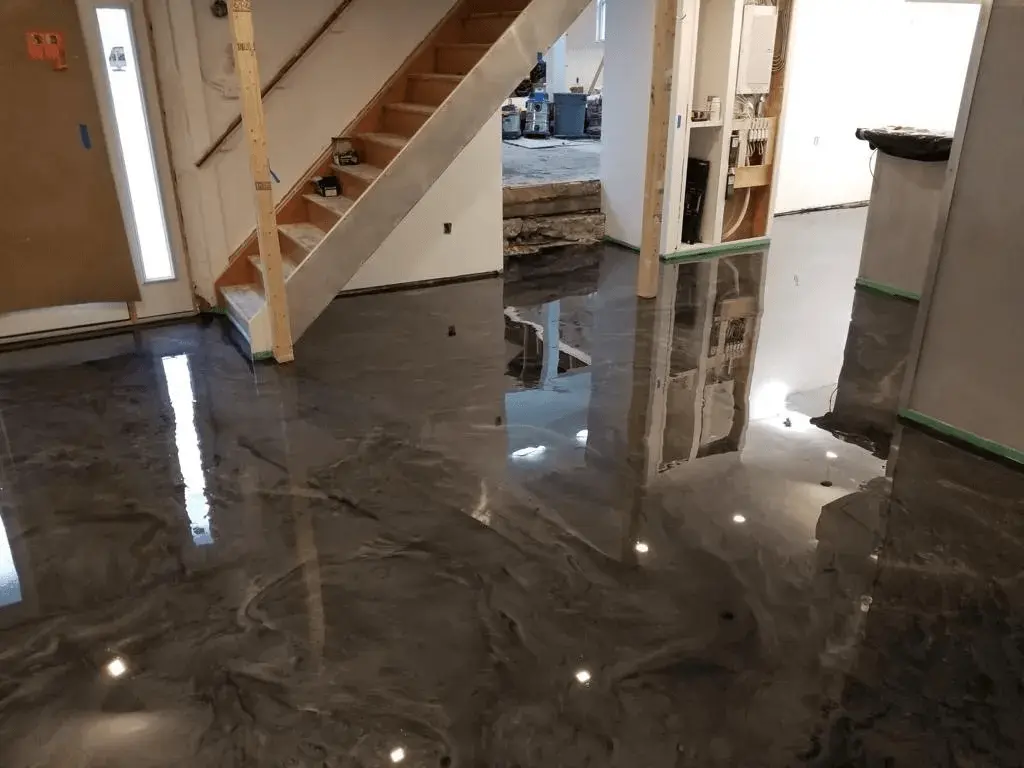
Search for floor coating companies in Miami and you will find dozens of options, from established crews to weekend operators with a mixer and a roller. On paper, many of them sell the same thing: epoxy, polyaspartic, flake or metallic finishes. In practice, the results vary enormously. We regularly strip and redo failed floors across Miami-Dade, Broward and Palm Beach, and almost none failed because of a bad product. They were caused by skipped prep, untested slabs and coatings applied too thin. This guide gives you the 12 questions we would ask if we were hiring an epoxy flooring contractor in Miami ourselves.
Why the Contractor Matters More Than the Product
A floor coating is a bond, not a paint job. The coating only performs as well as its grip on the concrete underneath, and that grip is created entirely by the installer. Two crews can use the identical kit from the same manufacturer and deliver floors with completely different lifespans. One grinds the slab open, tests for moisture, repairs cracks and builds the system to the specified thickness. The other rolls product onto a dusty, sealed surface and leaves in four hours. South Florida makes this worse: high water tables, humid air, hot-tire pickup in garages and intense UV on pool decks punish every shortcut. Choosing the right installer is the single biggest decision you will make.
12 Questions to Ask Before You Hire
1. How will you prepare the concrete: diamond grinding or acid etching?
This is the most important question on the list. Professional epoxy and polyaspartic floor coating installers use diamond grinding, typically with dust-extraction vacuums, to remove sealers, laitance and contaminants and open the surface to a measurable profile. Acid etching is a shortcut that leaves residue, struggles to cut through sealers and produces an inconsistent profile. If the answer is etching, pressure washing only, or a vague mention of cleaning the floor, keep looking. Ask whether grinding is included in the quoted price.
2. How do you test for moisture, and what happens if the slab fails?
Moisture vapor pushing up through a slab is the leading cause of bubbling and delamination in South Florida, especially on slabs poured at or near grade. A serious contractor will test using an accepted method such as the calcium chloride test (ASTM F1869) or in-situ relative humidity probes (ASTM F2170), or at minimum explain why a test is not needed on your specific slab. Just as important is the plan if readings come back high. The right answer involves a moisture-mitigating primer or a different system, not simply hoping for the best.
3. What exact products and chemistry are you using, and at what mil thickness?
Ask for the product names and the number of coats, then ask for the total system thickness in mils. A 100 percent solids epoxy base coat builds far more film per coat than a water-based epoxy, and a full-broadcast flake system with a polyaspartic topcoat is a very different floor from a single tinted coat. You should be able to read the manufacturer data sheets for each layer. If a contractor will not name the products or the thickness, you have no way to compare their quote against anyone else's, and no way to hold them to it later.
4. Is the topcoat UV stable?
Standard epoxy ambers and chalks when exposed to sunlight, which matters in any garage with the door open, any lanai and every pool deck in Miami. Aliphatic polyaspartic and polyurethane topcoats are UV stable and hold their color far better outdoors. That is why our polyaspartic floor coating systems are the default choice for sun-exposed areas. Ask the contractor which layer faces the sun, whether it is aliphatic, and how it handles hot-tire pickup, which is a real problem when Florida tires come off a 100-degree driveway.
5. What does your written warranty cover, and what voids it?
Warranties vary widely, so get the terms in writing rather than relying on a verbal promise. Read what is actually covered: peeling and delamination, discoloration, or both. Then read what voids it. Common exclusions include moisture vapor transmission, hydrostatic pressure, chemical spills, improper cleaning products and structural cracking of the slab. Also note whether the warranty comes from the installer, the manufacturer or both. A long warranty from a company that cannot be found next year is worth far less than a clear one from an established local contractor.
6. Can you show proof of licensing and insurance?
Ask for a current certificate of insurance showing general liability and workers' compensation coverage, ideally sent directly from the insurance agent. Without workers' comp, an injured crew member on your property can become your problem. For licensing, ask the contractor exactly which state license or county certificate of competency applies to your scope of work, then check it yourself. State-issued licenses can be verified on the Florida DBPR license lookup, and Miami-Dade, Broward and Palm Beach each maintain their own contractor licensing records as well.
7. Can I see references and photos of real projects?
Stock photos prove nothing. Ask for photos of floors the company actually installed, ideally including some that are several years old, and ask for a reference or two from jobs similar to yours. A good installer will be happy to show before, during and after shots, including the grinding stage. Browse our own completed projects for an example of what a real portfolio looks like. Look for clean edges at walls and door tracks, consistent flake density and no visible roller marks or bubbles in the finish.
8. What is the timeline and what are the cure times?
Ask how many days the installation takes, when you can walk on the floor, and when you can drive on it. Polyaspartic systems can often be completed in a single day with light foot traffic the same evening, while multi-coat epoxy systems typically need more days between coats and longer before vehicle traffic. Cure times also shift with temperature and humidity, which matters during a Miami summer. A contractor who gives you a precise schedule that accounts for weather and recoat windows is a contractor who understands the chemistry.
9. What exactly is included in the quote?
A one-line quote that says garage floor, flake, one price is not a scope. Ask for a written breakdown that lists every step and every exclusion. The cheapest-looking quote often grows once you find out that moving belongings, removing old coatings or coving the walls costs extra. Before you sign, make sure each of these items is clearly addressed in writing, either as included or as a priced extra:
- Surface preparation method and dust control
- Removal of existing paint, sealer or coating, if present
- Crack, spall and joint repair
- Moisture testing and any mitigation primer
- Each coat by product name, with flake or metallic options specified
- Stem walls, cove base, steps or edges included in the area
- Furniture or contents moving and site cleanup
- Total square footage used to price the job
10. How do you handle cracks and control joints?
Almost every South Florida slab has cracks, spalls or pitted areas. Ask how they will be repaired. The right answer involves chasing cracks open with a grinder and filling them with a rigid epoxy or polyurea repair material, then grinding flush before coating. Control joints are a separate decision: some owners prefer them filled for a seamless look, others keep them honored so the slab can move. Either way, the contractor should explain the tradeoff and note that a moving structural crack may eventually telegraph through any coating.
11. Will you coordinate with my HOA or condo association?
Condos, townhomes and gated communities across Miami-Dade and Broward often require a certificate of insurance naming the association, approved work hours, elevator or loading dock reservations and rules about noise, dust and odor. Grinding is loud, and some coatings have a strong smell during application. An experienced contractor has done this paperwork many times and will tell you up front what the building manager will ask for. A crew that shows up without approvals can get shut down on day one, delaying your project and souring things with the association.
12. What aftercare do you recommend?
A good installer leaves you with written care instructions. Ask which cleaners are safe, how long to wait before washing the floor, whether to use mats under parked vehicles, and what to avoid, such as harsh solvents or abrasive pads. Ask whether the topcoat can be refreshed down the road without a full regrind. Contractors who care about long-term performance will explain maintenance clearly, because a well-maintained floor is the best advertisement they have.
Red Flags That Should End the Conversation
- One-day kit installs sold as a professional system, especially with water-based epoxy
- No grinding, or acid etching and pressure washing offered as surface prep
- Cash-only payment, or a large upfront deposit with no written contract
- No written scope, product names or mil thickness
- Prices far below every other quote you received
- No certificate of insurance or a license number that does not match the business name
- Pressure to sign the same day to lock in a discount
If a price is dramatically lower than every other quote, something has been removed from the job. In our experience it is almost always the grinding, the moisture testing or the film thickness, and those are the three things that decide whether a floor lasts.
Request a Free QuoteHow to Compare Floor Coating Quotes Apples to Apples
- Same square footage measured, including stem walls and steps
- Same prep method, ideally diamond grinding with dust extraction
- Moisture testing included, and a stated plan if readings are high
- Base coat chemistry: 100 percent solids epoxy, polyaspartic or another system
- Topcoat chemistry and whether it is UV stable
- Total system thickness in mils
- Flake broadcast density: partial or full broadcast
- Crack and joint repair priced in or listed as an extra
- Written warranty terms and exclusions
- Timeline, cure times and return-to-service dates
Typical South Florida Price Ranges
Pricing depends on the system, the condition of the slab, the size of the area and access. As a general guide, professionally installed residential garage coatings in South Florida commonly fall in roughly the $4 to $12 per square foot range, with basic single-color systems at the lower end and full-broadcast flake, polyaspartic topcoats and metallic finishes toward the higher end. Heavy crack repair, coating removal or moisture mitigation add to the cost. Commercial and industrial projects are priced on their own scope. For a deeper breakdown by system type, see our guide to epoxy flooring cost per square foot in South Florida.
Frequently Asked Questions
How do I find the best epoxy flooring company in Miami?
Start with installers who answer the 12 questions above clearly and in writing. Verify their license and insurance yourself, look at photos of real local jobs, and compare at least two written quotes using the same scope. The best epoxy flooring company in Miami for your project is the one with transparent prep, named products, a stated mil thickness and a written warranty, not necessarily the one with the lowest price or the most ads.
Is polyaspartic better than epoxy for a Miami garage?
For most Miami garages, a hybrid works best: a high-build epoxy or polyaspartic base for adhesion and thickness, finished with a UV-stable polyaspartic topcoat. Polyaspartic resists yellowing, cures fast and handles hot tires well. Epoxy remains an excellent base coat and is ideal for many interior and commercial spaces that do not see direct sunlight, such as warehouses, showrooms and kitchens.
Should I hire polyaspartic installers near me or a larger regional company?
Distance matters less than process. A nearby installer can be convenient for scheduling and follow-up visits, but only if they grind, test and build the system properly. Whether you are searching for polyaspartic installers near me or epoxy floor installers near me, use the same questions and red flags to screen every company, local or regional, before anyone grinds your slab.
How long does a professional floor coating last?
Lifespan depends on prep, system thickness, UV exposure, traffic and maintenance. A properly ground, moisture-tested and correctly built residential system can last many years with simple care, while a thin, unground kit can peel within months. That gap, which shows up on South Florida garages every year, is exactly why the installer matters more than the brand on the bucket.
Get a Written Quote From Art of Coating Miami
Art of Coating Miami is a licensed and insured floor coating contractor with a BBB A+ rating, serving homeowners, condo owners and businesses across Miami-Dade, Broward and Palm Beach counties from our Fort Lauderdale office. Every quote we write names the products, the prep method, the system thickness and what is included, so you can compare us against anyone. Ask us all 12 questions. Call (786) 618-4877 or request your free on-site estimate and we will measure the floor, check the slab and give you a clear written scope.
Last updated: October 2026