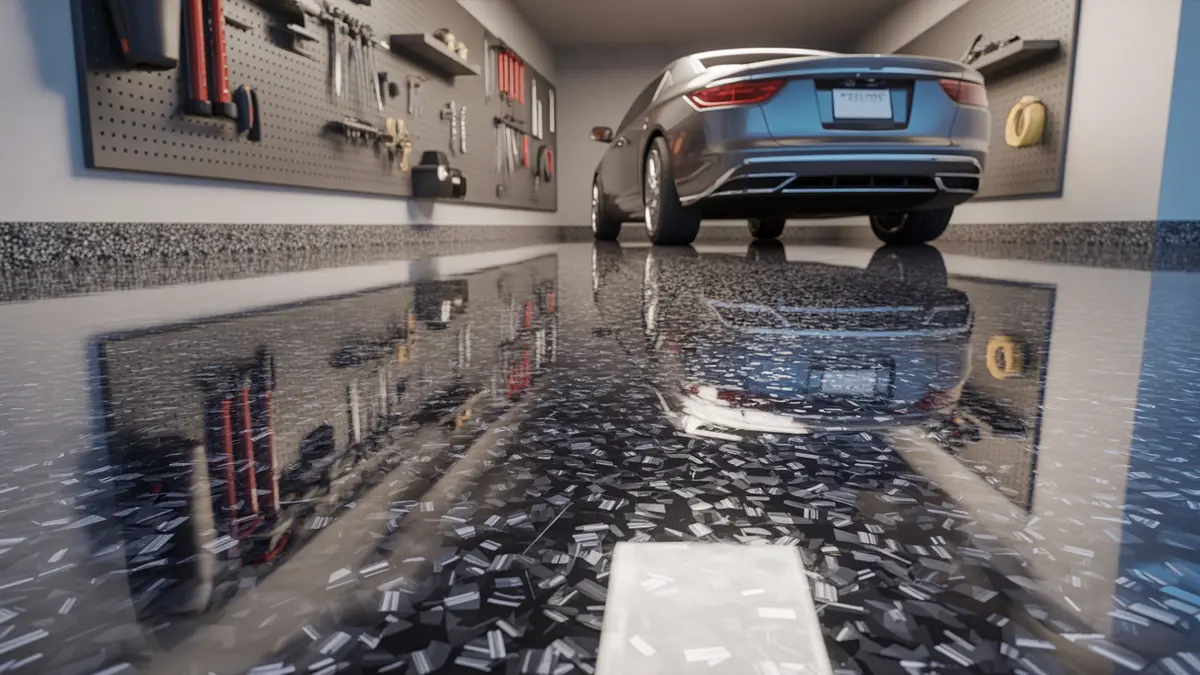
If you are pricing a garage floor coating in Miami, Fort Lauderdale, or Boca Raton, two systems dominate the conversation: epoxy and polyaspartic. Both turn a dusty, stained slab into a glossy, easy-to-clean surface, but they differ in cost, cure time, and how well they survive South Florida’s specific punishment — 95°F slabs, hot tires, relentless UV, high humidity, and salt air. This 2026 guide compares them head-to-head for garages, with real installed pricing and a clear recommendation at the end. For a broader look at every system we install, see our full garage floor coating page.
The Two Systems at a Glance
Epoxy is a two-part resin-and-hardener system that cures into a hard, rigid film bonded to your concrete. It has been the garage-floor standard for decades because it is affordable, builds thickness well, and takes color, flake, and metallic pigments beautifully. Our full write-up lives on the epoxy floor coating page.
Polyaspartic is a newer aliphatic polyurea technology. It cures far faster than epoxy — often the same day — and its chemistry is inherently UV-stable, so it will not yellow in the sun. It is more flexible than epoxy, which helps it handle the thermal swings between an air-conditioned interior wall and a sun-baked garage door. Details are on our polyaspartic floor coating page.
2026 Cost Per Square Foot in South Florida
Here are realistic installed price ranges for residential garages in Miami-Dade, Broward, and Palm Beach in 2026. These include surface preparation, materials, and labor — not bare product costs.
- Solid-color epoxy: $4–$7 per sq ft installed
- Flake (decorative) epoxy: $6–$10 per sq ft installed
- Polyaspartic (or epoxy base + polyaspartic topcoat, our most popular): $7–$12 per sq ft installed
- Metallic epoxy: $8–$14 per sq ft installed
- Typical two-car garage (400–500 sq ft): roughly $2,500–$5,000 depending on system and slab condition
Polyaspartic costs more per square foot than basic epoxy, but the gap narrows once you factor in downtime and lifespan. Because it cures in a day, a business or busy household loses far less time, and because it resists UV and abrasion better, it tends to last longer before needing a refresh. For a full breakdown of what moves the number — slab condition, prep, moisture mitigation, and finish — read our companion guide on epoxy flooring cost per square foot in South Florida.
Want a real number for your garage instead of a range? We measure, test the slab, and email a written, itemized quote within 24 hours — free, with no obligation.
Request a Free QuoteDurability & Cure Time: How They Hold Up
Cure Time & Downtime
This is polyaspartic’s biggest advantage. A full epoxy garage system needs 24–72 hours between coats and several days before you should park a car on it. A polyaspartic (or hybrid) system can be ground, coated, and ready to walk on the same evening, with vehicles back within about 24 hours. For anyone who cannot surrender the garage for most of a week, that alone often decides it.
UV, Heat & Hot-Tire Pickup
South Florida garage slabs routinely exceed 95°F, and hot tires are the number-one killer of cheap coatings — they literally pull weak films off the concrete. Standard epoxy also contains aromatic compounds that yellow and chalk under UV within 6–12 months of sun exposure, a real problem for garages with the door open half the day. Polyaspartic’s aliphatic chemistry is UV-stable and holds its gloss, and its flexibility resists hot-tire pickup better. Professional systems are also tested against recognized wear and adhesion standards; you can review the material test methods through ASTM International. The bottom line: a properly installed system beats a big-box kit not because of the color coat, but because of prep and topcoat chemistry.
Moisture & Salt Air
Coastal humidity and a high water table push moisture vapor up through the slab, and that vapor is what blisters coatings off from underneath. Both epoxy and polyaspartic will fail if this is ignored — which is why we perform calcium-chloride moisture testing on every garage and apply a vapor-mitigating primer when readings call for it, then diamond-grind the concrete to a proper bonding profile (per ICRI surface-profile standards). Near the coast, salt air adds corrosion; polyaspartic’s dense, non-porous film has a slight edge there. Preparation, not the brand on the bucket, is what determines whether your floor lasts 15–20 years.
Which Wins for Your South Florida Garage?
- Choose epoxy if budget is the top priority and the garage stays mostly shaded — you still get a durable, attractive floor for less.
- Choose polyaspartic if you want the fastest turnaround, maximum UV and hot-tire resistance, and the longest service life, and you are okay paying a bit more.
- Choose a hybrid (epoxy base + polyaspartic topcoat) for the best of both — the build and adhesion of epoxy with the UV stability and same-day cure of polyaspartic. This is what we install for most South Florida garages.
For most homeowners here, the hybrid system is the sweet spot: it costs a little more than plain epoxy but dramatically outperforms it in exactly the conditions that matter locally. If you are still weighing options, our side-by-side coating comparison guide breaks down epoxy vs polyaspartic vs polished concrete in one place.
Not sure which system fits your garage and budget? Art of Coating Miami offers free on-site consultations across Miami-Dade, Broward, and Palm Beach. Call (786) 618-4877 and we will assess your slab and send a written estimate within 24 hours.
Request a Free QuoteHot-Tire Pickup, UV & Humidity: The South Florida Factors
Three climate forces decide how a garage floor ages here, and they favor polyaspartic. Hot-tire pickup happens when tires heated on summer asphalt park on a coating and pull it off the slab as they cool and contract; polyaspartic's flexible, fully-cured film resists this far better than rigid epoxy, which is more prone to lifting if it was not perfectly prepped. UV exposure through an open garage door yellows and chalks standard aromatic epoxy within a season or two, while polyaspartic's aliphatic chemistry stays clear for years. And South Florida's humidity means moisture vapor is always pushing up through the slab — which is why we calcium-chloride test every floor and apply a vapor-mitigating primer when readings require it, no matter which system you choose. For the full prep-first approach, see our garage floor coating page.
The Hybrid System We Install Most
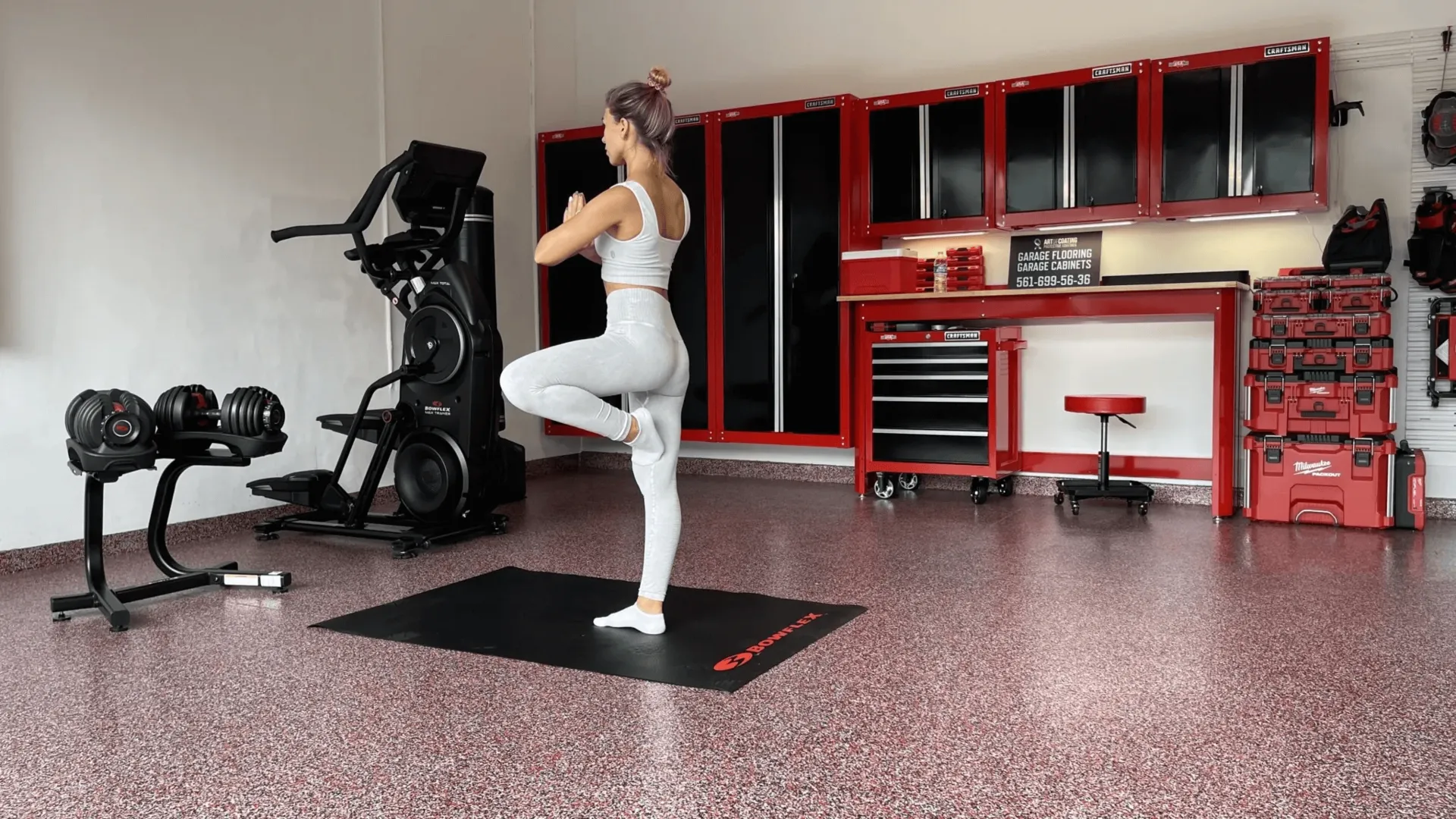
For most South Florida garages, the best answer is not either/or — it is both. We install an epoxy base coat for build, adhesion, and economical thickness, then lock it in under a UV-stable polyaspartic topcoat that delivers the sun resistance, hot-tire performance, and fast same-day return to service. You get epoxy's affordability where it is hidden and polyaspartic's durability where it counts, on the surface. Decorative vinyl flake broadcast between the coats adds slip resistance and hides dust and tire marks. It is the system we recommend for Miami, Fort Lauderdale, and Boca Raton garages that see real heat and real use.
Not sure which system fits your garage and budget? Art of Coating Miami offers free on-site assessments across Miami-Dade, Broward, and Palm Beach. Call (786) 618-4877 for a written estimate within 24 hours — see more of our work on the [projects](/projects) page.
Request a Free QuoteLast updated: October 2026