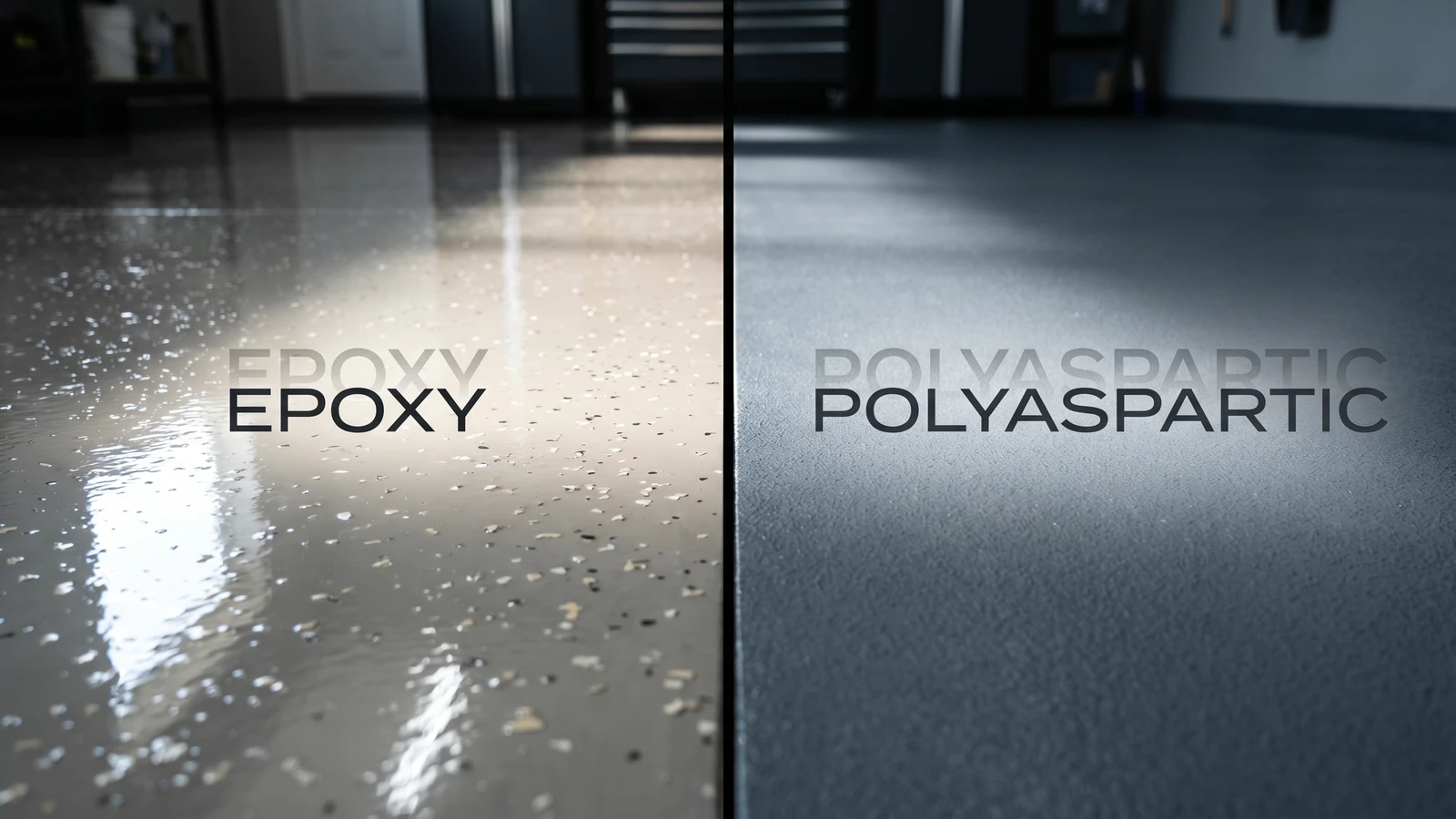
If you're researching floor coatings for your Miami garage, patio, or commercial space, you've probably narrowed it down to two options: epoxy and polyaspartic. Both are professional-grade coatings that transform dull concrete into a durable, attractive surface. But which one is actually better in 2026? The answer depends on your priorities — and after coating thousands of square feet across South Florida, we have a clear recommendation.
The Quick Verdict
For most South Florida homeowners and businesses, polyaspartic is the better choice in 2026. It cures faster, resists UV damage, lasts longer, and handles Miami's heat and humidity better than traditional epoxy. The only scenarios where epoxy still wins are very large industrial spaces (over 5,000 sq ft) where upfront cost dominates the decision, or specific chemical exposure environments. For garages, patios, showrooms, restaurants, and most commercial floors, polyaspartic delivers superior long-term value.
Want the short answer? In Miami's climate, polyaspartic outperforms epoxy in nearly every scenario except extreme industrial use. The 24-hour cure time alone usually makes the decision easy.
Request a Free QuoteSide-by-Side Comparison
Cure Time: Polyaspartic Wins by Days
This is the single biggest practical difference. Epoxy needs 24–72 hours between coats and a full 5–7 days before you can park vehicles or move heavy equipment. Polyaspartic cures in 2–6 hours between coats and is fully ready in just 24 hours. For a homeowner, that means moving back into your garage in one day instead of one week. For a business, it means losing one day of operations instead of an entire week.
UV Resistance: Polyaspartic Wins by Years
Standard epoxy contains aromatic compounds that yellow and chalk under UV light. In Miami's relentless sun, an epoxy floor exposed to direct sunlight will visibly degrade within 6–12 months. Polyaspartic uses aliphatic chemistry that is inherently UV-stable. We have polyaspartic installations from 2018 that look identical today — no yellowing, no chalking, no fading. If any part of your floor sees sunlight (open garage door, skylights, glass walls), polyaspartic is non-negotiable.
Durability: Polyaspartic Wins on Flexibility
Both coatings are extremely tough, but they fail differently. Epoxy is rigid and can chip when subjected to thermal cycling or impact. Polyaspartic is more flexible and absorbs impact better, making it less likely to chip or crack. In South Florida, where temperatures fluctuate dramatically between cold air-conditioned interiors and hot exterior slabs, this flexibility translates to significantly longer service life.
Humidity & Moisture: Polyaspartic Wins on Tolerance
Epoxy requires very specific humidity windows for application — typically 40–80% relative humidity. In Miami, where outdoor humidity routinely exceeds 90%, this can delay installations or compromise adhesion. Polyaspartic has wider humidity tolerance and faster reaction kinetics, so it's less affected by Miami's muggy air. This translates to fewer botched installations and more reliable bonds.
Cost: Epoxy Wins Upfront, Polyaspartic Wins Long-Term
Standard epoxy garage coatings cost $3–$7 per square foot installed. Polyaspartic systems typically cost $5–$10 per square foot. For a 500 sq ft garage, that's roughly $1,500–$3,500 for epoxy vs. $2,500–$5,000 for polyaspartic. However, when you factor in lifespan (15–20 years for polyaspartic vs. 7–10 years for UV-exposed epoxy), polyaspartic is significantly cheaper per year of service. Many homeowners pay for epoxy twice in the time a polyaspartic floor lasts.
When Epoxy Still Makes Sense
- Very large industrial floors (warehouses over 5,000 sq ft) where upfront budget dominates the decision and the floor never sees UV.
- Specific chemical exposure environments where epoxy's slightly higher chemical resistance matters (some battery rooms, certain food processing plants).
- Decorative full-flake systems where the heavy flake fully covers the basecoat — UV cannot penetrate to degrade the epoxy underneath, especially when topped with a polyaspartic clear coat (a hybrid system).
When Polyaspartic Is the Clear Winner
- Residential garages — every Miami garage door eventually opens to the sun.
- Patios, lanais, and pool decks with any UV exposure.
- Showrooms, retail spaces, and restaurants where downtime equals lost revenue.
- Any project on a tight timeline — open by tomorrow, not next week.
- Salt-air environments — the chemistry handles coastal corrosion better than epoxy.
- High-traffic homes with dogs, kids, or shop activity — better impact and abrasion resistance.
The Hybrid Solution: Best of Both Worlds
For premium installations, our most popular system is an epoxy basecoat (for maximum adhesion and build) topped with a polyaspartic topcoat (for UV protection and rapid cure). This hybrid approach delivers the cost benefits of epoxy with the performance benefits of polyaspartic, and it's what we install on the majority of our high-end residential garages and showrooms.
Real-World Performance in Miami
From the floors we coat across South Florida, our team has clear data on what works: epoxy installations exposed to UV need recoating within 5–7 years; polyaspartic installations from 2018 still look new in 2026. For garages with daily sun exposure through the open door, the difference is dramatic — and visible to anyone parked next door.
How to Choose for Your Specific Project
The right coating depends on three questions: How fast do you need it? Will it see any UV? How long do you want it to last? If the answer to any of those is "fast," "yes," or "long," polyaspartic is the better choice. The only time we recommend pure epoxy is for indoor industrial floors over 5,000 sq ft where upfront budget is the controlling factor.
Still not sure which coating is right for your Miami project? Art of Coating Miami offers free on-site consultations across Miami-Dade, Broward, and Palm Beach. We'll walk your space, identify UV exposure, and recommend the right system for your timeline and budget. Call (786) 618-4877 today.
Request a Free QuoteThe Installation Experience Differs
Beyond the specs, the two systems feel different to live through. Epoxy is a multi-day project with long cure windows, so you plan around a week without the space. Polyaspartic compresses that into a single day, but its rapid set leaves installers a short working window that rewards an experienced crew and punishes a careless one. That speed is a genuine advantage for busy households and businesses, yet it is only an advantage when the applicator knows how to move quickly and cleanly. See how we handle each on our epoxy floor coating and polyaspartic floor coating pages.
Odor, VOCs, and Comfort
For occupied homes and businesses, air quality during installation is a real concern. Many modern polyaspartic formulations are lower in volatile organic compounds and odor than older solvent-based epoxies, which can make them more comfortable for interior spaces where people return quickly. Proper ventilation still matters for either system during application and cure. If low-emission materials are a priority for your family or staff, the U.S. Environmental Protection Agency offers useful guidance on indoor air quality and VOCs that is worth reviewing before you choose a product for a lived-in space.
Common Myths, Cleared Up
- "Polyaspartic is just marketing." Its aliphatic chemistry is genuinely UV-stable; epoxy is not.
- "Thicker epoxy always lasts longer." Adhesion and prep matter more than raw mil count.
- "Any coating works outdoors." Standard epoxy yellows in sun; use a UV-stable topcoat.
- "DIY kits equal professional systems." Big-box kits are 2 to 3 mils and skip diamond grinding.
Maintenance and Long-Term Care
Day to day, both floors are easy: dust mop to keep abrasive grit off the surface and damp mop with a pH-neutral cleaner. The difference shows over years. UV-exposed epoxy may need recoating within five to seven years as it yellows and dulls, while polyaspartic holds its color and gloss far longer before a light maintenance recoat is due. For high-traffic homes with kids, pets, or shop activity, polyaspartic's flexibility also means fewer chips to touch up. Either way, addressing small damage early keeps moisture from working beneath the film and causing larger delamination.
If any part of your floor sees sunlight, through an open garage door, skylight, or glass wall, UV stability stops being optional. That single factor decides more of these debates than cost does.
Request a Free QuoteIt helps to frame the choice around three questions: how fast do you need the space back, will any part of the floor see UV, and how long do you want it to last? If the answer to any of those is fast, yes, or long, polyaspartic or a hybrid is the stronger pick. Pure epoxy still earns its place on large, shaded industrial floors where upfront budget is the controlling factor and the surface never meets the sun.
Real-world results in Miami back this up more than any spec sheet. Epoxy floors installed where the sun reaches them, through an open garage door or a storefront window, tend to yellow and dull within five to seven years and need recoating, while polyaspartic installations from years earlier still hold their color and gloss today. The flexibility of polyaspartic also shows up as fewer chips in high-traffic homes with kids, pets, and shop activity, where rigid epoxy is more prone to cracking under impact and thermal swings. For buyers comparing a parked car's floor to a neighbor's, the difference in how the two age is often visible at a glance.
For the majority of South Florida projects, polyaspartic or a hybrid wins on cure time, UV resistance, and lifespan. The honest answer for your space still depends on sun exposure, timeline, and budget, so request a free on-site consultation through our contact page and we will recommend the right system, or browse finished floors in our project gallery.
Last updated: October 2026