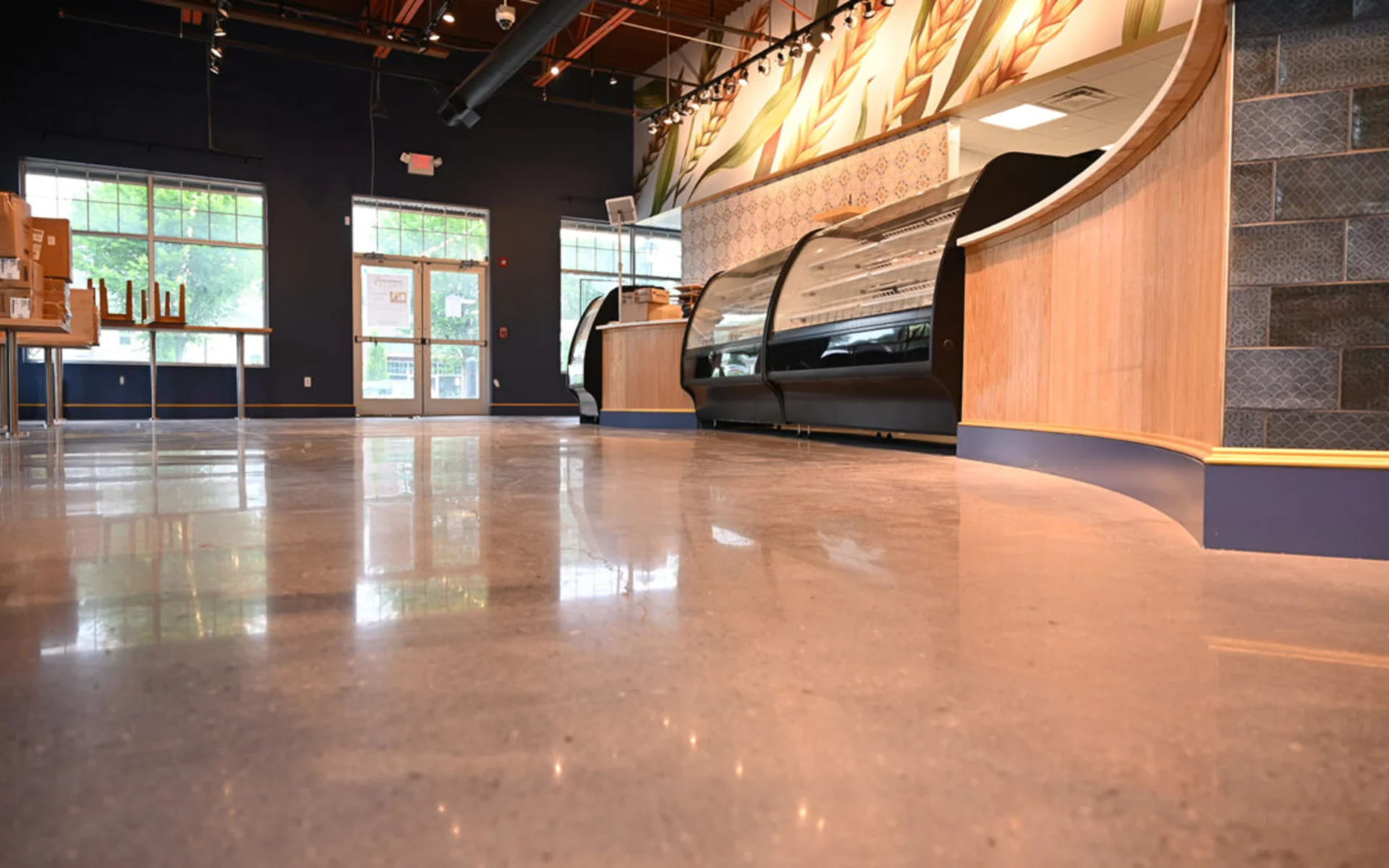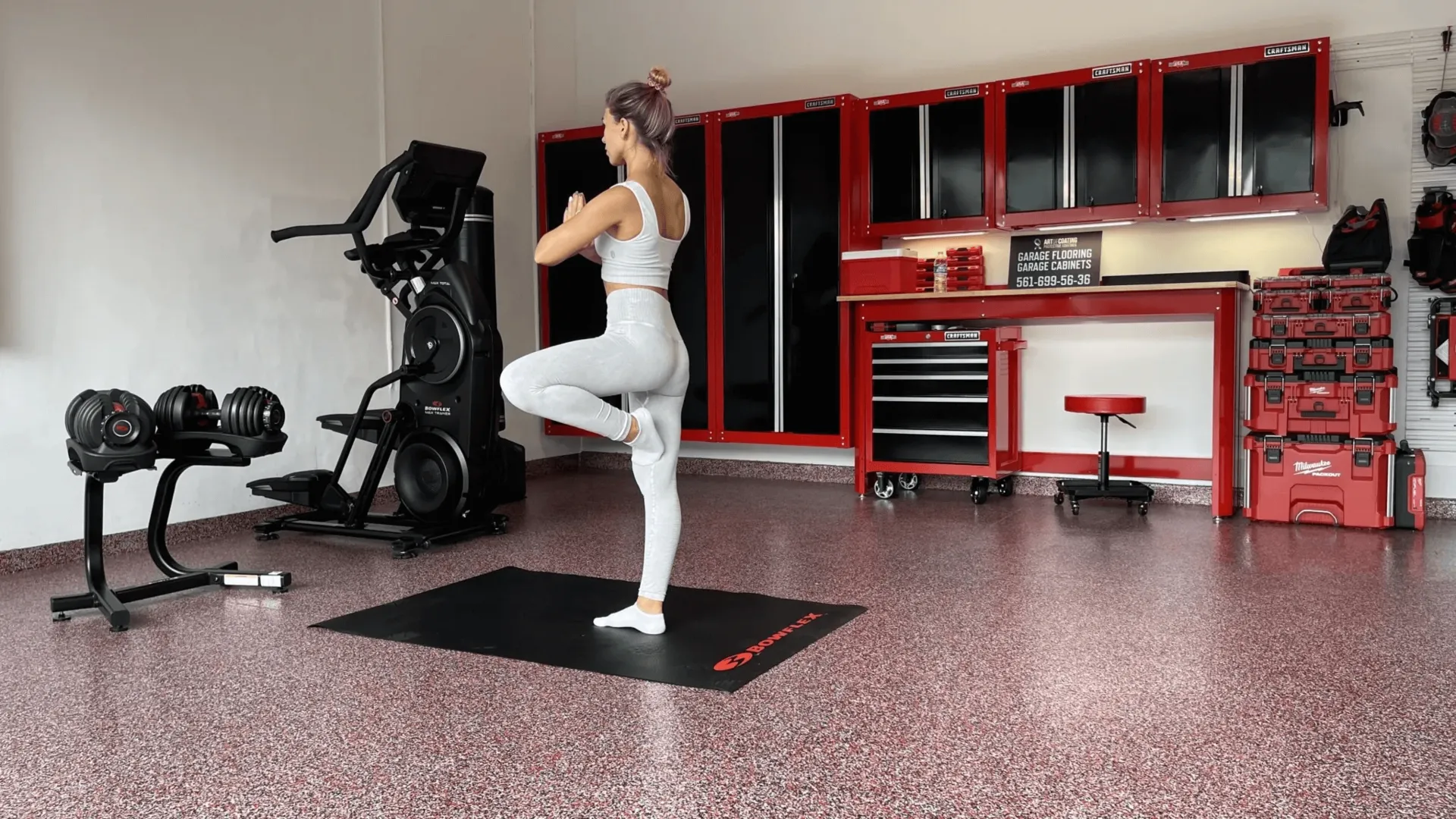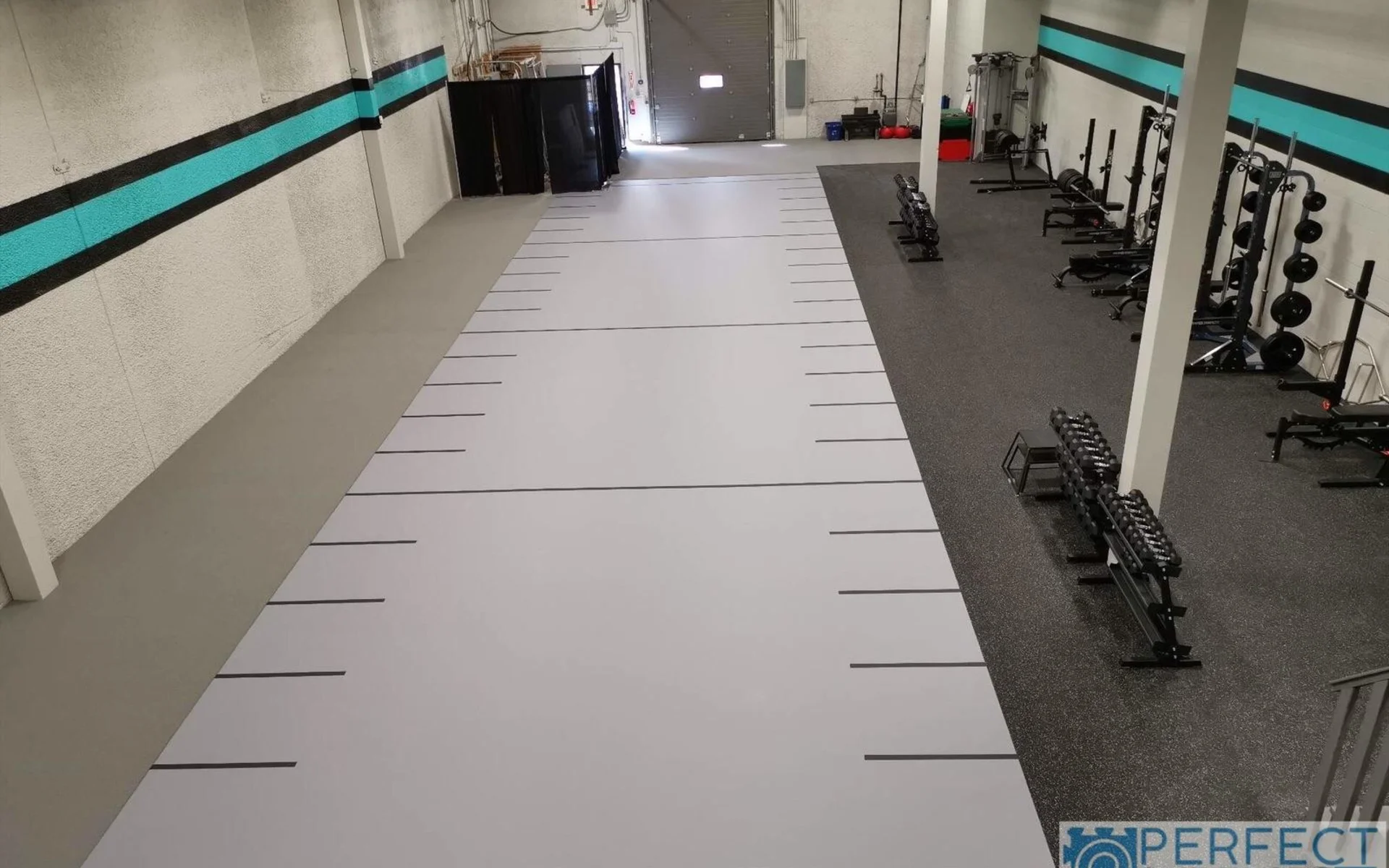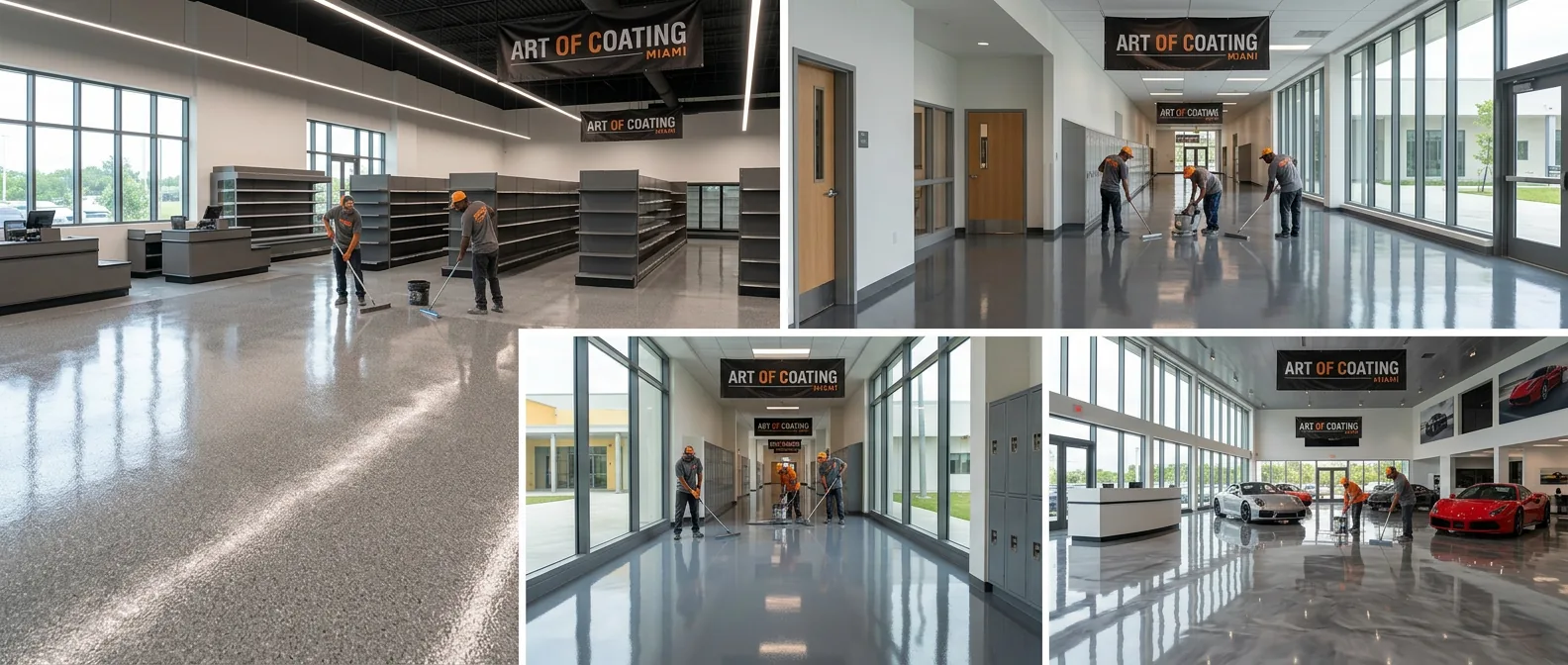
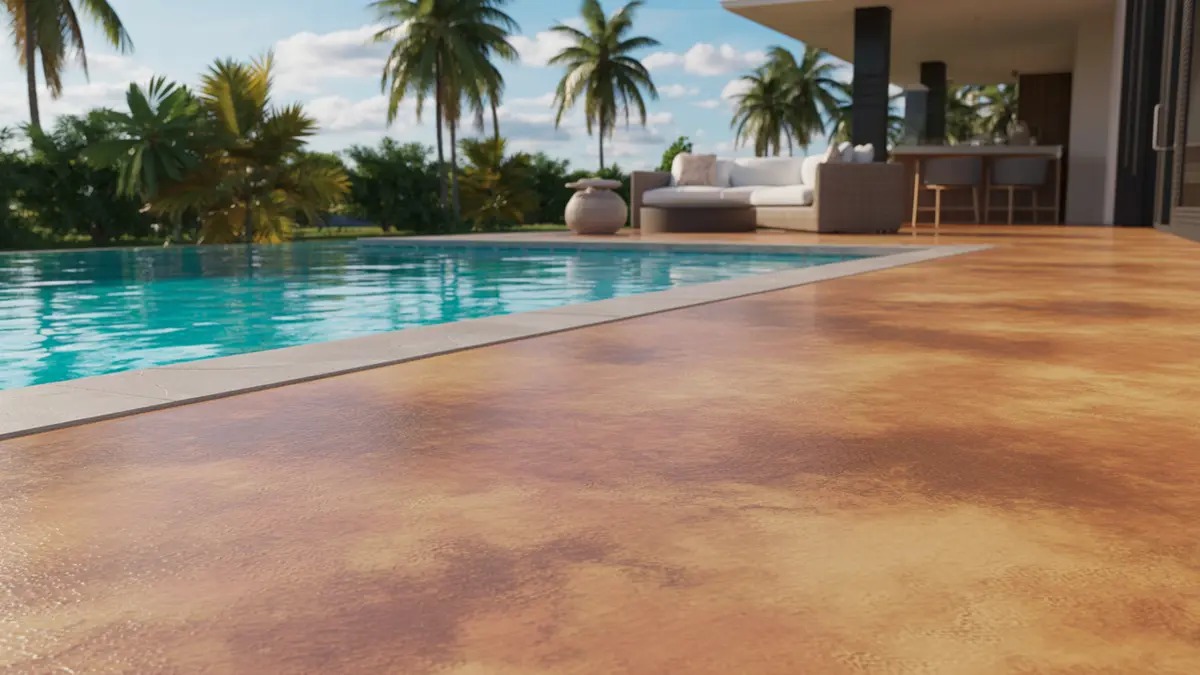
South Florida is one of the harshest environments in the country for floor coatings. Coastal salt air corrodes, summer humidity hovers near 90%, UV exposure is relentless, and slabs in garages and patios can exceed 95°F. A coating that performs beautifully in a dry, temperate climate can fail here within a single season. Polyaspartic floor coating was, in many ways, made for exactly these conditions. Here is how it holds up where ordinary epoxy and patio paint give out.
The Three Forces That Destroy Coatings in South Florida
- Salt air: airborne chloride from the ocean accelerates corrosion and attacks weak coating chemistry, especially on barrier islands and waterfront properties.
- Humidity & moisture vapor: high water tables push moisture up through the slab, and trapped vapor blisters coatings that were not installed with mitigation.
- UV & heat: intense sun yellows and chalks standard epoxy and bakes thin coatings until they lose adhesion at hot-tire contact points.
Why Polyaspartic Wins: Aliphatic Chemistry
The single biggest advantage of polyaspartic is that it is an aliphatic polyurea. In plain terms, its molecular structure is inherently UV-stable, so it does not yellow, fade, or chalk under sunlight the way epoxy does. Epoxy contains aromatic compounds that break down under UV within 6–12 months of direct sun exposure. Polyaspartic keeps its color and gloss for the life of the coating, which is why it is the default choice for sun-exposed garages, patios, and pool decks across Miami-Dade, Broward, and Palm Beach.
Standing Up to Salt Air
Polyaspartic cures into a dense, non-porous film with excellent chemical and corrosion resistance. That density is exactly what salt air demands — there are no open pores for chloride and moisture to work into. On coastal and barrier-island properties where bare or painted concrete pits and stains within a year, a properly installed polyaspartic system shrugs off salt spray, pool chemicals, and washdown. This is why our waterfront pool deck and patio projects almost always specify polyaspartic.
Beating Humidity & Moisture Vapor
Humidity attacks coatings from two directions: from above as ambient moisture during cure, and from below as vapor rising through the slab. Polyaspartic tolerates a wider humidity and temperature window during application than epoxy, so we can install reliably even in South Florida conditions. Just as important, we pair it with calcium-chloride moisture testing and a vapor-mitigating primer when the slab demands it. The coating chemistry plus proper moisture management is what prevents the blistering and delamination that plague bargain installs.
Same-Day Cure in the Heat
Polyaspartic cures across a broad temperature range — roughly 20°F to 120°F — and returns to service in about 24 hours. In practical terms, that means we can coat a garage or patio in a single day even in peak summer, and you can park or walk on it the next day. Epoxy, by contrast, needs days to cure and is fussier about temperature and humidity, which leads to delays and cure problems in our climate.
Where Polyaspartic Shines in South Florida
- Pool decks and patios — UV-stable, slip-resistant, cool underfoot, and salt-water proof.
- Garages — resists hot-tire pickup and stays glossy under the lights.
- Coastal and waterfront homes — corrosion resistance against salt air.
- Showrooms and retail with natural light — no yellowing near windows and storefronts.
- Businesses that cannot close — same-day return to service.
A Note on Hybrid Systems
Polyaspartic is not always used alone. Our most popular South Florida system is a hybrid: a high-build epoxy basecoat for adhesion and thickness, finished with a polyaspartic topcoat for UV resistance, chemical resistance, and fast cure. You get the build of epoxy and the climate resilience of polyaspartic in one floor.
Thinking about a coating that can actually survive South Florida? Art of Coating Miami installs climate-engineered polyaspartic and hybrid systems throughout Miami-Dade, Broward, and Palm Beach. Call (786) 618-4877 for a free, no-obligation estimate within 24 hours.
Request a Free QuoteCoastal Surface Prep Makes or Breaks It
Even the most corrosion-resistant chemistry fails if the slab underneath is not prepared for the coast. On waterfront and barrier-island properties, we diamond-grind the concrete to a proper bonding profile, open and repair cracks where chloride has already crept in, and run calcium-chloride moisture testing before anything is coated. Where readings are high, a vapor-mitigating primer stops rising moisture from blistering the film off from below. These steps are why a properly installed polyaspartic floor coating survives salt air while bargain installs peel within a season. Coastal corrosion behavior is well documented by ASTM International, and that science shapes how we spec every oceanfront job.
Spotting a Coating That Is Failing
Catching early warning signs lets you recoat instead of replace. On coastal floors, watch for a chalky surface film, edges that are lifting near thresholds and drains, rust-colored staining bleeding up through the coating, and bubbles or soft spots that signal trapped moisture. A healthy polyaspartic floor stays glossy and tightly bonded for years, so any of these symptoms means salt, UV, or vapor is getting a foothold. A quick professional assessment can confirm whether a maintenance recoat will solve it before the damage reaches the slab and forces a far more expensive full redo.
- Chalky residue on your hand after touching the surface
- Lifting or curling at edges, joints, and drains
- Rust or dark staining bleeding up from below
- Blisters or soft, hollow-sounding spots underfoot
Maintaining Polyaspartic in a Salt Environment
Coastal maintenance is simple but worth doing consistently. Rinse salt residue off exterior and patio surfaces regularly so chloride never sits and concentrates, and sweep away the fine abrasive sand that blows in near the water. Clean with a pH-neutral product rather than acidic or citrus cleaners, which can dull even a tough topcoat over time. Because polyaspartic resists UV and corrosion so well, the resealing cycle is far longer than acrylic or epoxy, but a light maintenance recoat every several years keeps a high-exposure floor looking essentially new indefinitely.
On the coast, rinsing salt off exterior coatings is the cheapest maintenance there is. Letting chloride sit and dry repeatedly is what shortens the life of any outdoor floor system.
Request a Free QuoteIt is also fair to weigh cost. Polyaspartic sits at the higher end of the price range, but for a waterfront home that premium buys years of extra service and far fewer recoats than cheaper products survive in salt air. Measured per year of performance on the coast, it is routinely the better value, which is why our oceanfront pool deck and patio projects almost always specify it over epoxy or acrylic.
It is also worth understanding where polyaspartic pairs best with other systems on a coastal property. On a high-humidity garage or interior slab near the water, our most reliable build is a high-build epoxy basecoat for adhesion and thickness, finished with a polyaspartic topcoat for UV stability, corrosion resistance, and same-day cure. The epoxy grips the prepared concrete while the polyaspartic takes the daily beating from salt, sun, and traffic. This hybrid approach gives you the build of one chemistry and the climate resilience of the other in a single floor, which is exactly why it dominates our oceanfront and near-coast work rather than either material used alone.
Polyaspartic is the system we trust most for Miami's salt air and humidity, but its performance is only as good as the prep and the crew behind it. If you own a waterfront home, patio, or pool deck and want a floor engineered to outlast the coast, request a free on-site estimate through our contact page, or see how we handle oceanfront conditions across the Miami and Fort Lauderdale areas.
Last updated: October 2026