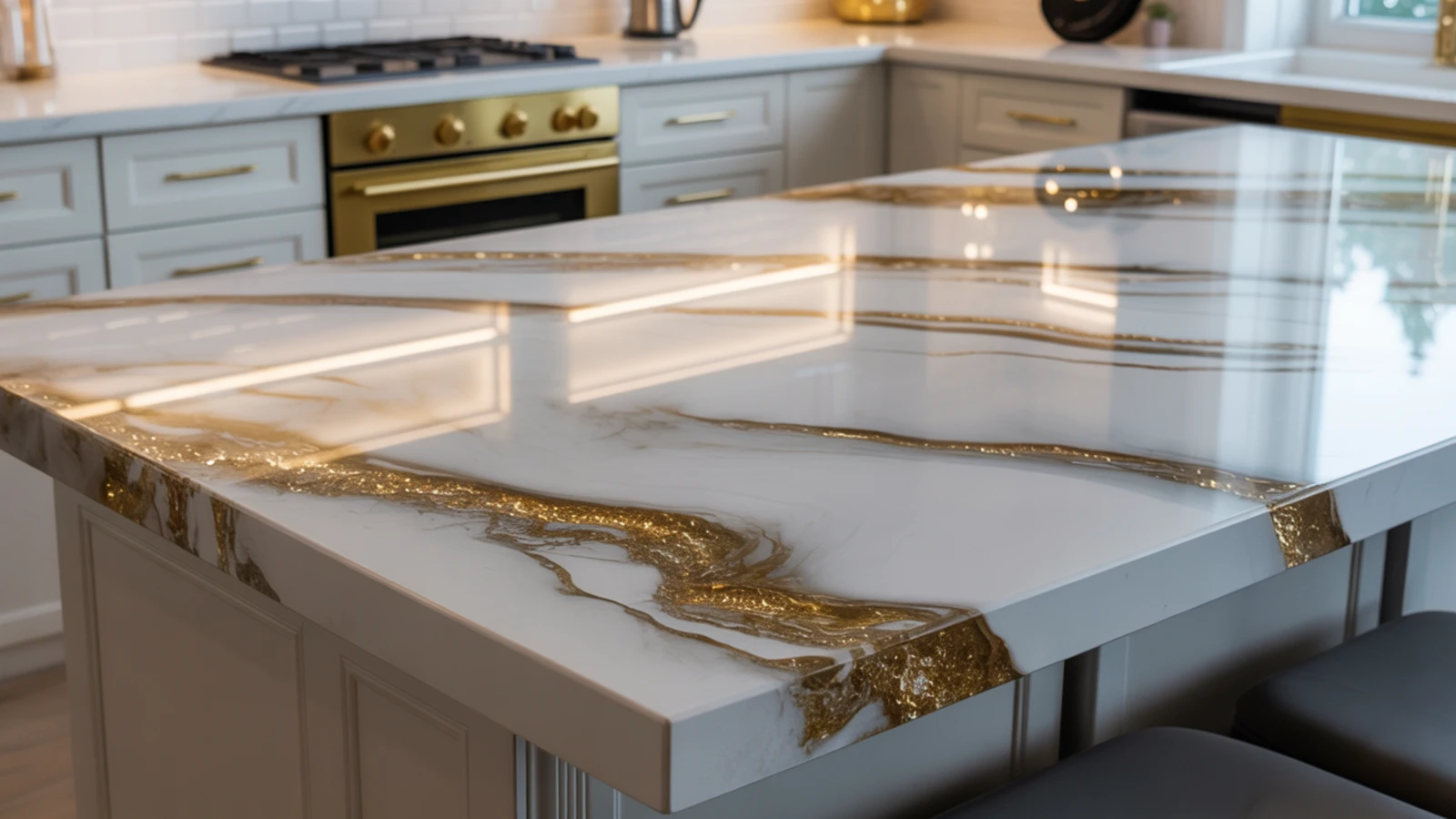
The short answer: epoxy countertops are a poured resin finish applied over your existing laminate, granite, tile or wood tops, giving a seamless marble, granite or metallic look without demolition. They suit indoor kitchens, baths and bars, but they scratch more easily than quartz, soften under hot pans and can yellow outdoors without a UV-stable topcoat. Pricing depends on square footage, edges, design and the existing surface, and is quoted after an on-site assessment.
Request a Free QuoteMost Miami homeowners asking about epoxy countertops have the same situation: the cabinets are fine, the layout works, but the tops are dated laminate, worn tile or a granite color nobody likes anymore. Ripping them out means plumbers, a fabricator and templating. Pouring epoxy over what is already there is a faster way to change the look. It is not the right answer for every kitchen, though, so this guide covers where it works, where it does not, and how it compares to quartz and granite before you decide.
What Epoxy Countertops Actually Are
An epoxy countertop is a two-part resin system poured directly over an existing, structurally sound countertop. The installer cleans and abrades the old surface, primes it, builds up the edges, then floods the top with tinted and clear resin that levels itself into a thick, glossy, seamless layer. Pigments, metallic powders and hand-worked veining are added while the resin is wet to create marble, granite or metallic looks. The same chemistry family we use on floors drives the result, which is why our epoxy countertop installation crew works from the manufacturer's technical data sheets rather than guesswork.
Because the resin bonds to what is underneath, the substrate matters. Epoxy over laminate countertops is the most common job we see, followed by tile with grout lines that need to be filled flat, older granite that is chipped or a color the owner is tired of, and solid wood. Anything that flexes, has loose laminate edges, water-damaged particleboard or failing joints has to be repaired or replaced first.
Where Epoxy Countertops Work in a Miami Home
Indoors, epoxy is a strong fit for kitchen perimeters and islands, bathroom vanities, home bars, laundry counters and rental units. These spaces are climate-controlled, out of direct sun and see the kind of use resin handles well. Bathroom vanities are especially good candidates because they are small, easy to isolate during cure, and often have dated cultured marble or laminate that is otherwise expensive to replace.
Outdoor kitchens are where we have to be honest. Standard epoxy is not UV stable, and South Florida sun will yellow and chalk it, especially lighter colors and whites. If a client wants a resin top on a covered lanai or summer kitchen, the system needs a UV-stable aliphatic topcoat, and even then a fully exposed counter by the pool takes more sun than we like to promise around. For fully exposed outdoor surfaces, we usually steer clients toward stone or toward coatings designed for exterior concrete, like the UV-stable polyaspartic systems on our patio flooring page, which are built for those conditions.
Epoxy Countertops Pros and Cons
- Pro: Poured over existing tops, so no demolition, no new plumbing hookups and usually no new sink cutouts.
- Pro: Seamless surface with no joints or grout lines where crumbs and moisture collect.
- Pro: Nearly unlimited design: marble veining, granite-style speckle, metallic swirls, solid colors or custom tints.
- Pro: Generally positioned below the cost of new natural stone or quartz slab replacement.
- Con: Softer than quartz or granite, so knives and abrasive pads will scratch it; always use a cutting board.
- Con: Heat sensitive; hot pans set directly on the surface can leave marks or soften the resin, so trivets are a must.
- Con: Standard epoxy yellows under UV, which limits outdoor and very sunny window locations.
- Con: The kitchen is out of service for several days while the resin cures.
Epoxy vs Quartz vs Granite vs Laminate
The epoxy vs quartz countertops question comes up on almost every call. Quartz is an engineered slab that is very hard, consistent and low maintenance, but it requires full tear-out, fabrication and installation. Granite is natural stone with excellent heat tolerance that needs periodic sealing. Laminate is the budget baseline. Epoxy is a surface renovation rather than a replacement. Here is how they compare on the factors that matter most in a working kitchen.
- Scratch resistance: quartz and granite are the hardest; epoxy is softer and shows fine scratches over time; laminate is softest and can chip.
- Heat tolerance: granite handles heat best; quartz can scorch from direct pan contact; epoxy and laminate both need trivets.
- Seams: epoxy is fully seamless; quartz and granite have visible seams on long runs or L-shapes; laminate has seams and exposed edges.
- Install disruption: epoxy is poured in place over existing tops; quartz and granite need demolition, templating and fabrication; laminate is replaced in sections.
- Design range: epoxy offers custom veining and metallics poured on site; quartz and granite are limited to available slabs; laminate is printed patterns.
- Cost position: epoxy generally sits below new quartz or natural stone, and above a basic laminate swap.
In plain terms, if your current counters are structurally sound and you want a dramatic visual change without demolition, epoxy makes sense. If you cook heavily, set hot pans down constantly and want the most scratch-resistant surface regardless of disruption, quartz or granite is the better long-term choice. We would rather say that up front than pour a top that does not suit your kitchen.
Design Options for Epoxy Countertops
The design side is where epoxy earns its following. Every top is hand-poured, so no two are identical and colors can be matched to cabinets or backsplash tile. If you like the look of metallic floors, the same pigments and techniques we describe in our metallic epoxy cost and design guide carry over to countertops on a smaller, more detailed scale. Common directions Miami homeowners choose include:
- White marble look with gray or gold veining, the most requested finish for kitchens and vanities.
- Dark granite look with black, charcoal and white flecks for a traditional kitchen.
- Metallic finishes in silver, copper, pearl or ocean blue for bars and statement islands.
- Custom blends matched to a backsplash, cabinet color or floor sample you provide.
The Epoxy Countertop Process and Timeline
A professional countertop pour is not a weekend craft project, and most of the time goes into prep steps you will never see in the final gloss. Expect your kitchen or bath to be out of use while the work happens and the resin cures, so plan meals and bathroom routines around it. A typical residential sequence looks like this:
- Assessment: check the substrate for flex, delamination, water damage and loose edges; confirm sink, cooktop and faucet details.
- Masking: cabinets, floors and appliances are wrapped, since resin drips off edges.
- Surface prep: the top is cleaned, degreased and abraded so the primer bonds; repairs are made.
- Priming and base color: a bond coat and base color layer go down and are allowed to set.
- Edge build-up: edges are shaped for a clean, consistent profile.
- Flood coats: tinted and clear resin is poured, spread and worked into veining or metallic patterns, then torched or heat-gunned to release bubbles.
- Cure: the surface is protected from dust and contact; light use typically follows after the initial cure and full cure takes several days, per the product's technical data sheet.
Most residential kitchen pours run over a few working days including cure, depending on size, layout and how many coats the design needs. Humidity and temperature in a Miami home affect cure, so we keep the air conditioning running and follow the manufacturer's recoat and cure windows rather than rushing the space back into service before the resin is ready.
Food Contact, Care and Everyday Use
Homeowners reasonably ask whether epoxy is safe for a kitchen. The answer depends on using a product rated for the purpose and letting it fully cure; uncured resin is not something you want food touching. Low-odor, low-VOC systems also help with indoor air during installation, and the EPA's indoor air quality guidance is a useful reference on ventilating during any home project. Once cured, care is simple, but a few habits protect the gloss for the long haul:
- Wait for full cure before food prep, heavy objects or cleaning products touch the surface.
- Clean with mild dish soap and water or a non-abrasive pH-neutral cleaner and a soft cloth.
- Avoid scouring pads, powdered cleansers, bleach-heavy sprays and solvents like acetone.
- Always use trivets for hot pans, slow cookers, air fryers and curling irons in bathrooms.
- Wipe up spills like wine, coffee and turmeric promptly to avoid staining lighter colors.
How Much Do Epoxy Countertops Cost in Miami?
Epoxy countertops cost is quoted per project rather than from a flat chart, because the variables swing the job more than with floors. Square footage is the starting point, but the linear footage of edges, the number of corners and cutouts, whether there is a backsplash to wrap, the design complexity and the condition of the existing substrate all change the labor involved. A simple laminate run in one color is a very different job from tiled counters needing a multi-layer marble pour.
What we can say is that epoxy is generally positioned below the cost of new natural stone or quartz slab replacement, mainly because there is no demolition, fabrication or new slab material involved. The accurate way to price your kitchen is a free on-site assessment, after which you receive a written itemized estimate that spells out prep, repairs, design and coats. When comparing it to a quartz quote, check both include removal, plumbing and backsplash work.
Frequently Asked Questions
Can you put epoxy over laminate countertops?
Yes, epoxy over laminate countertops is the most common countertop job we do. The laminate has to be firmly bonded with no bubbling, lifting edges or swollen particleboard underneath, especially around the sink where water damage is common. We sand the surface to give the primer something to grip, repair any loose areas, then build the edges so the old laminate profile disappears under the new finish.
Can you pour epoxy over granite countertops?
Yes. Epoxy over granite countertops works well when the stone is sound but the color is dated or the surface has chips and wear. Granite is polished and dense, so prep focuses on cleaning, degreasing and abrading the surface for adhesion. Seams between granite sections are filled and leveled first. The result is a new look with the solid, stable base that granite already provides underneath.
Is epoxy as durable as quartz?
No, and it is better to know that going in. Quartz is harder and more scratch resistant, and it does not need trivets as cautiously. Epoxy is durable for normal kitchen and bath use when you use cutting boards and trivets, and it has an advantage quartz lacks: scratches and dull areas can often be sanded and recoated rather than requiring a specialist stone repair or replacement.
Can epoxy countertops go outside in Miami?
Only with care. Standard epoxy yellows under UV exposure, and the South Florida sun accelerates that. A covered outdoor kitchen or bar can work with a UV-stable aliphatic topcoat over the epoxy, but a fully exposed counter next to the pool is a tough location for any resin. For those spots we usually recommend stone or an exterior-rated coating and will tell you so during the assessment.
How long before I can use my kitchen again?
Plan for several days without full use of the counters. Light use typically resumes after the initial cure, but heavy items, food prep and cleaning products should wait until the resin reaches full cure according to the manufacturer's technical data sheet. Keeping the air conditioning on and the area dust free during that window protects the finish. We give you exact timing for your product at the estimate stage.
Get an Epoxy Countertop Assessment
Art of Coating Miami is a licensed, insured coating contractor serving Miami-Dade, Broward and Palm Beach counties since 2022, with a BBB A+ rating and a 5.0 Google rating. If you are weighing epoxy against quartz or granite, we will look at your existing tops, tell you honestly whether they are a good candidate, show you design options and provide a written itemized estimate. Call (786) 618-4877 or request a free on-site assessment to get started.
Last updated: October 2026