
Walk into any home improvement store and you'll see two completely different products marketed for garage floors: concrete sealers (often $30–$80 per gallon) and epoxy kits ($150–$300+). They both claim to protect your concrete and improve appearance, but they perform very differently. If you're trying to decide which is right for your Miami garage, this comparison will save you from making an expensive mistake.
What Is a Garage Floor Sealer?
Concrete sealers are thin, penetrating products that soak into the pores of your concrete to repel water, oil, and stains. Common types include silicate (sodium silicate, lithium silicate), silane/siloxane, and acrylic sealers. They typically apply with a roller in 1–2 coats and dry within hours. The result is a slightly darker, slightly more uniform concrete surface — but the concrete still looks and feels like concrete.
Sealers do not change the texture, color, or finish of the floor in any meaningful way. They are invisible protection, designed to extend concrete's natural lifespan rather than transform its appearance.
What Is Epoxy Floor Coating?
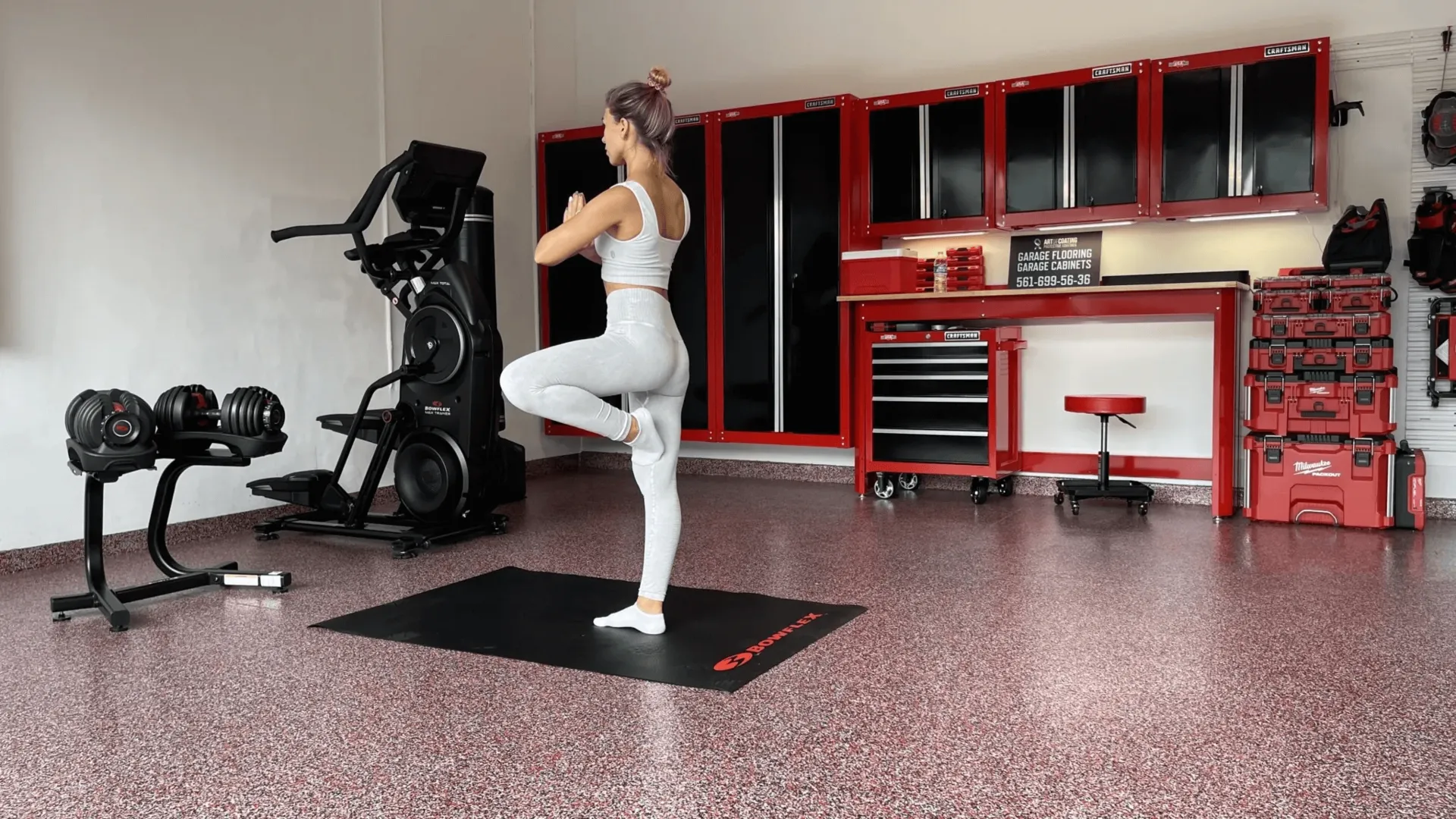
Epoxy is a two-part chemical coating (resin + hardener) that creates a thick, hard, plastic-like layer bonded to your concrete. Professional systems range from 8 to 30+ mils thick — that's 100x to 1000x thicker than sealers. Epoxy can be tinted any color, loaded with decorative flakes, or topcoated with polyaspartic for additional protection. The result is a completely transformed surface that looks like a finished floor, not raw concrete.
Head-to-Head Comparison
Appearance
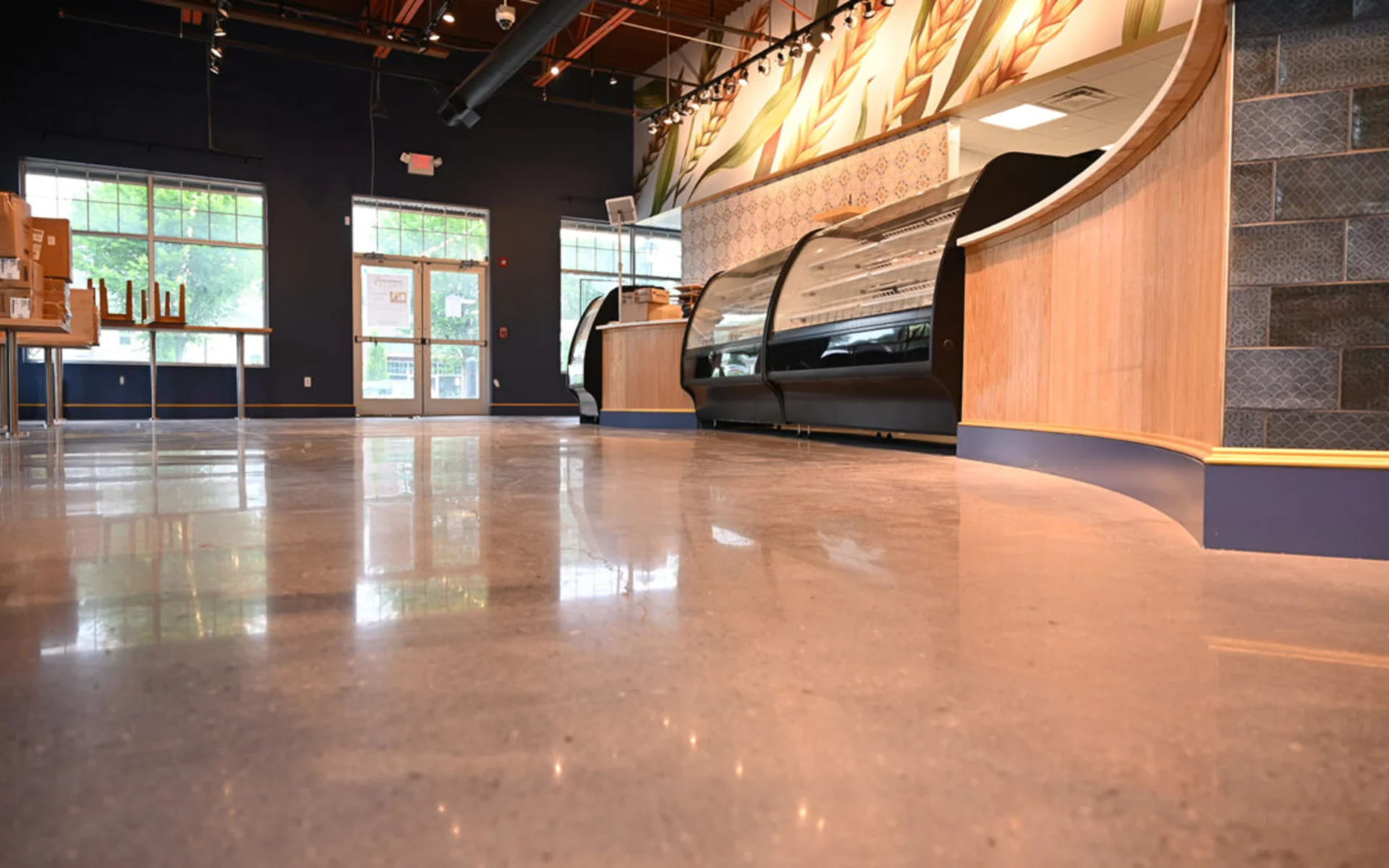
Sealers leave your concrete looking like concrete — slight darkening, maybe a low-sheen finish, but the original color, cracks, stains, and imperfections all show through. Epoxy completely transforms the floor: smooth, uniform color, optional decorative flakes, glossy or matte finish. If aesthetics matter at all, epoxy is the only choice.
Stain & Chemical Resistance
Sealers reduce staining but don't eliminate it. Oil, brake fluid, and battery acid will still penetrate sealed concrete given enough time. Epoxy creates an impervious barrier — spills sit on the surface and wipe up cleanly with a paper towel. For a working garage where you actually use it as a workshop, the difference is dramatic.
Durability
Sealers wear away with foot traffic, vehicle tires, and pressure washing. Most sealers need to be reapplied every 1–3 years. Professional epoxy lasts 7–15 years, and a polyaspartic-topped system lasts 15–20+ years. Over a 15-year period, you'd apply sealer 5–10 times to match a single epoxy installation.
Hot Tire Pickup
This is where DIY epoxy kits and sealers fail most spectacularly. Hot tires from a car driven on Miami roads stick to thin coatings and lift them right off the concrete in patches. Sealers and DIY epoxy kits frequently fail this way within 6–12 months. Professional epoxy systems use proper concrete preparation (diamond grinding, not just acid etching) and high-build coatings that don't lift under hot tires. This is the single biggest reason DIY garage floor projects fail.
Slip Resistance
Sealed concrete has the same slip characteristics as bare concrete — somewhat slippery when wet. Epoxy systems can be customized with anti-slip additives (silica sand, polymer beads, full broadcast flake) to dramatically improve traction. For a garage that sometimes has wet floors (rain runoff from cars, washing), the difference matters.
Cost: Initial vs. Long-Term
A DIY sealer application costs $50–$200 in materials for a typical 500 sq ft garage. A professional epoxy installation costs $1,500–$3,500. But over 15 years, you'd apply sealer 5–10 times ($250–$2,000 in materials, plus your time), while one professional epoxy lasts the entire period. The total cost of ownership often favors epoxy, especially when you factor in the time investment of resealing.
When a Sealer Makes Sense
- You're a renter or expect to move within 2 years and just want minimal protection.
- Your garage is essentially storage — no vehicles, no chemicals, no foot traffic.
- You have a brand-new concrete slab and want to protect it during the first year of curing before applying a permanent coating.
- Your budget is strictly under $200 and you don't mind the appearance staying the same.
When Epoxy Is the Right Choice
- You park vehicles in the garage daily — hot tire pickup will destroy thin sealers.
- You want the floor to actually look finished and presentable.
- You use the garage as a workshop with chemicals, paint, fluids.
- You want to install once and not worry about it for 10+ years.
- You're considering selling the home — finished epoxy floors significantly increase appeal and value.
- You experience humidity issues — epoxy creates a vapor barrier that sealed concrete doesn't.
The Miami-Specific Factor
South Florida's humidity, salt air, and heat make sealers fail faster than in dry climates. The constant moisture cycling causes sealed concrete to spall (chip and flake at the surface), and sealers wear away under the abrasive demands of Miami garages. We routinely see sealer applications that lasted 6–12 months in Miami when the manufacturer claimed 2–3 years. Epoxy and polyaspartic systems are simply more reliable in this climate.
The Bottom Line
For 95% of Miami garage owners, the right answer is professional epoxy — not because we sell it, but because the math works out: lower cost per year, dramatically better appearance, and zero ongoing maintenance. The only time we recommend a sealer is when the homeowner is renting, moving soon, or has a strict budget under $200. For everyone else, epoxy is the answer.
Ready to upgrade your Miami garage floor? Art of Coating Miami offers professional epoxy and polyaspartic installations starting at $3.50/sq ft. Free on-site estimates throughout Miami-Dade, Broward, and Palm Beach. Call (786) 618-4877 today.
Request a Free QuoteUnderstanding the Types of Concrete Sealer
"Sealer" is a broad label covering products that behave very differently. Penetrating sealers like silanes and siloxanes soak in and repel water and salt without changing the look, which makes them useful for driveways and exterior slabs. Silicate densifiers harden the surface and reduce dusting but offer little stain protection. Acrylic sealers leave a thin, low-sheen topical film that wears away quickly under tires. None of them build a thick, impact-resistant layer, which is the fundamental divide between any sealer and a true coating. For the coating side of that divide, see our epoxy floor coating page.
- Silane/siloxane: deep water and salt repellency, invisible finish
- Silicate densifier: hardens and reduces dusting, minimal stain defense
- Acrylic: thin topical sheen, wears fast under vehicle tires
- Epoxy or polyaspartic coating: thick, bonded, transformative, and durable
Can You Epoxy Over a Sealed Floor?
This is one of the most common and costly misunderstandings. Most sealers, especially acrylics and silanes, actually prevent epoxy from bonding because they occupy or close the pores a coating needs to grip. Applying epoxy over an unknown sealer is a classic recipe for peeling within months. A professional installer resolves this by diamond grinding the slab, which physically removes surface sealer and opens a clean mechanical profile for the new coating. That is why prep, not product, decides whether a garage floor lasts, a principle reinforced by the coating and sealer guidance at the Concrete Network.
The Prep Gap Explained
The reason professional epoxy outlasts both sealers and DIY kits comes down to preparation. A roll-on sealer asks almost nothing of the surface, while a lasting epoxy requires diamond grinding to a proper profile, crack and spall repair, and moisture testing before a drop of resin goes down. In South Florida's humidity, skipping the moisture step is what causes the blistering and hot-tire delamination that make homeowners regret the cheap route. The product on the label matters far less than the hours of honest prep that come before it ever opens.
If someone offers to epoxy your garage without grinding the concrete first, walk away. Acid etching and roll-over-sealer shortcuts are the leading cause of garage floors that peel within a year.
Request a Free QuoteThere is also a middle path worth knowing about. On a brand-new slab you intend to coat later, a temporary penetrating sealer can protect the concrete through its first year of curing, after which it is ground off and the permanent system goes down. And for homeowners who want the ultimate garage floor, an epoxy base finished with a polyaspartic topcoat combines the build of one with the UV stability and fast cure of the other, far outperforming any sealer.
The Miami climate quietly tips the scales toward a real coating as well. Constant humidity, salt in the air, and heat make thin sealers fail faster here than the manufacturer's label suggests, and we routinely see sealer jobs that lasted six to twelve months when the box promised two to three years. The same moisture that shortens sealer life also drives the spalling and hot-tire pickup that defeat DIY epoxy kits. A professionally prepped epoxy or polyaspartic system, with diamond grinding and moisture mitigation, is simply the more reliable answer in this environment, which is why it dominates the garages we coat across Miami-Dade, Broward, and Palm Beach. If you have already tried a sealer or a kit and watched it fail, you are not alone, and a proper grind-and-coat system is almost always the permanent fix that finally ends the cycle of reapplying every year or two.
For a working garage you actually use, a professionally installed epoxy or polyaspartic system is the durable, better-value answer nearly every time. If you are unsure what is already on your slab or which direction fits your budget, request a free on-site assessment through our contact page, or compare your options in our polyaspartic vs epoxy guide.
Last updated: October 2026