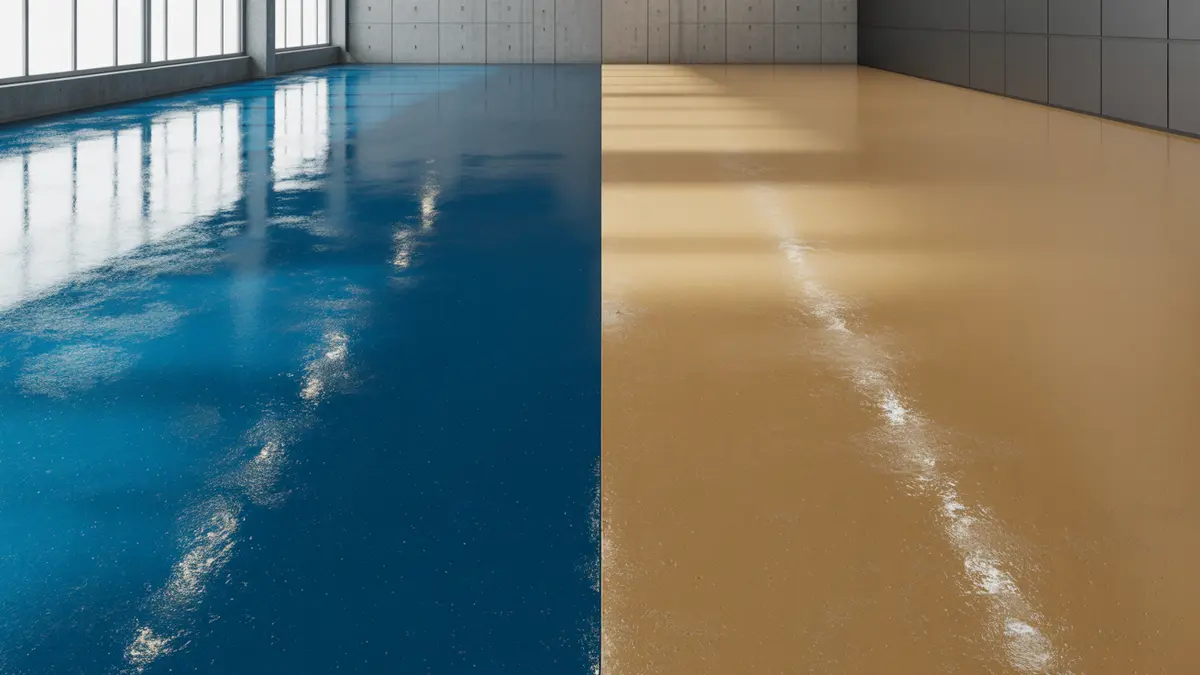
When it comes to protecting and upgrading commercial or industrial floors in South Florida, two coating systems dominate the market: epoxy and polyaspartic. Both deliver exceptional durability and a professional appearance, but they differ significantly in application, performance, and cost. Understanding these differences is critical before investing in a floor coating system that your business will rely on for years.
What Is Epoxy Floor Coating?
Epoxy floor coatings are two-part systems consisting of a resin and a hardener. When mixed, they create an exothermic chemical reaction that produces a rigid, plastic-like material bonded directly to your concrete substrate. Epoxy coatings typically range from 2 to 5 mils in thickness for standard applications, though high-build systems can exceed 10 mils.
Epoxy has been the industry standard for decades due to its proven track record in warehouses, manufacturing plants, showrooms, and commercial kitchens. The coating creates an extremely hard surface that resists chemicals, abrasion, and impact damage.
What Is Polyaspartic Floor Coating?
Polyaspartic coatings are an advanced aliphatic polyurea technology. They cure through a different chemical mechanism than epoxy, which gives them several unique advantages. The most notable difference is cure speed — a full polyaspartic system can be applied and returned to service within 24 hours, compared to 3–7 days for epoxy.
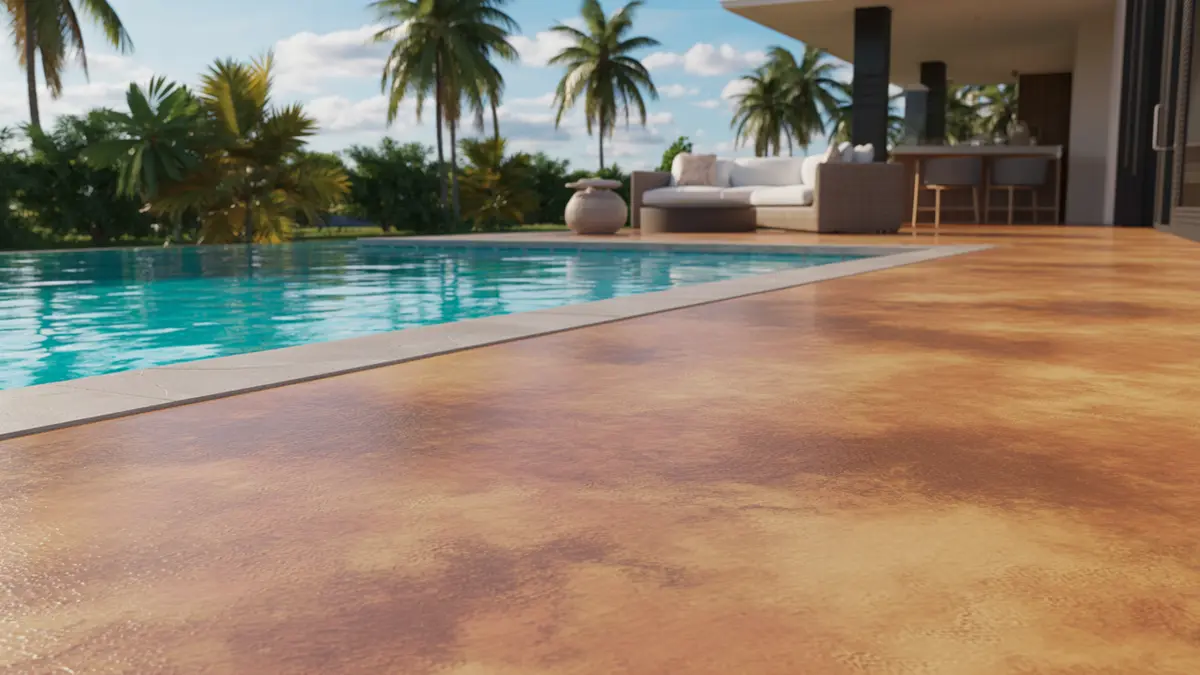
Polyaspartic coatings also offer superior UV stability. While epoxy yellows and chalks when exposed to sunlight, polyaspartic maintains its color and gloss indefinitely. This makes polyaspartic the clear choice for outdoor applications, sun-exposed showrooms, and areas near loading docks.
Head-to-Head Comparison
Cure Time & Downtime
Epoxy systems require 24–72 hours between coats and 5–7 days before heavy traffic or equipment can return. Polyaspartic systems cure in 2–6 hours between coats, with full return to service in 24 hours. For businesses that cannot afford extended downtime, polyaspartic is the clear winner.
Durability & Chemical Resistance
Both systems offer excellent chemical resistance. Epoxy provides slightly higher compressive strength (10,000–12,000 PSI vs. 8,000–10,000 PSI for polyaspartic), making it marginally better for extremely heavy loads. However, polyaspartic has superior abrasion resistance and flexibility, meaning it is less likely to chip or crack under thermal cycling — a real consideration in South Florida where temperatures can fluctuate dramatically between air-conditioned interiors and outdoor loading areas.
UV Resistance
This is where polyaspartic dominates. Epoxy coatings contain aromatic compounds that degrade under UV exposure, causing yellowing and chalking within 6–12 months of sun exposure. Polyaspartic coatings use aliphatic chemistry that is inherently UV-stable, maintaining color and gloss for the life of the coating.
Cost Comparison
Epoxy coatings typically cost $3–$7 per square foot installed, while polyaspartic systems range from $5–$10 per square foot. However, when you factor in the reduced downtime (polyaspartic saves 4–6 days of lost business), the total cost of ownership often favors polyaspartic for commercial applications.
Which Should You Choose?
- Choose epoxy if you have a large warehouse or industrial facility where maximum chemical resistance matters more than cure speed, and the area is not exposed to UV light.
- Choose polyaspartic if you need minimal downtime, UV resistance, or are coating a showroom, retail space, restaurant, or any area with natural light exposure.
- Consider a hybrid system — epoxy base coat for maximum adhesion and build, topped with a polyaspartic topcoat for UV protection and rapid cure. This is our most popular recommendation for South Florida commercial projects.
Not sure which system is right for your facility? Art of Coating Miami offers free on-site consultations throughout Miami-Dade, Broward, and Palm Beach counties. Call (786) 618-4877 for a no-obligation estimate within 24 hours.
Request a Free QuoteHow the Two Systems Are Installed
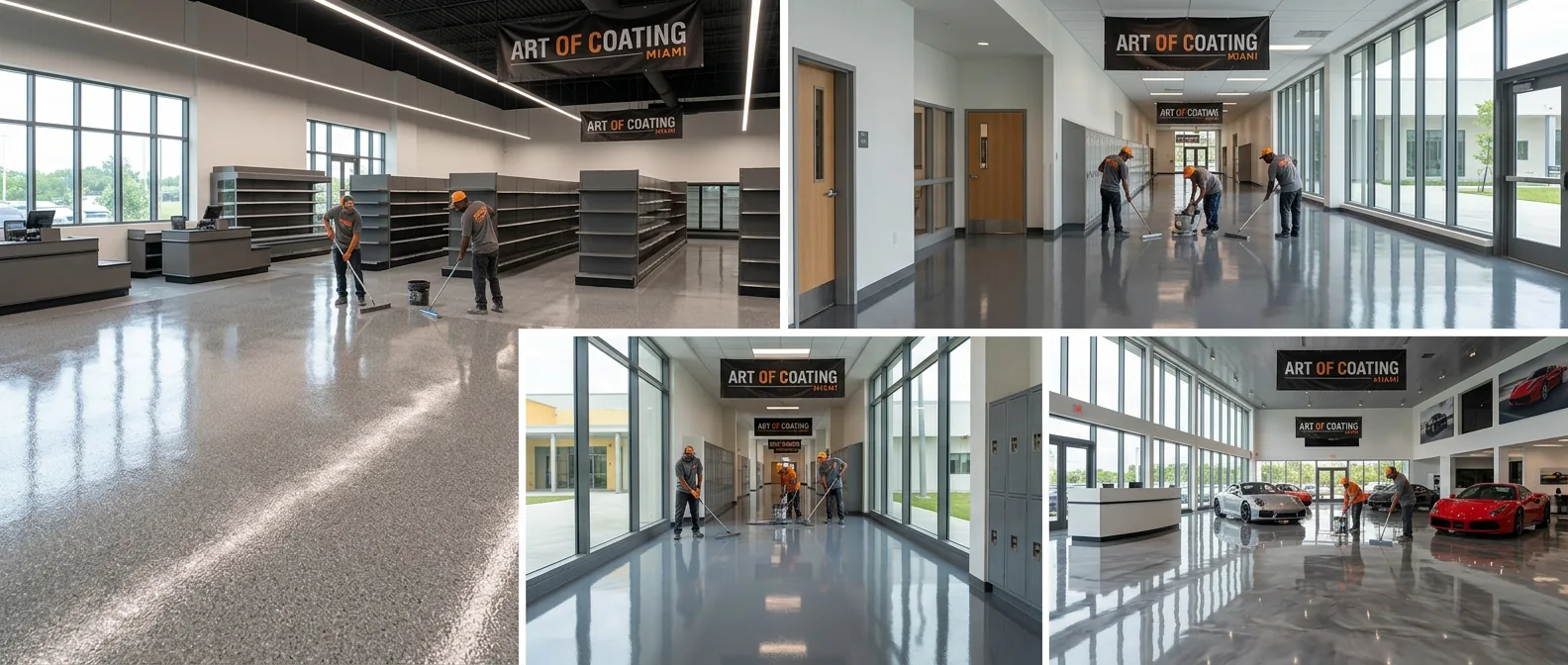
The practical experience of each coating starts with how it goes down. An epoxy system is applied in unhurried stages, prime, base coat, optional decorative media, and topcoat, with long cure windows between each that stretch the job across several days. Polyaspartic cures in hours, so a full system can be ground, coated, and finished in a single day, but its fast set gives installers a short working window that demands an experienced, well-coordinated crew. Rushing polyaspartic is a recipe for roller marks and lap lines, which is why professional application matters more here than with forgiving epoxy. Compare both on our epoxy floor coating and polyaspartic floor coating pages.
Choosing by Industry and Environment
The best pick often comes down to the room itself. Climate-controlled warehouses and interior production floors with no sun exposure can lean on cost-effective high-build epoxy. Showrooms, restaurants, and retail spaces with glass storefronts need polyaspartic's UV stability so the floor never yellows near the light. Facilities that cannot afford downtime, such as auto shops and medical suites, benefit from polyaspartic's same-day return to service. For harsh thermal-shock or washdown environments, neither may be ideal and a urethane cement is the better call. Our commercial flooring team specs the system to the use, not the trend.
- Interior warehouse, no UV: high-build epoxy for value
- Sun-exposed showroom or dock: polyaspartic for color stability
- Cannot close for a week: polyaspartic for same-day cure
- Maximum build plus UV protection: epoxy-polyaspartic hybrid
Lifespan, Warranty, and Maintenance
Both systems are low-maintenance once cured, cleaned with a dust mop and pH-neutral solution, but their service curves differ. Interior epoxy commonly lasts 10 to 15 years, while polyaspartic and hybrid systems can run longer thanks to superior abrasion and UV resistance. Whatever the chemistry, the warranty tells you more than the brochure: a written guarantee means the installer stands behind surface prep, not just the product. Industry performance is measured against recognized wear and adhesion test methods published by ASTM International, so it is fair to ask which standards your contractor builds to before you sign.
The single biggest predictor of coating lifespan is not epoxy versus polyaspartic; it is surface preparation. Diamond grinding and moisture mitigation matter more than the name on the bucket.
Request a Free QuoteIt is also worth separating cost today from cost over time. Epoxy wins on upfront price, but polyaspartic's longer life and minimal downtime often make it cheaper per year of service, especially for a business that loses revenue every day the floor is closed. The right lens is total cost of ownership, not the headline bid, because a floor that needs replacing in five years is never the bargain it looked like.
Vetting the installer matters as much as choosing the chemistry, because both systems live or die on preparation. Ask to see photos of their grinding and moisture-testing process, not just glossy finished floors, and request references for projects similar to yours in age and use. A reputable contractor will specify the prep method, mil thickness, and warranty in writing and will not flinch at questions about moisture mitigation. Beware quotes that come in dramatically below the rest; in our experience the gap is almost always the prep being skipped, which is precisely what fails first in South Florida's heat and humidity. The right crew makes an average product last, while a careless one can waste the best materials on the market.
For most South Florida facilities, the decision is less about one chemistry beating the other and more about matching the system to conditions, timeline, and budget, which is exactly why our hybrid comes up so often. If you want an honest recommendation for your specific space, request a free on-site consultation through our contact page, and we will assess your slab, sun exposure, and downtime tolerance before quoting.
Last updated: October 2026